
Shaanxi Mobile Toilet Decoration Style
The decoration style of mobile toilets in Shaanxi focuses on practical and environmentally friendly functional design and scenario-based aesthetic adaptation. Although it does not clearly correspond to traditional style classifications, it can be specifically analyzed through functions, materials, technologies, and scenario adaptability.
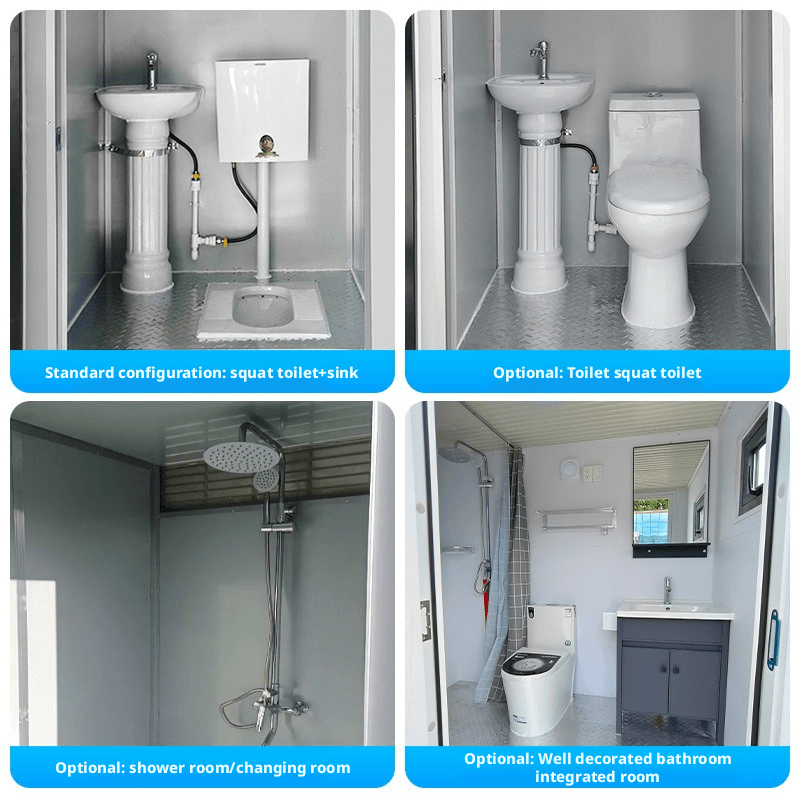
1. Function-Oriented Practical Design
The decoration of mobile toilets in Shaanxi prioritizes the realization of basic functions. Internally, they are usually equipped with toilets, sinks, lighting, and ventilation systems, forming an independent and complete sanitary space. For example, in tourist attractions or temporary event venues, their design needs to meet the requirements of rapid installation, high-frequency use, and easy maintenance. Therefore, the functional layout is compact and modular. Although this design does not pursue complex decorations, it ensures ease of use through reasonable spatial planning (such as wet-dry separation and barrier-free access), reflecting the pragmatic concept of 'form follows function.'
2. Material Selection and Style Presentation
Material selection directly affects the visual effect of the decoration style. Two types of materials are commonly used in mobile toilets in Shaanxi:
- Panels: Color-coated steel plates, due to their strong thermal insulation and low cost, are mostly used in cold northern regions, presenting a simple and modern style with their metallic texture; anti-corrosion wooden boards convey a natural atmosphere through their natural textures and are commonly found in ecological scenic spots or pastoral-themed venues.
- Frames: Stainless steel or aluminum alloy materials are the preferred choices for the main frames due to their corrosion resistance and lightness for easy transportation. These materials can present an industrial or minimalist style through polishing or matte treatments, while forming visual layers when paired with panels.
3. Integration of Environmental Protection Technologies with Style
The application of environmental protection technologies not only reflects functionality but also becomes an integral part of the decoration style. For example:
- Biodegradation technology: Microorganisms are used to decompose excrement, eliminating the need for a water flushing system. Its equipment (such as treatment tanks and ventilation ducts) is usually hidden within walls or on the roof, with a simple and uncluttered appearance, enhancing the sense of technology and environmental protection attributes.
- Solar power supply system: Solar panels installed on the roof serve as both energy equipment and visual elements that blend with the overall structure through black or silver-gray panels, creating a futuristic or industrial visual effect.
4. Scenario-Based Aesthetic Adaptation
In scenarios such as tourist attractions and city squares, the decoration of mobile toilets needs to harmonize with the surrounding environment. For example:
- Color matching: In historical districts, an antique color scheme of gray tiles and white walls is adopted, while in forest parks, a natural combination of wood tones and greens is used to weaken the visual prominence of the buildings through color.
- Shape design: Some toilets are designed in bionic shapes (such as mushroom houses or tree houses) or combined with landscape features (such as embedded in rocks or attached to trees), making them part of the environment rather than standalone structures.
In conclusion, the decoration style of mobile toilets in Shaanxi is a comprehensive manifestation of functional requirements, material characteristics, environmental protection technologies, and scenario adaptability. Although it is not clearly classified as a certain traditional style, it forms a unique model that combines practicality and aesthetics through modular design, the use of natural materials, and technological integration.



