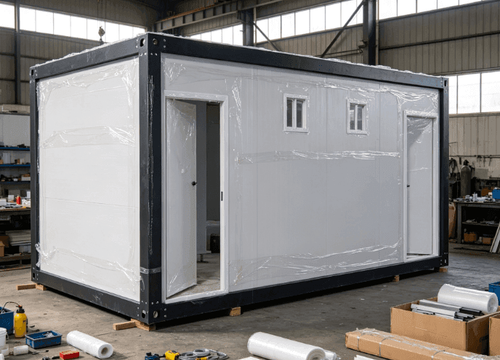
Shaanxi Mobile Toilet Decoration Needs
The decoration of mobile toilets in Shaanxi requires comprehensive consideration from aspects such as materials, configurations, construction, environmental protection, energy efficiency, and maintenance. The specific key points are as follows:

Material selection should balance functionality and durability
For the main frame, stainless steel or aluminum alloy is preferred. These materials are corrosion-resistant and lightweight, facilitating easy movement and installation. For the panels, metal insulation decorative integrated fireproof panels are recommended for the exterior walls, while high-end composite decorative panels are used for the interior walls, with thermal insulation materials filled in between to meet both fireproof and heat insulation requirements. The floor should be paved with 300×300mm anti-slip and wear-resistant tiles to ensure safety during use. The roof should adopt an asphalt shingle waterproof roofing system to prevent rainwater leakage. If a natural style is pursued, anti-corrosion wooden panels can be selected for the panels, but regular maintenance is required to prevent decay.
Internal configurations should meet practical and comfortable needs
Sanitary ware should be selected for their dirt-resistant and durable properties. For example, ceramic squat toilets should have a water absorption rate of ≤0.5% to reduce odor retention. Washbasins, toilets, and other fittings can be equipped with water-saving flushing devices to reduce water consumption. The ventilation system should combine forced exhaust with natural ventilation to ensure air circulation. Additionally, convenient facilities such as clothes hooks, makeup mirrors, and toilet paper holders can be added to enhance the user experience. For scenarios such as construction sites, unmanned indication systems, help systems, and automatic insulation systems can also be configured to enhance functionality and safety.
The construction process should be standardized and efficient
The foundation construction should involve concrete hardening or bedding, and the installation of section steel supports to ensure the stable placement of the toilet. The main frame is assembled on-site, usually completed within one day, followed by the installation of walls and roof. The interior decoration includes floor paving, wall treatment, and ceiling construction, with attention paid to the sealing of material joints. During the equipment installation phase, water and electricity pipelines should be connected, and the sealing of sanitary ware and ventilation systems should be tested to prevent odor leakage.
Environmental protection and energy-saving technologies should be reasonably applied
Biodegradable toilet technology enables waterless flushing by decomposing feces through microorganisms, reducing water consumption and sewage discharge pressure. Solar power systems are suitable for construction sites without external power supply, reducing operating costs. Water-saving vacuum negative pressure flushing devices can further save water, meeting the requirements of green construction.
Maintenance should be regular and targeted
Daily checks should be conducted on water and electricity lines, sewage outlets should be cleaned, and the interior should be kept clean. In winter, additional freeze-proof checks should be carried out to prevent pipe freezing and cracking. In summer, ventilation should be strengthened to avoid odor accumulation. Regular maintenance can extend the service life of the toilet and ensure its long-term stable operation.