
Service Area Mobile Smart Toilet
The service area mobile smart toilet provides drivers and passengers with a convenient, comfortable, and thoughtful toilet experience through intelligent transformation. Its core features include toilet stall status display, intelligent device collaboration, smart management, diversified services, and humanistic design.
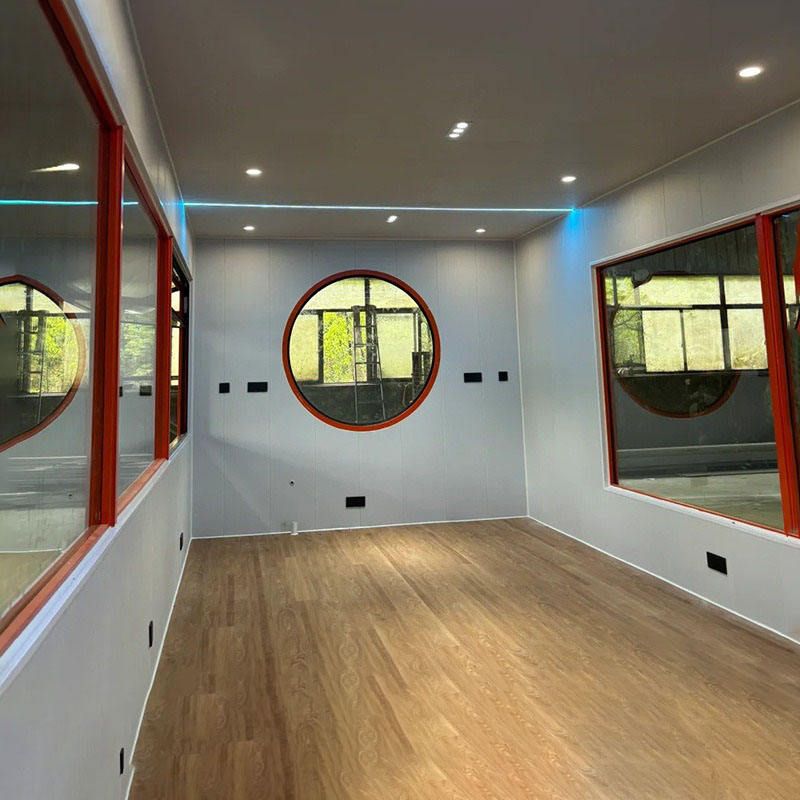
Toilet stall status display is one of the fundamental functions of smart toilets. It uses electronic screens to show the occupancy status of toilet stalls in real-time, with different colors (such as green for vacant and red for occupied) to visually indicate the status, helping users quickly locate available stalls and reducing waiting times. This function is particularly suitable for service areas with high passenger traffic, significantly improving toilet efficiency.
Intelligent device collaboration is key to ensuring a good toilet environment. Smart toilets are equipped with smart locks, ammonia gas detection sensors, and smart cleaning systems: smart locks prevent accidental opening or unauthorized entry, enhancing safety; ammonia gas detectors monitor air quality in real-time and automatically trigger ventilation or deodorization equipment when odors exceed standards; smart cleaning systems use sensors to determine the frequency of toilet stall usage and automatically schedule cleaning tasks to ensure hygiene standards are met.
Smart management is achieved through dynamic monitoring via a digital platform. Some service areas have launched smart toilet management systems that integrate functions such as passenger flow statistics, odor index monitoring, warning of low supplies (such as toilet paper and hand soap), and analysis of stall usage duration. The system's back-end automatically assigns tasks based on data, guiding cleaning staff to work precisely, avoiding resource waste, and providing decision support for service area operations.
Diversified services expand the functional boundaries of smart toilets. In addition to basic toilet needs, some toilets integrate navigation services (such as guiding users to other facilities in the service area), food ordering functions (by scanning a code to connect to the service area's catering system), and even provide charging ports, first-aid kits, and other convenience facilities, transforming a single-function space into a comprehensive service node and enhancing travel convenience.
Humanistic design focuses on optimizing user experience details. For example, service areas along the Yellow River in Shanxi Province have installed scenic glass curtain walls in toilets, allowing users to enjoy the Yellow River scenery while using the facilities; some toilets incorporate green plant art installations, soft lighting, and background music to create a warm and comfortable rest environment, upgrading toilets from a "necessary facility" to a "highlight of the journey".
In typical cases, Zhejiang, Jiangsu, and Shandong provinces have achieved full-process digital management through smart toilet platforms, while the Yellow River service area in Shanxi has become a popular tourist attraction due to its scenic design. These practices demonstrate that smart toilets not only upgrade hardware facilities but also significantly improve user experience through technological empowerment, becoming an important direction for modern service area construction.
You may also like

Portable Toilet Eco-Friendly: MOQ, Samples & Quotation Guide
Read More
Top Portable Toilet Color Steel Manufacturers: How to Choose a Factory Partner
Read MorePortable Toilet Picture: Types, Features & Buying Tips
Read More