Semicircular Container Mobile House
Currently, there is no standardized product information directly targeting 'semicircular container mobile houses', but its feasibility can be analyzed through container modification technology and semicircular structural principles.
I. Technical Foundations of Conventional Container Mobile Houses
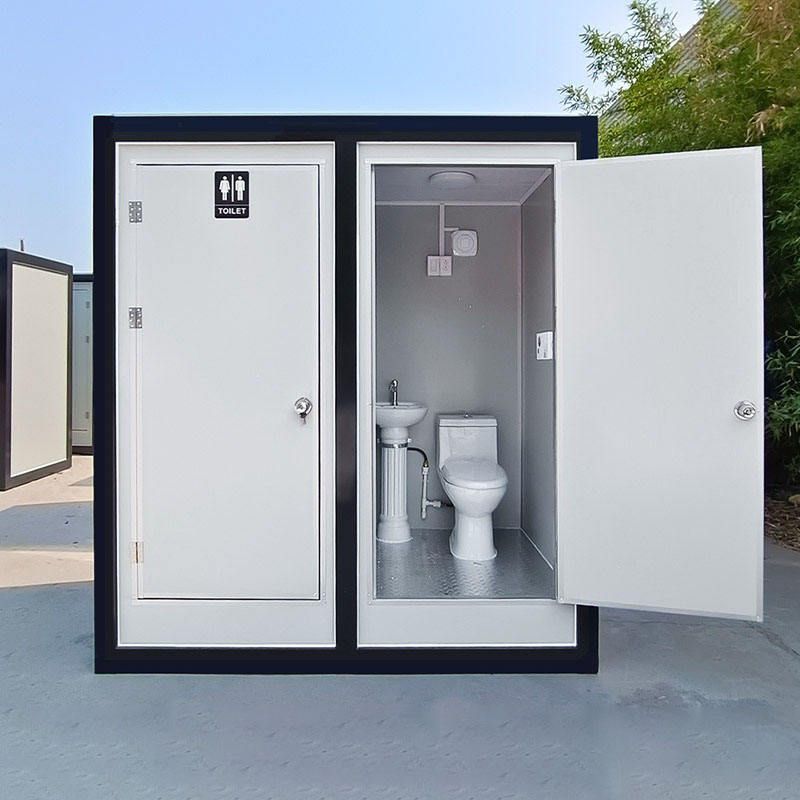
Existing container mobile houses are primarily rectangular in structure, modified from standard containers (such as 20-foot and 40-foot units). They feature modularity, mobility, and rapid assembly. The materials are mostly color-coated steel plates or steel structures, meeting fire prevention, waterproofing, and earthquake resistance standards, with a service life of over 10 years. For example, Falilai residential containers adopt a fully welded structure, providing Class A fire prevention, corrosion resistance, and sealing performance, suitable for construction site dormitories, field operation housing, and other scenarios.
II. Design Feasibility of Semicircular Structures
Structural Stability
Semicircular structures disperse pressure through the arch principle, requiring steel strength to meet requirements. Referring to semicircular arch bridge designs (such as an arch bridge with a radius of 5 meters), their load-bearing capacity is verified through geometric calculations. Container modifications can borrow similar principles, using curved steel beams or reinforced frames to support the semicircular top.Space Utilization
Semicircular structures can increase vertical space height, suitable for scenarios requiring large spans or high clearances (such as exhibition halls and temporary warehouses). However, it is necessary to balance internal usable area with external volume to avoid transportation constraints.Waterproofing and Sealing
The semicircular top requires special treatment for drainage issues, adopting an integrated molded roof or adding drainage channels, combined with the container's original sealing technology (such as rubber strips and welding processes) to ensure moisture resistance.
III. Modification and Customization Plans
Existing Product Adjustments
Some manufacturers offer customization services (such as Guangzhou Jinge Steel Structure Engineering Co., Ltd.), which can modify the shape of standard containers to semicircular forms, but additional design fees and mold costs are required.Modular Combination
Larger spaces can be formed by splicing multiple semicircular units, similar to the combination mode of 'flat-roof mobile houses' (such as the prefabricated modular houses of Suzhou Luowei Company), but it is necessary to solve the sealing and connection strength issues of curved interfaces.
IV. Application Scenarios and Limitations
- Suitable Scenarios: Leisure villas in tourist areas, temporary exhibition halls, emergency rescue housing, and other scenarios with special requirements for appearance.
- Limiting Factors: The transportation difficulty of semicircular structures is higher than that of rectangular containers, requiring professional lifting equipment; customization costs are higher, possibly exceeding the price range of conventional products (for example, ordinary container houses cost about 200-300 yuan per square meter, while semicircular customized versions may double).