
Semi-finished Prefabricated Housing
Semi-finished prefabricated housing is a form of construction that involves the industrial production of building components and their on-site assembly. It offers advantages such as shortened construction periods and reduced pollution. The main types include panel-assembled, box-assembled, and frame-assembled structures, with technologies encompassing prefabricated concrete structures and steel structures.
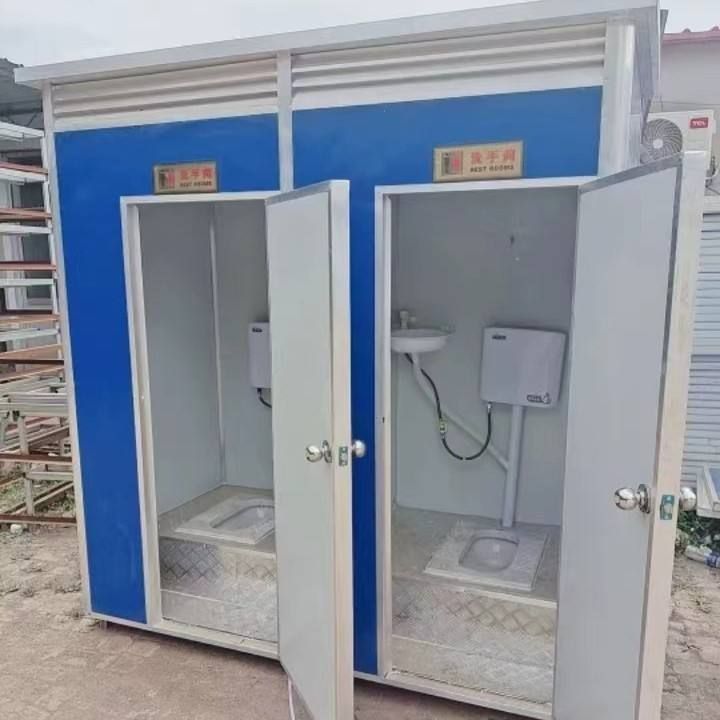
Main Types and Technical Characteristics The core of semi-finished prefabricated housing lies in 'prefabrication' and 'assembly'. Its technical system is divided into two categories:
- Prefabricated Concrete Structures: Based on prefabricated concrete components (such as beams, slabs, walls, and columns), these structures are connected through on-site pouring to form an integral whole. Such houses are highly stable and suitable for multi-story buildings, but they have a large transportation weight and require high precision in on-site construction.
- Steel Structures: Supported by lightweight steel frames and paired with prefabricated wall panels, floor slabs, and other components, these structures are characterized by their light weight and fast construction speed. Steel-structured houses are more capable of achieving large-span spaces, and their components can be recycled, offering superior environmental performance.
According to the assembly method, semi-finished prefabricated housing can be divided into three main types:
- Panel-assembled: Primarily consisting of prefabricated wall panels, floor slabs, and other planar components, these are connected through bolts or welding and are suitable for low-rise residential buildings or temporary structures.
- Box-assembled: Entire rooms (such as bedrooms and kitchens) are prefabricated as independent 'box' modules, which are then transported to the site and directly spliced together. This approach offers high integration and short construction periods.
- Frame-assembled: Using prefabricated frames (such as steel or concrete frames) as the structural main body, prefabricated enclosure components are then installed. This method offers strong flexibility and can adapt to complex architectural forms.
Advantages and Application Scenarios The advantages of semi-finished prefabricated housing are significant:
- Shortened Construction Period: Factory-prefabricated components can be produced in parallel, greatly reducing on-site assembly time. For example, the construction period of modular buildings can be shortened by more than 60%.
- Controllable Quality: Factory production reduces human errors, ensuring high dimensional accuracy of components and superior quality stability compared to traditional cast-in-place construction.
- Environmental Protection and Energy Efficiency: On-site wet operations are reduced, lowering dust and noise pollution. Components can be reused, meeting green building standards.
- Strong Adaptability: Unaffected by seasons (e.g., concrete box houses can be constructed in winter), and modular design facilitates later renovation or expansion.
Market Products and Prices Currently, there are various semi-finished prefabricated housing products on the market:
- Mobile Villa Modular Integrated Housing in Suining, Xuzhou, Jiangsu: Adopting a steel structure frame and prefabricated wall panels, it costs approximately 368 yuan per square meter and is suitable for vacation villas or temporary residences.
- Concrete Box Houses in Baigou New City, Baoding, Hebei: Using prefabricated concrete boxes as units, it costs approximately 255 yuan per square meter. With high area utilization, it is commonly used for rural self-built houses or storage facilities.
Summary Semi-finished prefabricated housing combines industrial production with on-site assembly, achieving a dual improvement in construction efficiency and quality. Its technical classification is clear, its advantages are prominent, and mature products have been applied in various scenarios, making it an important direction for the future development of building industrialization.



