Back to blog
Article
Self-made Container House Accessories
Admin September 15, 2026
To make self-made container house accessories, you need to prepare basic materials such as containers, steel, thermal insulation materials, interior and exterior wall panels, doors and windows, and master welding and assembly techniques. You can also purchase professional accessories to assist in the production.

I. Basic Materials
- Container: As the main body of the house, you can choose standard 20-foot or 40-foot shipping containers. Check the structural integrity of the container to ensure there is no severe rust or deformation.
- Steel: Used for frame reinforcement, commonly used angle steel, channel steel, and square tubes. For example, 14050 channel steel is welded around the chassis, and 55*2.0 square steel is fully welded for the columns and roof ring beams to ensure support strength.
- Thermal Insulation Materials: To cope with extreme temperatures, materials such as polyurethane foam, rock wool, or glass wool need to be filled to prevent deformation of the steel structure due to thermal expansion and contraction and to improve living comfort.
II. Decorative and Functional Materials
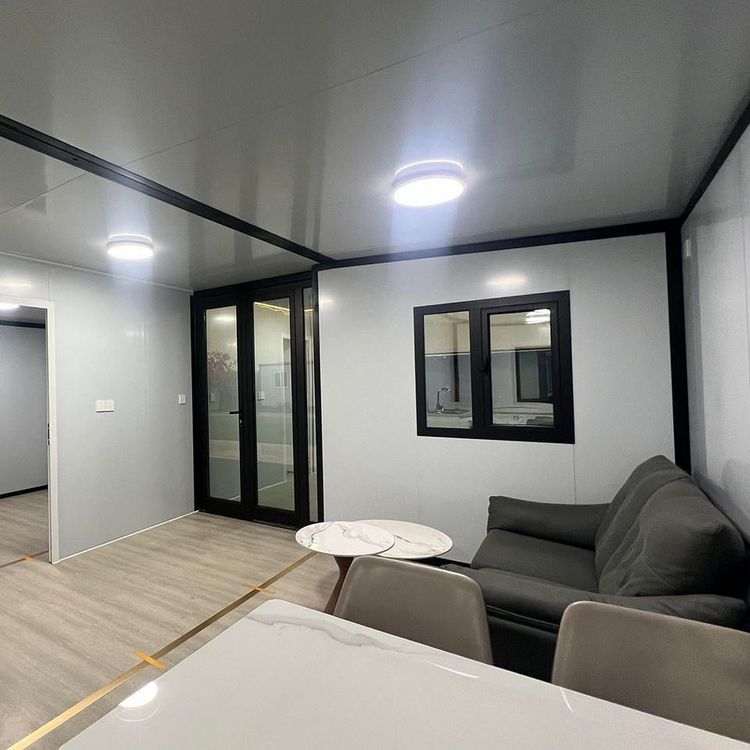
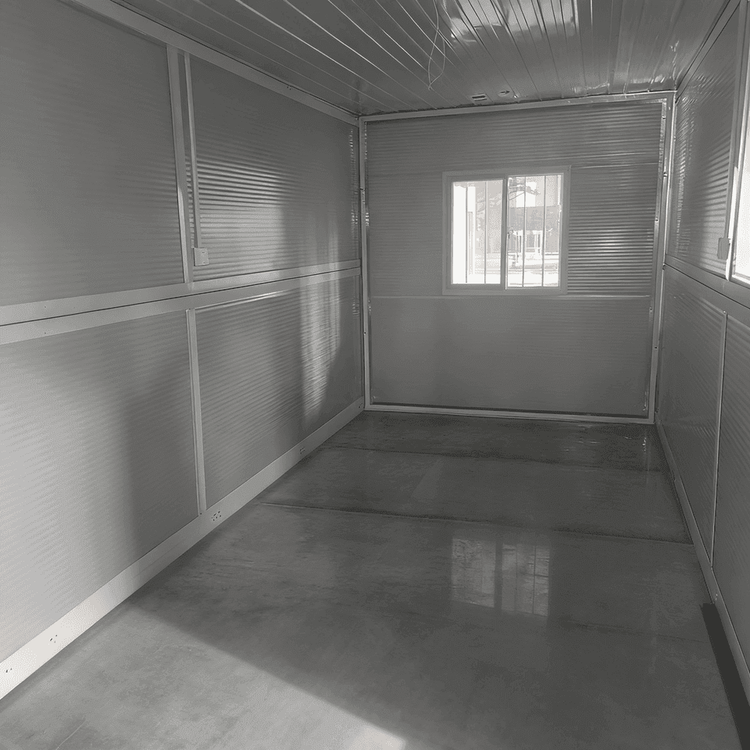
- Interior and Exterior Wall Panels: For interior decoration, options include color-coated steel plates, calcium silicate boards, or cement fiber boards. For the exterior, color-coated steel plates or anti-corrosion wood can be used, balancing aesthetics and durability.
- Doors and Windows: Aluminum alloy sliding windows, security doors, and skylights are used to ensure ventilation and safety. Some designs may add soundproofing materials or double-glazed windows to improve sound insulation.
- Flooring and Ceiling: The chassis is laid with 18mm construction templates or moisture-proof flooring leather, and a ceiling panel is installed on the roof to hide pipelines and enhance thermal insulation.
III. Professional Accessories and Tools
- Connectors: Screws, corner pieces, lifting heads, and other accessories are used for frame assembly. Some products support screw fixation without welding, simplifying the construction process.
- Sealing Materials: Glass curtain wall waterproof glue is used to seal the joints of the roof panels, with waterproof performance 5-6 times stronger than ordinary glue, extending the service life of the house.
- Custom Equipment: For mass production, you can purchase column and beam forming press machines to automatically press frame components, improving efficiency and precision.
IV. Key Points of Production Techniques
- Welding Techniques: The columns should be fully welded to the chassis and roof ring beams to ensure structural stability. When welding channel steel as the main crossbeam, the horizontal error should be kept ≤3mm.
- Assembly Sequence: First, weld the steel frame chassis, then install the columns and roof ring beams, followed by assembling the color-coated steel wall panels and roof panels. Finally, lay the flooring, install doors and windows, and electrical wiring.
- Safety Regulations: During construction, wear protective equipment and avoid welding in humid environments. Use insulated tools when operating electrical wiring to prevent electric shock risks.