
Seismic Resistance Level of Container Houses
The seismic resistance level of container houses varies depending on their design grade and product differences. Some high-quality products can reach a seismic resistance grade of 9, withstanding an earthquake intensity of 8 degrees (equivalent to an earthquake of magnitude 6.4 or above). Conventional products can typically resist earthquakes of magnitude 7 or below while maintaining structural stability.
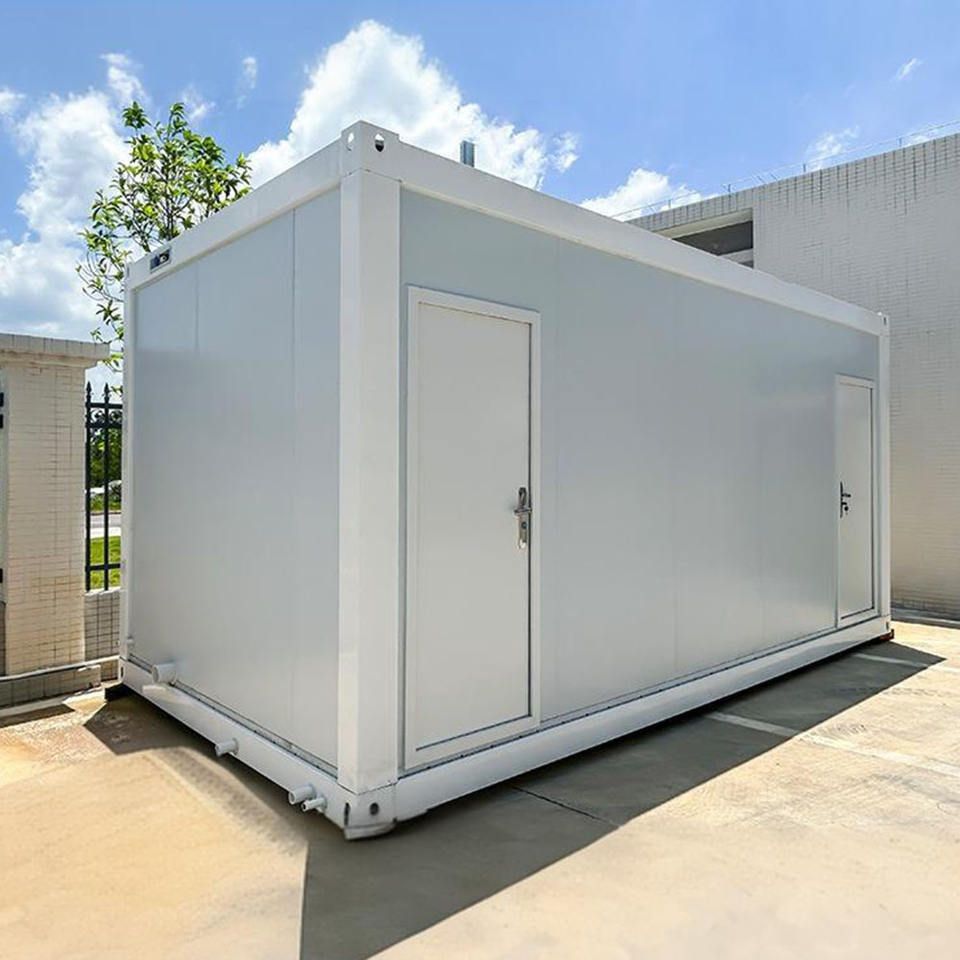
Differences in Seismic Resistance Capabilities Across Design Grades
The seismic performance of container houses is closely related to their structural design, material selection, and manufacturing processes. Some high-quality products achieve a seismic resistance grade of 9 by optimizing structural frames, increasing the strength of connection nodes, and using high-strength steel. This standard is classified based on China's "Code for Seismic Design of Buildings" (GB50011-2010), corresponding to an earthquake intensity of 8 degrees (i.e., the energy released by the earthquake is equivalent to the destructive force of an earthquake of magnitude 6.4 or above). For example, the quick-assembly container series from Suzhou Zhongnan Steel Structure Co., Ltd. has undergone rigorous structural calculations and experimental verification, achieving a seismic resistance grade of 8, meeting national regulatory requirements. The conventional container houses from Harbin Xinhu Construction Engineering Co., Ltd. also claim to withstand earthquakes of magnitude 8, indicating that their structures have high load-bearing capacity under lateral loads (such as seismic waves).
Seismic Performance of Conventional Products
For container houses without special reinforcement design, they can typically maintain structural integrity and stability during earthquakes of magnitude 7 or below. These houses effectively disperse seismic energy through rigid connections of the basic frame and reasonable layout of wall materials, preventing local damage from causing overall collapse. However, it should be noted that seismic resistance is related to both earthquake intensity (the degree of damage to the ground and buildings caused by the earthquake) and earthquake magnitude (the amount of energy released by the earthquake). The intensity of a magnitude 7 earthquake may vary in its destructive effects due to differences in geological conditions, so the actual seismic performance needs to be evaluated in combination with specific scenarios.
Key Factors in Seismic Design
The improvement of seismic performance in container houses mainly relies on the following technical means:
- Structural Optimization: Adopt rectangular steel tube frames or truss structures, increase lateral supports and diagonal braces to enhance overall stiffness;
- Connection Reinforcement: Use high-strength bolts or welding processes to fix frame nodes, preventing connection failure during earthquakes;
- Material Upgrade: Select Q345 or higher-strength steel to improve the bending and shear resistance of components;
- Foundation Fixation: Securely connect the house to the ground through anchor bolts or concrete foundations to reduce the risk of sliding or overturning.
Practical Application Recommendations
For higher seismic protection, it is recommended to choose products that have been tested and certified by professional institutions, and clarify their seismic resistance grades and applicable earthquake intensity ranges. Additionally, the geological conditions of the area where the house is deployed (such as soft soil or rocky foundations) will also affect seismic performance, requiring comprehensive evaluation based on site survey results.



