
Seismic Performance of Prefabricated Assembly Houses
The seismic performance of prefabricated assembly houses varies significantly depending on their type and technical standards. Generally, modular and panel-assembled houses exhibit stronger seismic performance, while prefabricated panel houses are relatively weaker.
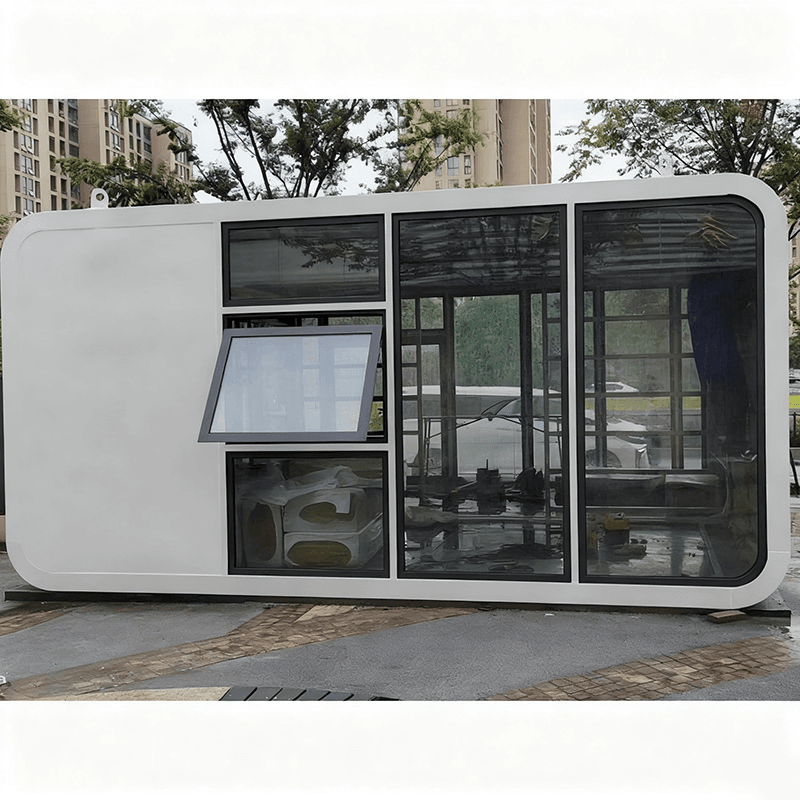
Outstanding Seismic Performance of Modular Prefabricated Houses
Modular prefabricated houses are produced through standardized factory production of housing modules, offering significant advantages in seismic design. For example, housing modules produced by Sichuan Huagou Residential Industry Co., Ltd. can meet seismic requirements of magnitude 8, a high standard in China's seismic fortification that is suitable for earthquake-prone regions. A more typical example is the fully PC-assembled new Sichuan-style Chinese courtyard house built in Shoubao Town, Qianwei County, Leshan City, whose structure passed a simulated magnitude 9 earthquake test, verifying the stability of modular buildings under extreme seismic conditions. The core of seismic resistance in these houses lies in the rigid connection technology between modules, which forms an overall load-bearing system through high-strength bolts or welding, effectively avoiding the risk of collapse caused by component separation in traditional buildings during earthquakes.
Limited Seismic Performance of Prefabricated Panel Houses
The seismic capacity of prefabricated panel houses is greatly influenced by their construction era and technical standards. Old-style prefabricated panel houses built before the 1980s, with simple connection node designs, can only withstand magnitude 6 earthquakes; newly built prefabricated panel houses have improved their seismic capacity to magnitude 7 through enhanced node construction, but this is still lower than that of reinforced concrete cast-in-place houses. The fundamental flaw lies in insufficient structural integrity—prefabricated panels are like 'building blocks', and their connections are prone to failure during earthquakes, leading to wall cracking or floor slab detachment. For example, during the Wenchuan earthquake, some prefabricated panel houses suffered severe damage due to connection node failure, confirming the vulnerability of this structure under strong earthquakes.
Good Seismic Performance of Panel-Assembled Buildings
Panel-assembled buildings use lightweight and high-strength panels (such as autoclaved aerated concrete panels and metal sandwich panels) as enclosure structures, combined with steel or concrete frames to form a composite load-bearing system. Their advantages include: Material properties—panels are lightweight, reducing seismic forces; Structural toughness—steel or concrete frames provide lateral stiffness, while panels absorb seismic energy through flexible connections; Integrity—continuous load-bearing surfaces are formed through cast-in-place nodes or mechanical connections, preventing the spread of local damage. These buildings are widely used in earthquake-prone countries like Japan and New Zealand, and practical applications show that their seismic performance is close to or equivalent to that of traditional cast-in-place buildings.
Summary
When selecting prefabricated assembly houses, it is necessary to match the structural type according to the seismic risk level: modular or panel-assembled buildings are preferred in high-intensity areas, while improved prefabricated panel houses can be considered in medium- and low-intensity areas. At the same time, strict adherence to standards such as the 'Technical Standard for Prefabricated Concrete Buildings' is essential to ensure that key aspects such as connection nodes and structural layouts comply with seismic design requirements.



