
Second-Hand Container House Refurbishment
There are multiple feasible ways to refurbish second-hand container houses, which can be designed according to different needs and budgets. Common cases include transforming them into villas, studios, or elevated residences.
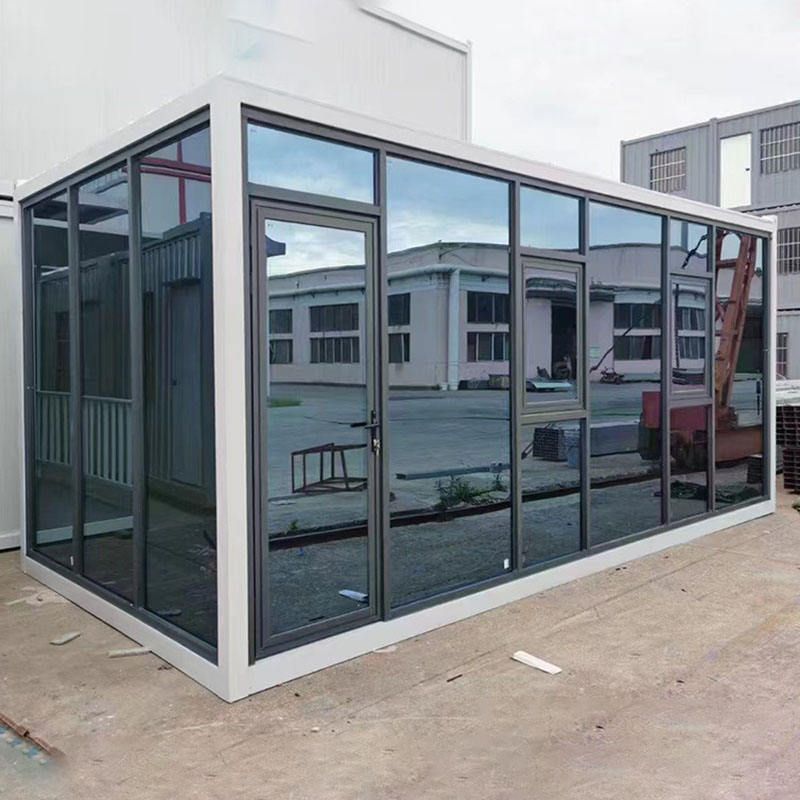
1. Transformation into a Villa
In some cases, users purchase two second-hand containers at a low price and gradually transform them into a dream villa over five years. The renovation process covers several basic projects:
- Interior Decoration: Paint the interior walls of the containers to enhance aesthetics; install lighting fixtures and household appliances to meet daily needs; lay floors and assemble cabinets to improve functional zoning.
- Space Optimization: Use leftover iron sheets from cutting to create decorative elements, enhancing the design sense; replace traditional iron doors with sliding doors to save opening space and improve practicality.
- Material Reuse: Through creative design, transform waste materials into decorative or functional components to reduce renovation costs.
2. Transformation into a Studio
For the renovation of seventh-hand containers, the focus is on solving issues related to insulation, soundproofing, and structural stability:
- Structural Reinforcement: Use wood and jacks to support the bottom of the containers to ensure overall stability and prevent deformation due to long-term use.
- Insulation Treatment: Attach custom foam boards to the interior walls to form an insulation layer, reducing heat exchange between the interior and exterior; cover the exterior with wooden soundproof boards to protect the foam boards and enhance soundproofing.
- Sealing Optimization: Seal the gaps around doors and windows to prevent air and water leakage, further improving insulation and soundproofing performance; install sliding doors to save space and facilitate use.
3. Transformation into an Elevated Residence
The case of the 'Floating House' demonstrates an advanced renovation direction for container houses, emphasizing environmental protection and sustainability:
- Elevated Design: Use recycled shipping containers to build an elevated structure, allowing the building to float among the trees, reducing ground damage while improving ventilation and moisture resistance.
- Material Recycling: 80% of the materials come from recycling, such as using demolished wood for interior walls and ceilings to reduce resource consumption; design a greening system on the roof to enhance ecological benefits.
- Resource Recycling: Integrate a rainwater harvesting and utilization system, reuse waste materials in construction, and minimize material waste to the greatest extent, reflecting the concept of green architecture.
Key Points for Renovation
Regardless of the renovation direction, attention should be paid to structural safety, functional completeness, and environmental protection. Second-hand containers may have rust or deformation issues, requiring comprehensive inspection and reinforcement before renovation; interior decoration should meet residential or work standards, such as the layout of water and electricity lines and ventilation design; material selection can prioritize recycled or renewable resources to reduce environmental impact.



