
Design of Portable Toilets for Scenic Spots
The design of portable toilets for scenic spots focuses on modularity, rapid deployment, and flexible relocation, while also considering hygiene, environmental adaptability, and user convenience. It is suitable for both temporary events and long-term scenic spot scenarios.
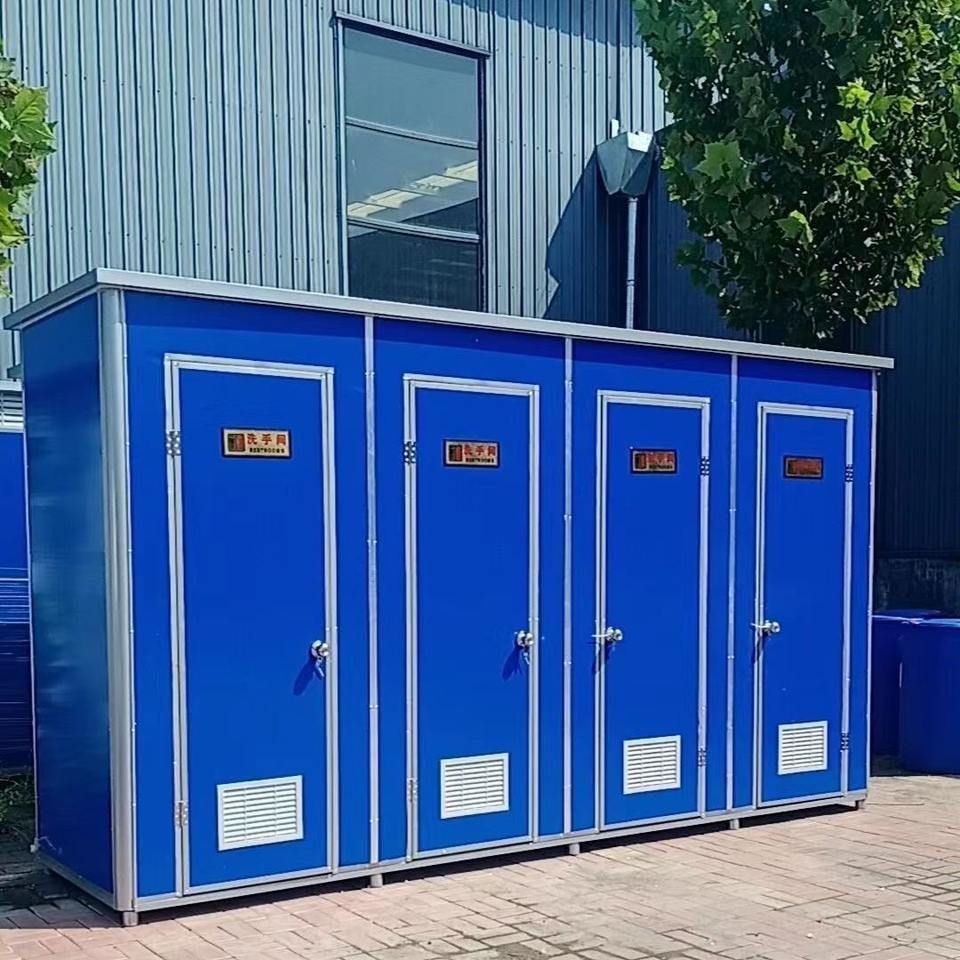
Structural Design Features
Lightweight and Durability
The main frame is made of lightweight metal materials (such as aluminum alloy), with an outer layer covered in anti-corrosion panels (such as fluorocarbon-painted steel plates). The overall dimensions are typically 1000×1000×2400 millimeters, weighing about 98 kilograms, facilitating easy transportation and manual installation. Some models use thicker panels (such as 2.5-millimeter fluorocarbon-painted steel plates) to enhance wind and impact resistance, adapting to complex outdoor environments.Modular Combination
It supports single-unit or multi-unit series combinations. Single units can be independently deployed at temporary event sites, while multi-unit series combinations (such as a 4-stall public toilet) can meet the needs of large scenic spots for crowd distribution. Modules are connected via buckles or bolts, eliminating the need for foundation construction. They can be directly placed on hardened ground for immediate use, shortening the construction period.Optimized Functional Zoning
The internal configuration is standardized: a 300-liter built-in wastewater tank paired with a flush toilet collects sewage through a gravity drainage system, reducing odor diffusion. Basic accessories include mirrors, coat hooks, and paper towel holders, with some models featuring independent storage spaces (such as small cabinets). The Apple Cabin design further enhances the user experience, with a dual-color exterior (such as wood grain + solid color), complete signage, a double-door structure for improved insulation, a handwashing area equipped with double basins and a vanity mirror, and separate male and female sections each with 2-4 partitioned stalls.
Technical Advantages
Improved Hygiene Standards
The sealed wastewater tank and flush system form a closed loop, with a 300-liter capacity supporting continuous use by a single unit for 3-5 days (based on an average of 20 uses per day), reducing cleaning frequency. Some models are equipped with biodegradation technology, using microorganisms to decompose feces, further reducing sewage discharge.Enhanced Environmental Adaptability
Anti-corrosion panels and metal frames resist rain erosion and UV aging, extending the service life to over 10 years. Thickened exterior walls (such as fluorocarbon-painted steel plates) adapt to temperature variations from -30℃ to 50℃, meeting the needs of high-altitude or extremely cold regions.Flexible Relocation and Reusability
The modular structure supports rapid disassembly and reassembly, with single-unit relocation requiring only 2-3 people, suitable for seasonal scenic spots or temporary events (such as music festivals and exhibitions). The equipment can be reused, reducing long-term costs.
Application Scenarios
It is suitable for scenic spots, construction sites, post-disaster relief, and other scenarios, especially those with complex terrain (such as mountains and grasslands) or requiring short-term additions of sanitation facilities. Its characteristic of requiring no approval and being ready for immediate use significantly improves sanitation efficiency in temporary scenarios.



