
Application Cases of Mobile Toilets in Scenic Spots
Typical application cases of mobile toilets in scenic spots include Benxi Scenic Spot, Putian Scenic Spot, and a scenic spot in Guangdong, whose innovative practices provide replicable solutions for the industry.
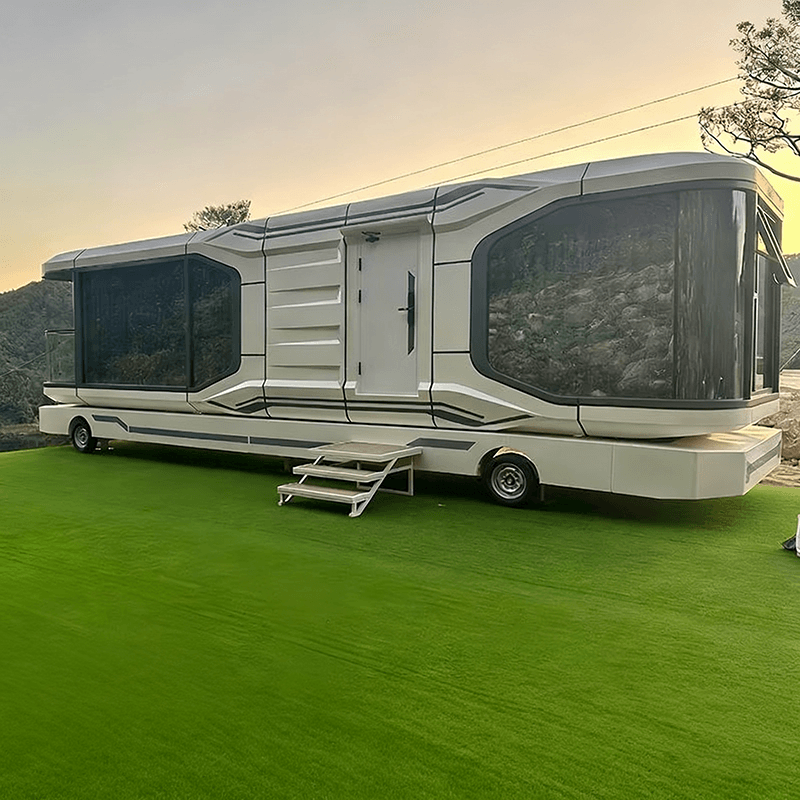
Benxi Scenic Spot: Combination of Modular Leasing and Low-Carbon Management
Benxi Scenic Spot adopts a modular mobile toilet leasing solution, with core advantages in flexible deployment and low-carbon treatment. The toilet structure employs a functional unit separation design. For example, the water circulation treatment unit can be independently placed outside, and the waste collection module supports rapid replacement, facilitating dynamic adjustment of positions according to tourist flow, seasonal changes, and the heat distribution within the scenic spot. Some toilets are equipped with low-carbon treatment systems that biologically degrade or seal-treat excreta, reducing transportation and secondary pollution. Built-in sensors can monitor usage status, the stock of sanitary products, and air quality in real-time, with data synchronized to the management backend for precise scheduling of cleaning and maintenance. For example, during the peak tourist season, the scenic spot can increase the number of toilets in high-traffic areas based on real-time data to avoid resource waste.
Putian Scenic Spot: Full-Process Optimization and Smart Services
Putian Scenic Spot enhances the tourist experience during the peak season through scientific planning of leasing locations, optimization of equipment configuration, and strengthening of management and maintenance. One to two mobile toilets are set up every 500 meters in key areas such as entrances/exits and popular attractions, accompanied by signage for guidance. Additional facilities such as barrier-free restrooms and baby care rooms are added, equipped with basic supplies like sinks and paper towels, with some introducing eco-friendly toilets. In terms of management, a timed cleaning mechanism is established (comprehensive cleaning every 2-3 hours), with increased frequency during peak hours, and a "scan-to-report-repair" service is launched, with a response time of within 15 minutes. In terms of smart services, real-time monitoring of tourist flow is conducted, and when the queue exceeds three people, an automatic prompt is given to add temporary toilets or adjust locations, while toilet status is pushed through official accounts. Humanized designs include the provision of hooks and storage shelves, hot water for hand washing in winter, and fans or sunshades in summer.
A Scenic Spot in Guangdong: Practice and Improvement of Tidal Toilets
A scenic spot in Guangdong has introduced tidal toilets, which dynamically adjust the space ratio between male and female restrooms through movable partitions to alleviate the problem of long queues for female restrooms during peak hours. Initially, due to the easily movable partition signs, there was confusion in area identification, leading to privacy and safety issues. The scenic spot promptly made rectifications: replacing the signs with fixed ones, standardizing the tidal switching process, and strengthening employee training and tourist guidance. This case highlights the need for mobile toilet design to balance functional flexibility and usage safety, providing a reference for the subsequent optimization of tidal toilets.



