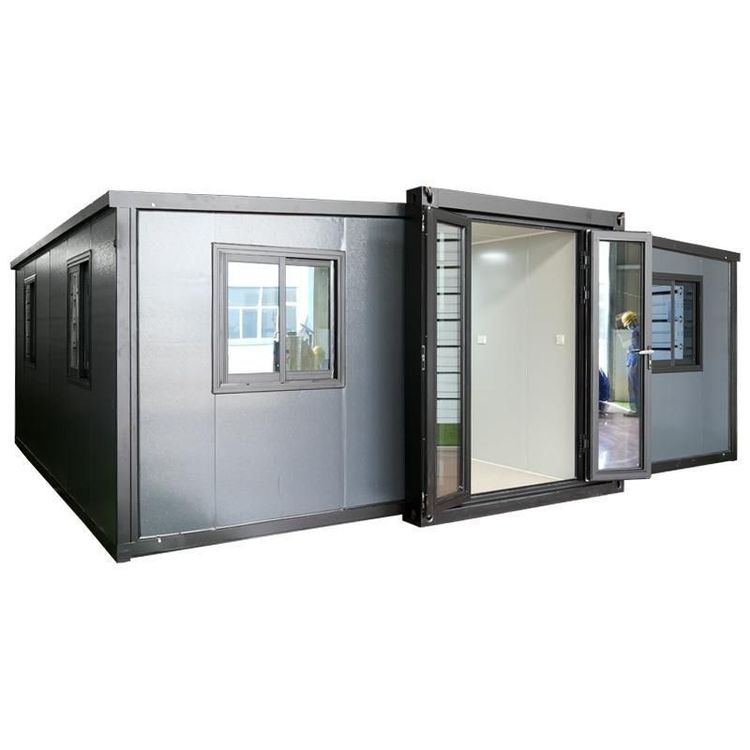
Temporary Mobile Toilets in Scenic Areas
Temporary mobile toilets in scenic areas include two types: mobile toilets and 'tide toilets'.

Mobile Toilets: These can be moved as a whole and can be placed at locations with fixed or temporary needs, suitable for places such as stations, docks, and tourist attractions. They generally consist of a fecal sewage storage tank (or fecal sewage treatment device), floor, sanitary ware, walls, washing facilities, water tank, roof, and moving device. Based on structural form, they can be divided into single-structure mobile toilets and composite-structure mobile toilets; based on moving method, they can be divided into hoisting and handling mobile toilets, and powered and towed mobile toilets; based on sewage treatment method, they can be divided into water-flush and waterless suction mobile toilets, circulating water-flush mobile toilets, and dry-packing mobile toilets. Their characteristic is that they can be conveniently transported to any place where toilets need to be set up and can be used repeatedly. They have the advantages of being movable, combinable, and easy to transport.
'Tide Toilets': By setting up a number of 'gender-neutral universal toilet stalls' and using movable signs or lockable sliding doors, the usage rights are dynamically adjusted according to real-time pedestrian flow to cope with tourist peaks. It is a local practice of public toilets transitioning from 'construction according to standards' to 'fine management following pedestrian flow'. It uses flexible methods to deal with tourist peaks, being simple, economical, and highly effective. For example, in the Qinghai Heidushan scenic area, after the 'tide toilets' were put into use, the waiting time for women to use the toilets during peak hours was shortened from more than 30 minutes to less than 10 minutes. However, 'tide toilets' have also sparked controversy. The male and female signs at the entrance of a 'tide toilet' in Huizhou West Lake scenic area in Guangdong could be manually toggled, raising concerns about 'getting mixed up or going to the wrong one'. Initially, the scenic area's customer service claimed that the signs were operated exclusively by staff and that there were dedicated guides on site, but a reporter's on-site visit found that there was a lack of management. Subsequently, the scenic area quickly implemented rectification measures. Currently, all the toggled signs of the involved tide toilets have been removed and are about to be replaced with fixed slot-type door plates. At the same time, multiple measures will also be introduced to improve the long waiting times for women to use the toilets during holidays.