
Portable Toilets for Scenic Areas
Portable toilets for scenic areas are public restroom facilities that can be moved as a whole and flexibly deployed. They feature modularity and reusability, making them suitable for both fixed and temporary demand scenarios.
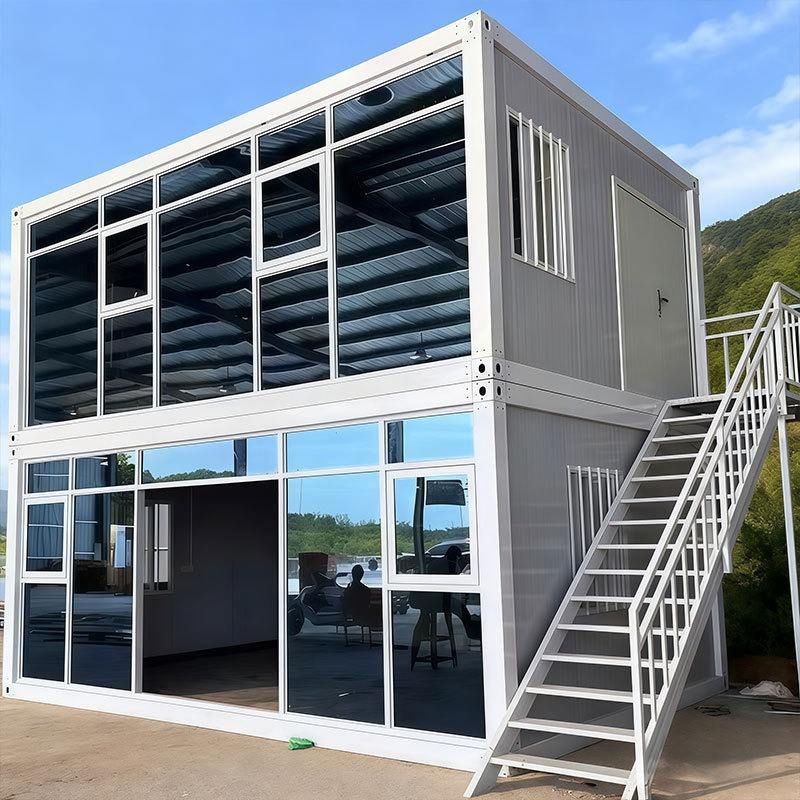
Structural Composition and Classification
Portable toilets for scenic areas typically consist of modules such as fecal sewage storage tanks (or disposal units), floor slabs, sanitary fixtures, walls, washing equipment, water tanks, roofs, and mobile devices. Based on structural form, they can be classified into single-unit structures (independent single rooms) and composite structures (multi-room combinations). According to mobility methods, they are divided into lifting/handling types (requiring manual or mechanical handling) and powered/trailer types (equipped with their own power or capable of being towed). In terms of sewage treatment methods, they are categorized as flush types (requiring a water connection), non-flush suction types (relying on vacuum sewage suction trucks for cleaning), recirculating flush types (where sewage is purified and reused), and dry-pack types (where feces are collected in biodegradable bags without the need for flushing).
Functional Characteristics and Advantages
Their core advantages lie in mobility and flexibility: they can be quickly transported to demand points such as scenic areas and temporary event venues, and the number or combination form can be adjusted according to foot traffic (e.g., pointed-roof models with rain-proof corridors, accommodating both genders and shower functions). Additionally, their reusability significantly reduces construction costs and avoids resource waste associated with the demolition of traditional toilets. Some upgraded models (such as urban smart public toilet stations) incorporate Internet of Things (IoT) technology, featuring smart functions like facial recognition for paper dispensing and automatic sensor flushing, as well as additional modules like nursing rooms and third-gender restrooms to meet diverse needs.
Application Scenarios and Adaptability
They are suitable for scenarios with complex terrain or short-term use, such as mountainous scenic areas, music festivals, and construction sites. The prefabricated construction method allows for production to installation in just a few weeks, with minimal impact on the surrounding environment during construction. Meanwhile, customized water supply, drainage, and power solutions can be tailored to site conditions, such as using dry-pack types in areas without a water source and selecting low-energy-consumption equipment in areas with insufficient power, demonstrating strong environmental adaptability.



