
Configuration of Portable Toilets in Scenic Areas
Configuring portable toilets in scenic areas is an important measure to meet tourists' toilet needs and enhance public service standards, with designs that need to balance functionality, environmental protection, and landscape harmony.
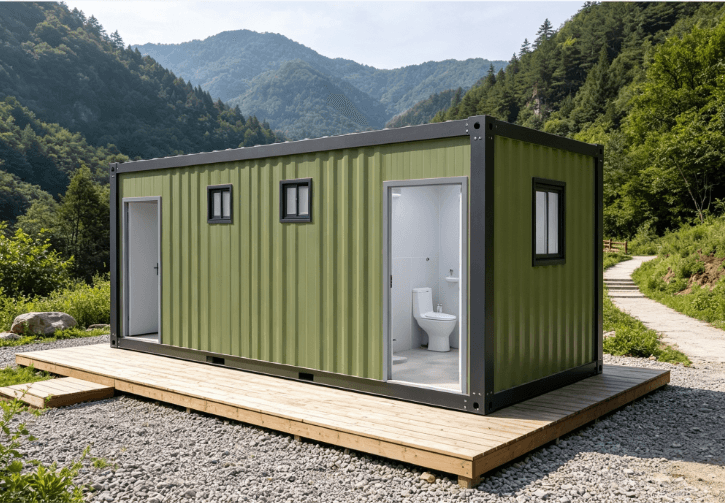
I. Core Features of Portable Toilets
Portable toilets (Portable toilet) are sanitary facilities that can be moved as a whole and flexibly deployed, suitable for temporary or fixed-demand locations such as tourist attractions. Their core advantages include:
- Portability and Convenience: Utilizing lightweight materials (such as aluminum alloy and high-strength plastics) and modular design, they can be quickly transported by vehicles to any location within the scenic area, meeting toilet demands during peak periods or in remote areas.
- Economic Durability: With a sturdy structure and low maintenance costs, they can be repeatedly disassembled and reused, making them suitable for scenic areas with long-term or seasonal operations.
- Integrated Environmental Technologies: Some models employ waterless flushing, microbial degradation, and other technologies to reduce water consumption and pollution emissions. For example, microbial treatment systems decompose waste into harmless substances, achieving ecological circulation.
II. Design Principles and Functional Optimization
The design of portable toilets should adhere to the following principles:
- Portable Convenience: The overall structure is lightweight and equipped with wheeled or lifting devices for easy manual or mechanical handling.
- Environmental Adaptability: Design adjustments are made based on the scenic area's climate conditions, such as rain-proof canopies, non-slip floors, and ventilation systems, to enhance user comfort.
- Landscape Harmony: The appearance integrates with the scenic area's style, commonly featuring cottage-style, antique-style, or rustic designs. For example, rustic-style toilets have thatched roofs, paired with rain-proof areas and public sinks, offering both practicality and aesthetics.
- Humanized Functions: In addition to basic sanitary facilities, some toilets include partitions, cosmetic mirrors, barrier-free access, and other features to meet the diverse needs of tourists.
III. Technological Upgrades and Public Service Value
Since China launched the "Toilet Revolution" in 2015, the technology and application of portable toilets have continuously evolved:
- Smart Upgrades: Sensors are introduced to monitor usage frequency and air quality, automatically adjusting ventilation and lighting to improve management efficiency.
- Cultural Integration: Through ethnic patterns, traditional architectural forms, and other designs, toilets serve as windows for showcasing the scenic area's culture.
- Eco-Friendliness: The promotion of water-saving flushing systems or waterless technologies reduces interference with the natural environment, supporting sustainable development.
Portable toilets effectively address toilet challenges in scenic areas through flexible deployment, environmental technologies, and humanized design, becoming an important carrier for upgrading public services.



