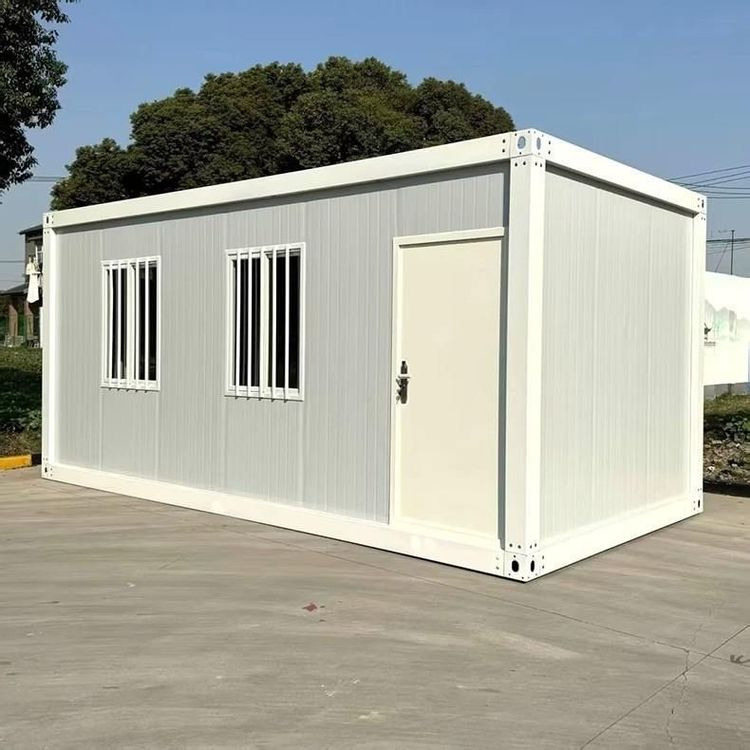
Practicality of Mobile Toilets in Scenic Areas
Mobile toilets in scenic areas offer high practicality, mainly reflected in the following aspects:

Wide range of applicable scenarios: Mobile toilets in scenic areas can meet the toilet needs of various locations, especially suitable for different areas within the scenic spots. Whether it is the entrance of attractions with concentrated tourists, popular check-in points, or relatively remote rest areas on hiking trails, they can be flexibly arranged according to actual needs. In addition, their application scenarios also cover public places such as stations, docks, villa areas, newly built residential areas, large construction sites, squares, and bustling commercial streets, demonstrating strong environmental adaptability.
Convenient mobility and flexible adjustment: Mobile toilets can be quickly transported to the target location through methods such as hoisting, towing, or power-driven movement, and support repeated disassembly and assembly for use. This characteristic enables them to dynamically adjust their positions according to the distribution changes of tourist traffic in the scenic area. For example, during holidays, the toilets can be concentrated in popular areas, and on weekdays, they can be dispersed to other needed locations, effectively improving resource utilization.
Diverse functions and customization options:
- Structure and mobility methods: They are divided into single-unit structures, composite structures, as well as hoisting-type, power-towing-type, etc., to adapt to different terrains and transportation conditions.
- Sewage treatment technologies: Various solutions are provided, including water-flushing, waterless suction-type, circulating water-flushing, and dry-packing types. In water-scarce areas, waterless packing toilets can be used, and in areas without sewage pipelines, integrated sewage treatment equipment can be equipped, balancing environmental protection and practicality.
- Integration of intelligent systems: Some mobile toilets incorporate Internet of Things technologies, equipped with functions such as face recognition for paper dispensing, automatic induction flushing, environmental monitoring, pedestrian traffic statistics, and remote fault alarms. Some products are also equipped with solar photovoltaic panels or rainwater harvesting devices to reduce operational energy consumption.
Rapid construction and environmental friendliness: They adopt a prefabricated construction method, taking only a few weeks from production to installation, with minimal impact on the surrounding environment during construction. Manufacturers can make customized adjustments according to the water supply and drainage and power conditions of the site. For example, in ecologically sensitive areas, low-noise and low-emission construction plans can be adopted to reduce interference with the natural environment.
Optimization of appearance and internal facilities: Manufacturers can provide customized exterior designs such as round, pointed-roof, and bionic shapes, enabling the toilets to harmoniously blend with the scenic landscape of the scenic area and even become characteristic landscape features. The internal facilities are complete, equipped with washbasins, squat toilets, sliding windows, exhaust fans, etc. Some independent single-room toilets also adopt color-blocked wall panel designs to enhance user comfort and aesthetics.