
How to Design Mobile Toilets in Scenic Areas
The design of mobile toilets in scenic areas needs to comprehensively consider factors such as structural form, mobility method, and sewage treatment method, and carry out personalized design based on actual needs.
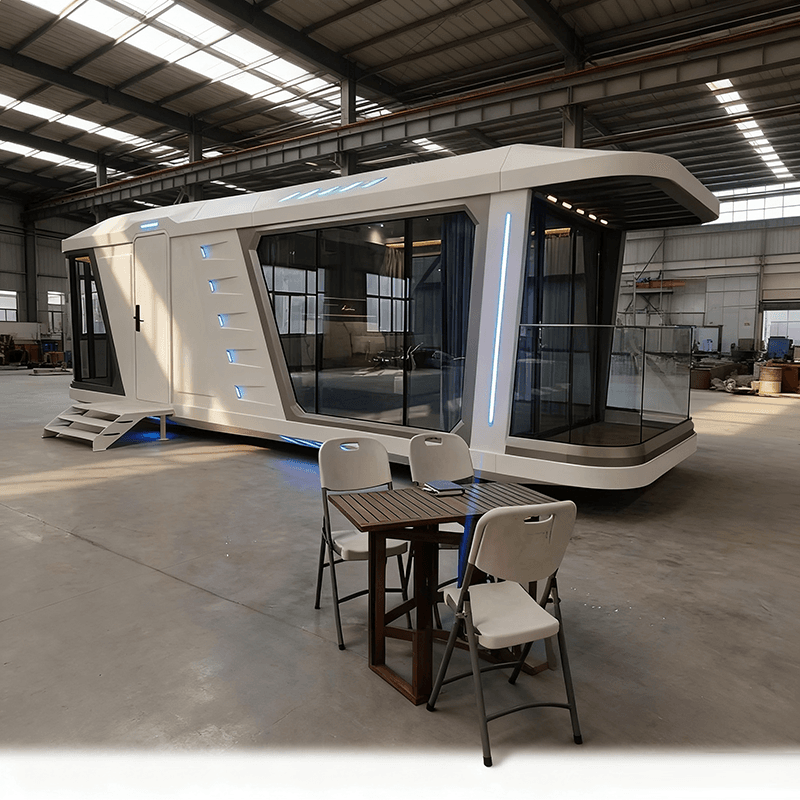
Structural Form
Mobile toilets in scenic areas can be divided into single-structure mobile toilets and composite-structure mobile toilets according to their structural forms. Single-structure mobile toilets are usually smaller in size, suitable for scenic areas with relatively fewer tourists and limited space. Their structure is simple, making them relatively easy to set up and dismantle. Composite-structure mobile toilets are composed of multiple single units and can flexibly adjust their scale according to the tourist flow and site conditions in the scenic area. For example, a modular design can be adopted to combine multiple functional modules such as toilet compartments and hand-washing areas to meet the usage needs of different scenarios.
Mobility Method
According to the mobility method, they can be divided into lifting and handling mobile toilets and powered and towed mobile toilets. Lifting and handling mobile toilets mainly rely on lifting equipment for movement and installation and are suitable for scenic areas where they are not frequently moved or the moving distance is short. Powered and towed mobile toilets have autonomous mobility capabilities or can be moved by vehicle towing, facilitating flexible allocation between different scenic spots, especially suitable for large scenic areas or places that require frequent layout adjustments.
Sewage Treatment Method
According to the sewage treatment method, they can be divided into water-flush and waterless suction mobile toilets and circulating water-flush mobile toilets. Water-flush mobile toilets are equipped with facilities such as squat toilets, hand-washing basins, and fans in the toilet compartments. They flush waste into septic tanks or sewage pipes through water flushing, with relatively good treatment effects, but they require access to a water source and drainage system. Waterless suction mobile toilets use the principle of vacuum suction to collect waste into a fecal storage tank for regular cleaning, without the need for a water source, and are suitable for water-scarce areas or scenic areas with high environmental protection requirements. Circulating water-flush mobile toilets purify and reuse the used water through a sewage treatment system, saving water resources while ensuring the cleanliness and hygiene of the toilets.
Specific Design Cases
- 8-Squat-Position Design: It adopts a container form as a whole, with a total of 8 squat positions. The exterior walls are spliced with real stone paint and Great Wall panels, which are aesthetically pleasing. A double basin is installed in the middle hand-washing area for the simultaneous use of tourists. The men's toilet is equipped with 3 urinals and 4 partitioned squat positions to meet the needs of tourists of different genders.
- Apple Cabin Four-Partition Design: It adopts an apple cabin form as a whole. The exterior walls are painted with thickened fluorocarbon paint, and the color can be customized to harmonize with the scenic area environment. A double basin, a hand-washing cabinet, and a dressing mirror are installed in the hand-washing area to enhance the user experience of tourists. It is divided into male and female sections on the left and right, with two partitioned squat positions in each section, and the layout is reasonable.



