
Mobile Toilet Configuration in Scenic Areas
Mobile toilets configured in scenic areas come in various types and possess multiple characteristics. The following provides an introduction from the perspectives of type, structure, mobility method, sewage treatment method, and overall features:
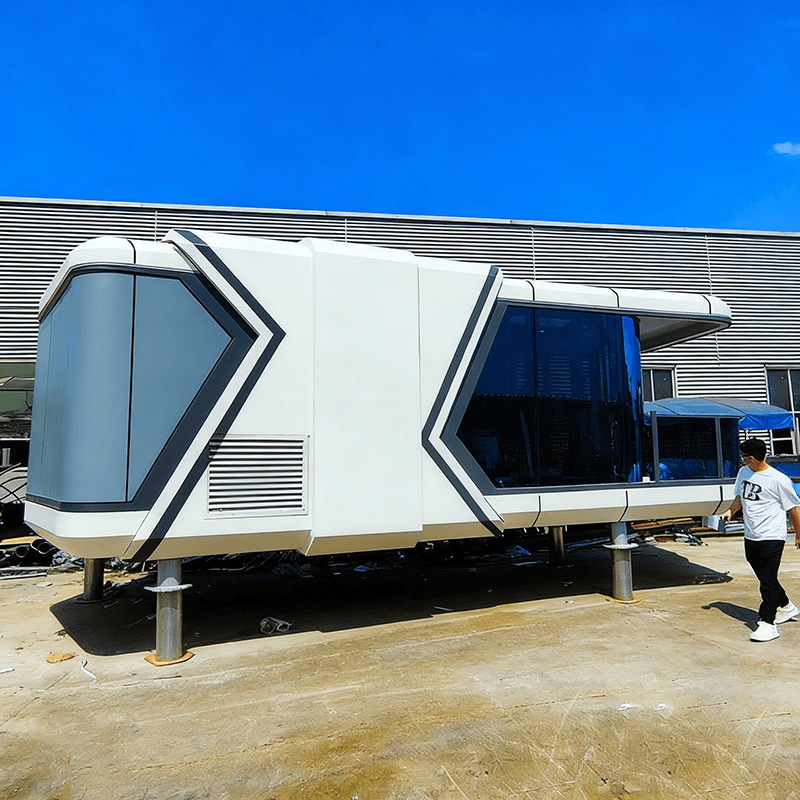
In terms of types, there are commonly seen 3-stall mobile toilets with a flat-top design. The exterior walls and toilet doors are made of heat-insulating aluminum alloy materials. The interior is fully equipped with sanitary fixtures and is relatively economical in price, suitable for scenic area scenarios with cost considerations and relatively basic needs. There are also Apple Pod-shaped mobile toilets with separate areas for men and women. Each has one squat toilet, with an open hand-washing area in the middle. The walls are made of galvanized sheet metal and painted white, with complete signage and equipped with stone wall lamps. The men's toilet area is fully equipped with sanitary fixtures and has been finely decorated, presenting a fashionable appearance that can enhance the overall image of the scenic area.
In terms of structural form, they can be divided into single-unit structure mobile toilets and composite-structure mobile toilets. Single-unit structures are relatively independent, offering flexibility in installation and use. Composite structures may be composed of multiple parts, potentially providing more advantages in functional integration and space utilization.
Based on mobility methods, there are hoisting and handling-type mobile toilets, which are convenient for position adjustment using hoisting equipment and are suitable for flexible placement in different areas within the scenic area. Power-driven and trailer-type mobile toilets can be moved using power devices or vehicles, offering a relatively wider range of mobility.
From the perspective of sewage treatment methods, there are water-flush and waterless suction-type mobile toilets, circulating water-flush type mobile toilets, and dry-packing type mobile toilets. Water-flush and waterless suction-type toilets can effectively treat fecal sewage. Circulating water-flush type toilets can achieve water resource recycling, being more water-saving and environmentally friendly. Dry-packing type toilets do not require water and treat feces through packing, suitable for water-scarce areas or scenic areas with extremely high environmental protection requirements.
In addition, mobile toilets in scenic areas also feature energy efficiency, environmental protection, sturdiness, durability, aesthetic appearance, bright colors, and high-quality materials. They are lightweight, quick to construct, and can be put into use rapidly. They have cold-resistance, heat-insulation, and earthquake-resistance properties, adapting to different climates and geographical environments. They can be moved as a whole, facilitating adjustments according to scenic area planning and tourist traffic. Materials such as stainless steel, metal carved panels, steel structures, and real stone paint can be selected, and the shapes and specifications can be customized according to needs to meet the diverse requirements of scenic areas.



