
Scenic Area Mobile Ecological Toilet
The scenic area mobile ecological toilet is a type of public toilet based on solid-liquid separation technology, achieving harmless treatment of excreta through microbial decomposition. It features water conservation, mobility, environmental protection, intelligence, durability, and cost-effectiveness.
Water Conservation and Waterless Flushing: During initial operation, it requires a one-time injection of 70-80 kilograms of water to maintain microbial activity. Subsequently, it offers water-saving or waterless flushing functions. Some waterless models do not require a water source or plumbing. For example, the waterless packing type uses biodegradable film and mechanical devices to seal excreta; the waterless biological treatment fertilizer-making type utilizes biochemical reactors to convert feces into organic fertilizer, with treated urine used as liquid fertilizer. Water-saving models, such as the foam-sealing type, achieve a water-saving rate of over 90%, the vacuum self-priming type consumes only 0.5-1 liter of water, and the recirculating water flushing type enables closed-loop water resource circulation.
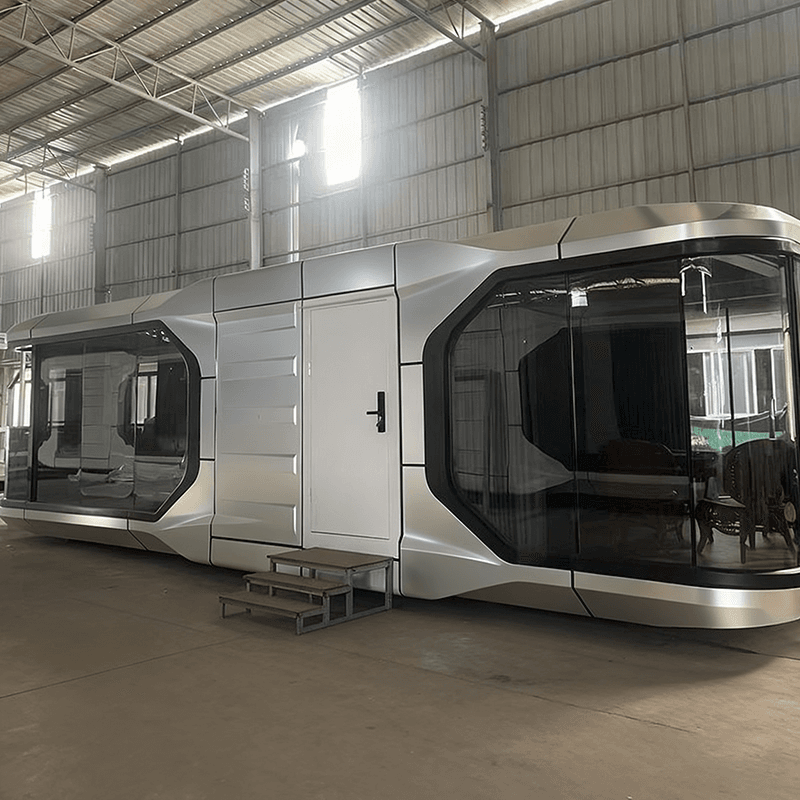
Mobility: The toilet body is constructed using a steel-frame cement composite structure or large square steel. For instance, some customized restrooms in scenic areas are 3 meters wide and 14 meters long, using Class A metal carved panels throughout and filled with insulation materials, allowing for free movement. They are suitable for scenic areas, alpine water-scarce regions, and public places.
Environmental Protection and Resource Utilization: Through microbial communities, feces are decomposed into carbon dioxide, water, and organic fertilizer, achieving pollution-free discharge. Some technologies convert feces into humic organic fertilizer and urine into liquid fertilizer, with high resource utilization rates.
Smart Features: Some models are equipped with intelligent temperature control systems that also provide sterilization and disinfection functions when the temperature exceeds 60°C. They integrate microcomputer control systems that can automatically sense people and trigger lighting and ventilation, monitor temperature, humidity, foot traffic, and air quality in real-time, and feature intelligent deodorization, face recognition paper dispensing, and APP monitoring functions.
Durability: The steel-frame cement composite structure toilet body offers excellent thermal insulation performance, with a service life exceeding 20 years. The steel-frame structure can operate in environments as cold as -28°C and is resistant to corrosion and rust.
Cost-Effectiveness: The construction cost of a single toilet stall is 100,000 yuan lower than that of a traditional water toilet, with annual maintenance costs around 15,000 yuan, saving on construction investment and post-treatment expenses. For example, the carbon-neutral public toilets deployed in Chengdu in 2024 save over 3,000 tons of water annually.
You may also like

Portable Toilet Eco-Friendly: MOQ, Samples & Quotation Guide
Read More
Top Portable Toilet Color Steel Manufacturers: How to Choose a Factory Partner
Read MorePortable Toilet Picture: Types, Features & Buying Tips
Read More