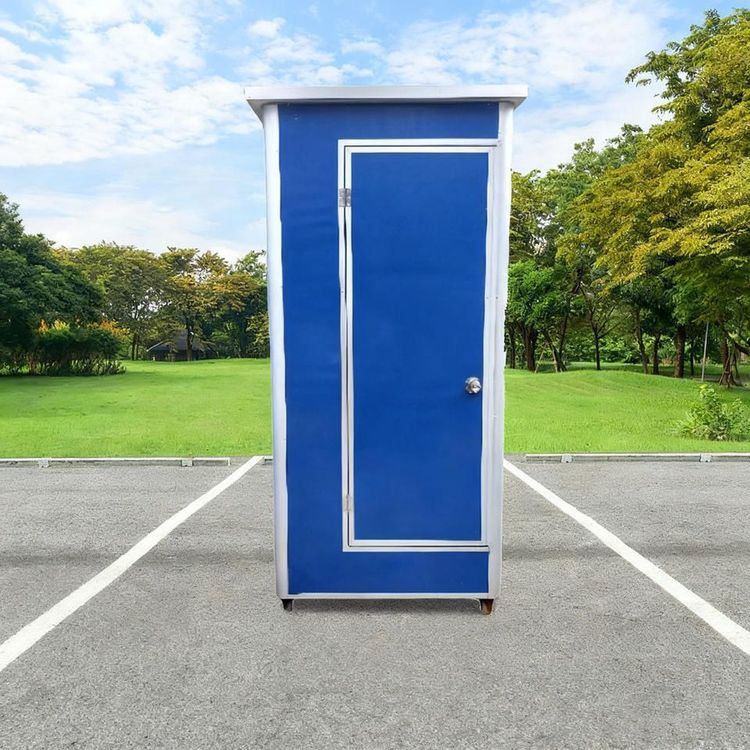
Scenic Area Garden Mobile Toilet
The scenic area garden mobile toilet is a movable restroom facility designed to meet the specific needs of scenic areas, featuring flexible adaptability and diverse functions.

I. Applicable Scenarios and Structural Composition Scenic area garden mobile toilets are primarily used in public places such as stations, docks, and tourist attractions, especially in areas where the construction of fixed public toilets is difficult or where demand changes temporarily, such as mountainous regions and around ancient architectural complexes. Their structures typically include core modules such as fecal sewage storage tanks (or disposal units), floor slabs, sanitary fixtures, walls, washing equipment, water tanks, roofs, and mobile devices. Some high-end models also integrate intelligent systems.
II. Materials and Structural Forms In terms of materials, wood was predominantly used in the early days, but now lightweight and corrosion-resistant materials such as fiberglass-reinforced plastic and polyethylene are more commonly used. Some high-end models use a combination of 304 stainless steel (for internal structures) and galvanized steel sheets (for external decoration), balancing durability and cost. Structurally, they can be classified by mobility into hoisting types and powered trailer types; and by sewage treatment methods into water-flush types, waterless suction types, circulating water-flush types, and dry-packing types. For example, the dry-packing type collects feces using biodegradable film bags, requiring no water source, making it suitable for water-scarce scenic areas.
III. Design Highlights
- Full Seepage Prevention Design: From the base slab of the container, wall corners, to the connections of sewage pipes, welding sealing is employed. For instance, Shanghai Dongba Construction uses stainless steel welding techniques to ensure seamless connections between the base slab and wall panels, and leak-proof flanges are used at pipe joints to prevent leakage.
- Cleaning Efficiency Optimization: Rounded interior wall designs reduce cleaning dead zones by more than 50%, and combined with anti-slip bases, they achieve a “one-flush clean” effect, reducing cleaning costs.
- Modular Production: The main structure uses lightweight steel or new composite materials, providing corrosion resistance, fire resistance, and thermal insulation. Internal functional modules (such as restrooms, baby care rooms, and gender-neutral restrooms) can be flexibly configured based on visitor traffic.
IV. Innovative Designs
- Architectural Morphology Concealment: Through designs such as earth covering and wooden grilles, the toilets blend with the natural landscape, such as being embedded in the terrain or disguised as artistic installations.
- Scenery Borrowing: Washbasins and rest areas are equipped with floor-to-ceiling windows, introducing natural light and mountain views, breaking the enclosed feeling of traditional toilets.
- Local Characteristic Decorations: Local materials such as blue bricks, red stones, and bamboo weavings are used, combined with displays of intangible cultural heritage works, enhancing cultural recognition.
- Functional Leisureization: Additional facilities such as vending machines, mobile phone charging stations, and rest areas are added, expanding the single excretion function into a comprehensive public service complex.
V. Application Case In 2023, the Lanzhou Yellow River Scenic Line Grand Scenic Area successively put into use mobile toilets. Through modular design and full seepage prevention technology, they effectively solved the restroom needs of tourists while harmonizing with the Yellow River landscape, becoming a model for service upgrades in the scenic area.