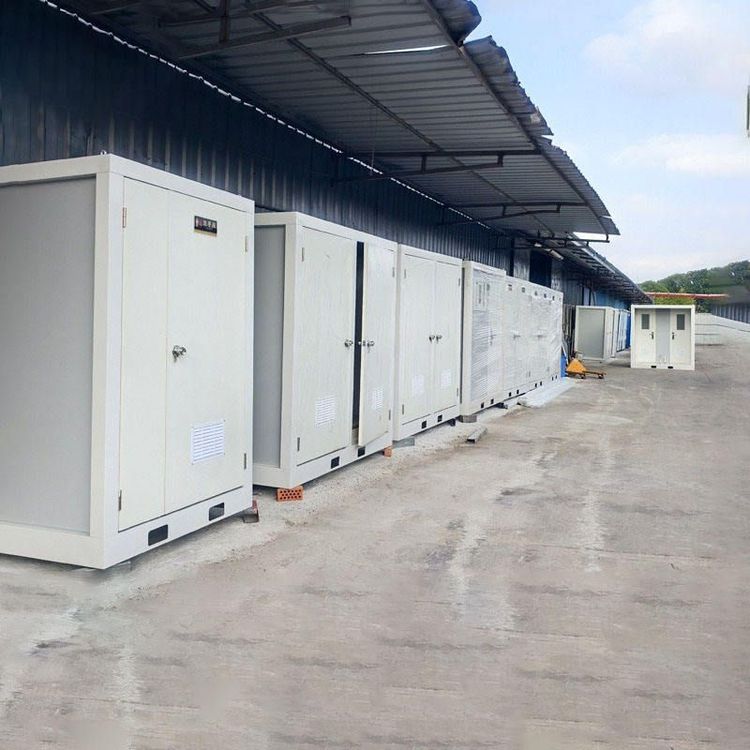
What is the Price of Sanitation Mobile Toilets
The prices of sanitation mobile toilets vary significantly depending on their type and configuration, ranging from several hundred yuan to tens of thousands of yuan. They can be categorized as follows:

Basic and simple models are relatively inexpensive
For example, a basic 1.3-meter square straight-drain squat toilet costs over 900 yuan; the price range for economical simple models is 800-1500 yuan; the cheapest simple models cost only 300-1500 yuan. These products usually have a simple structure and limited functionality, suitable for temporary or low-frequency use scenarios such as construction sites and temporary event venues.
Mid-range models have moderate prices
Among mid-range products, the deposit for a four-person mobile toilet is 3000 yuan, suggesting that the overall price may be higher; the price range for mid-to-high-end models is 2000-9000 yuan; a common connected toilet in scenic spots costs about 5000 yuan, and a double-connected bathroom costs 6000 yuan. These products usually have more complete facilities, such as separate compartments and ventilation systems, suitable for scenic spots and parks that need to balance practicality and aesthetics.
High-end customized models are more expensive
The prices of high-end customized models vary significantly. For example, a smart toilet produced in Shanghai can cost up to 68,000 yuan, and the price of smart and environmentally friendly models may be even higher. Taking Kohler's non-mobile smart toilet as an example, its price has reached 22,999 yuan. If integrated into a mobile toilet, the cost will further increase. These products are usually equipped with smart sensing systems and environmental treatment technologies, suitable for scenarios with extremely high requirements for sanitation conditions and user experience, such as high-end commercial districts and international exhibitions.
Core factors contributing to price differences
Price differences are mainly determined by functional configuration, material and workmanship, and technological complexity. Basic models are designed to meet basic needs and have lower costs; mid-range products improve practicality by optimizing space layout and increasing the number of compartments; high-end models achieve functional upgrades through intelligent and environmentally friendly technologies, while using more durable materials and finer workmanship, resulting in a significant increase in costs. Users can choose the appropriate type based on their actual needs, budget, and usage scenarios.