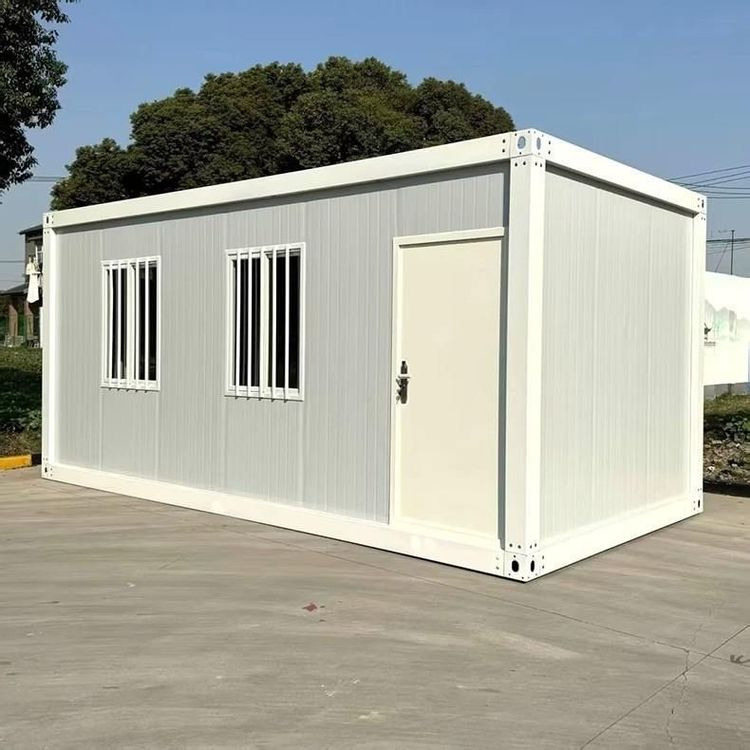
Russian Mobile Toilet
The Russian mobile toilet mainly involves two aspects: military camouflage use and the fee-charging incident outside World Cup venues.

In terms of military camouflage use: On the Russia-Ukraine battlefield, the Russian military innovatively camouflaged simple tents as mobile toilets as an important means of protecting soldiers. The core of this camouflage strategy is to eliminate human silhouettes, making it difficult for AI drones to identify them as human targets. On the battlefield, drones use image recognition technology to locate and attack targets, and human silhouettes are one of the important features for identifying humans. By using the appearance of mobile toilets, the Russian military successfully reduced the risk of soldiers being attacked by drones by hiding them inside. This camouflage method not only reflects the Russian military's adaptability on the battlefield but also demonstrates the importance of camouflage technology in modern warfare. Through clever camouflage, the Russian military can remain concealed under the reconnaissance of enemy drones, creating favorable conditions for subsequent military operations.
Regarding the fee-charging incident outside World Cup venues: During the 2018 Russia World Cup, there was a phenomenon of Russian grandmothers setting up mobile toilets and charging fees outside the St. Petersburg venue. These mobile toilets charged 30 rubles (about 3 yuan) per use, which attracted widespread attention. Previously, the Russian government had promised that fans with FAN IDs could use public transportation for free, but it did not explicitly mention the issue of public toilet fees. This incident reflects the challenges of public facility management during the World Cup and the gap between the government's promises and actual implementation. Although the fee-charging for mobile toilets alleviated the problem of insufficient public toilets to some extent, it also sparked discussions and controversies about the free public facility policy. This incident also reminds us that when hosting large-scale international events, it is necessary to fully consider the needs and management of public facilities to ensure the smooth progress of the events and a good experience for participants.