
Rural Toilet Reform Mobile Toilet Standards
Currently, there is no unified national standard specifically for mobile toilets in rural toilet reform, but relevant standards for three-compartment household toilets can be referred to, with specifics subject to local government documents. The following provides an introduction from the aspects of septic tanks, toilet rooms, fecal transfer pipes, and exhaust pipes:
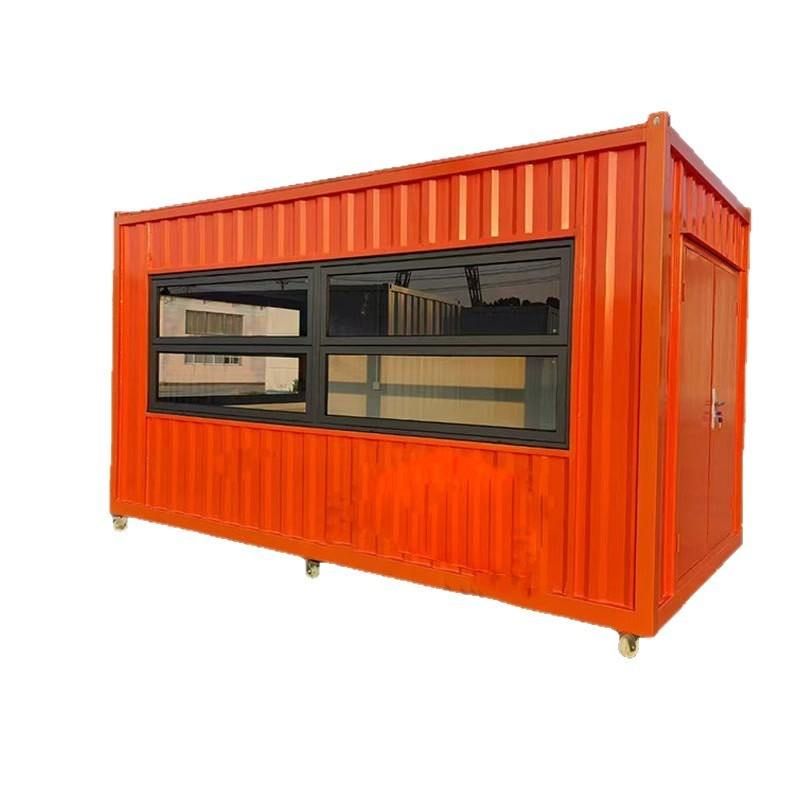
Regarding septic tanks: If a mobile toilet uses a three-compartment septic tank, its effective volume should be no less than 2 cubic meters, and the ratio of the first, second, and third compartments should be 2:1:3. This design ensures that feces have sufficient residence time in each compartment for thorough fermentation, sedimentation, and decomposition, thereby achieving harmless treatment. For example, the first compartment is mainly for the fermentation and sedimentation of feces, the second compartment for further fermentation and clarification, and the third compartment stores the relatively clarified liquid after treatment, which can be used for farmland fertilization, etc.
Regarding toilet room construction: The net area of the toilet room in a mobile toilet should be no less than 1.2 square meters, and the net height of an independent toilet room should be no less than 2 meters. At the same time, it should be equipped with a door, windows, a roof, lighting facilities, a toilet bowl, and a flushing device. The interior walls should be tiled or cement-plastered, and the floor should be made of non-slip tiles or cement-plastered and sloped towards the toilet bowl. These requirements aim to provide users with a comfortable, hygienic, and safe usage environment, preventing accidents such as falls due to slippery floors.
Regarding the installation of fecal transfer pipes: The inlet of the fecal transfer pipe from the first compartment to the second compartment should be at a height of one-third of the effective volume from the bottom of the tank, and from the second compartment to the third compartment, it should be at one-half; the inner diameter of the fecal transfer pipes should be ≥100mm, and the two pipes should be staggered. A reasonable arrangement of fecal transfer pipes ensures the smooth flow of feces between compartments while avoiding short-circuiting, enabling thorough fermentation and decomposition of feces.
Regarding the setting of exhaust pipes: The exhaust pipe should be installed in the first compartment, at a height of more than 2 meters from the ground, with an inner diameter of ≥100mm, and a rainproof cap should be installed at the top. The function of the exhaust pipe is to discharge harmful gases such as biogas produced in the septic tank, preventing the accumulation of gases that could lead to dangerous situations such as explosions. Meanwhile, the rainproof cap prevents rainwater from entering the exhaust pipe and affecting its normal operation.



