
Rural Temporary Container House
Rural temporary container houses are legal if they meet requirements for land nature, planning approval, and construction standards; otherwise, they may be deemed illegal constructions. Here is a detailed analysis:
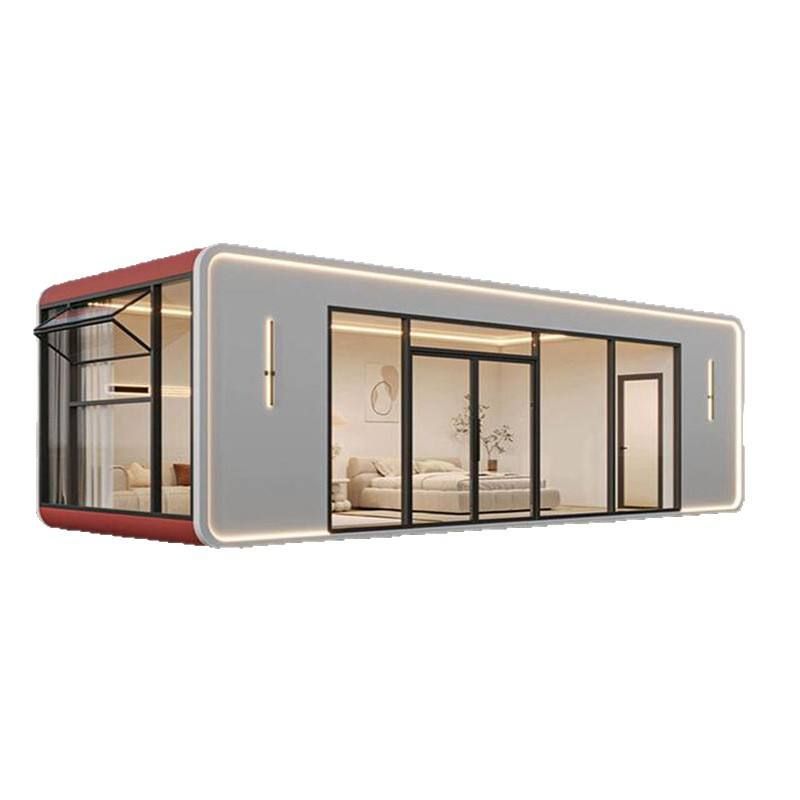
Core Conditions for Legality
1. Compliance with Land Nature
If container houses are used for residence or business operations, they must be built on homesteads or collective construction land that has undergone approval for agricultural land conversion. For example, an agricultural company in Hainan was ordered to rectify for building container houses on permanent basic farmland. For non-residential purposes such as warehousing and processing, it is necessary to apply for collective commercial construction land quotas.
2. Proper Planning Approval
When used as permanent buildings, they need to be included in rural construction planning. For instance, a homestay in Anji, Zhejiang, formed a double-story structure by assembling containers and became a legal commercial building after submitting and getting approval for its design plan in advance. If used as temporary buildings (such as for post-disaster relocation or construction site sheds), some regions allow exemption from planning permits for 1-2 years, but they must be self-demolished upon expiration.
3. Meeting Construction Standards
They need to satisfy structural safety and fire protection requirements. Container houses for residential purposes must use Class A fire-resistant materials (such as rock wool boards), with each unit having a floor area not exceeding 300 square meters. For example, a container street market by the Huangpu River in Shanghai was included in a pilot program for legal business premises for using fire-retardant materials and passing fire protection inspections.
Scenarios of Illegal Construction Risks
1. Occupying Farmland or Public Spaces
Container houses built on farmland, rural roads, or fire lanes without approval are illegal constructions, which can easily trigger neighborhood disputes and safety hazards. For example, in a special rectification campaign in Danbei Town, Danyang City, illegal containers were forcibly removed due to issues such as unauthorized electrical wiring and occupation of collective land.
2. Lack of Approval Procedures
Even if container houses are movable, they may still be deemed illegal constructions if they have not undergone land nature verification, planning applications, or fire protection inspections. For example, workers' dormitories in a residential community in Beijing were forcibly demolished for using foam sandwich panel containers that failed fire protection inspections.
Suggestions for Legalization
1. Consult Approval Procedures in Advance
Verify land ownership with the village committee or township natural resources office to confirm whether it is homestead or approved construction land. If agricultural land is involved, submit an "Application Form for Agricultural Land Conversion" and a land reclamation plan.
2. Entrust Professional Design Units
Obtain architectural drawings that comply with the "Technical Policy for Rural Housing Construction", specifying the number of floors, floor heights, and structural safety measures to ensure approval through planning.
3. Prioritize Compliant Materials
Use materials that meet fire resistance, earthquake resistance, and wind resistance standards, and avoid using flammable sandwich panels to reduce safety risks.



