Rural Simple Mobile Toilet
The following is information about rural simple mobile toilets:

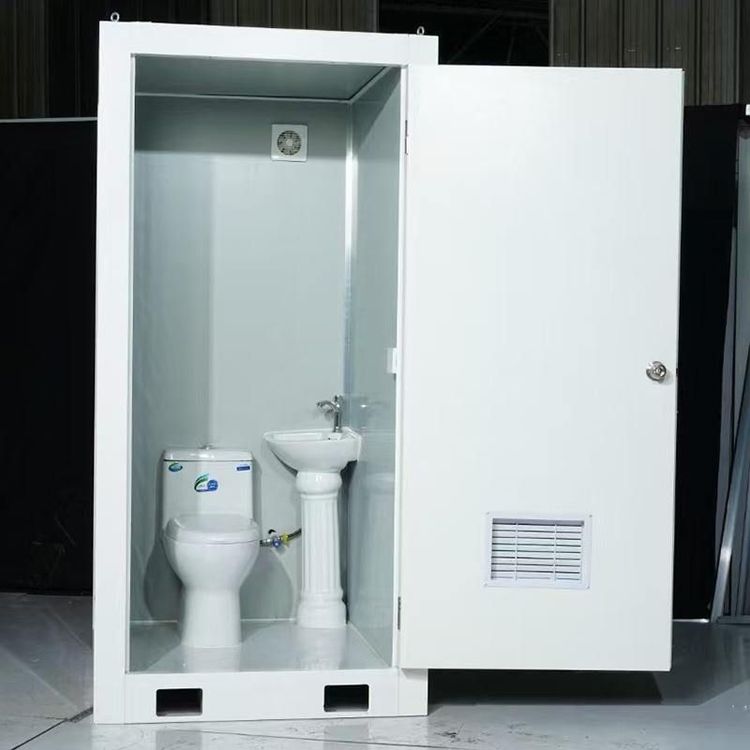
I. Definition of Rural Simple Mobile Toilets Rural simple mobile toilets are facilities that can be moved as a whole and placed at locations with fixed or temporary needs to provide toilet services for the public and customers. They have advantages such as mobility, combinability, and ease of transportation, allowing them to be conveniently transported to places where they need to be set up and used repeatedly.
II. Types of Rural Simple Mobile Toilets
- Finished Mobile Toilets: Sold directly by manufacturers at a price of 850 yuan per unit. They are fully equipped inside, made of 5-centimeter-thick composite board material, and available in three colors: blue, white, and wood grain. They are transported as finished products and can be used after connecting to water and electricity at home. This type is suitable for rural areas that have certain requirements for toilet facilities and a relatively limited budget.
- Simple Mobile Commodes: These are portable and come with a lid. They can utilize idle buckets at home. As long as the diameter of the bucket opening is appropriate and there is a fixed slot at the back, placing it on top instantly transforms it into a mobile commode. Sitting on it is relatively comfortable, making it suitable for temporary family use or scenarios with relatively low hygiene requirements.
III. Composition of Rural Simple Mobile Toilets They are generally composed of fecal sewage storage tanks (or fecal sewage disposal devices), floor slabs, sanitary ware, walls, washing equipment, water tanks, roofs, and mobile devices. These components work together to ensure the normal use and hygiene conditions of the mobile toilets.
IV. Classification Methods of Rural Simple Mobile Toilets
- By structural form: They can be divided into single-structure mobile toilets and composite-structure mobile toilets. Single-structure toilets are relatively simple and independent, while composite-structure toilets may be composed of multiple parts and may have more complex functions.
- By mobile method: They can be divided into lifting and handling mobile toilets, powered and towed mobile toilets. Different mobile methods are suitable for different transportation conditions and site situations.
- By sewage treatment method: They are divided into water-flush and waterless-flush suction mobile toilets, circulating water-flush mobile toilets, and dry-packing mobile toilets. Water-flush toilets have higher cleanliness but require a water source; waterless-flush suction and dry-packing toilets are more suitable for water-scarce areas.