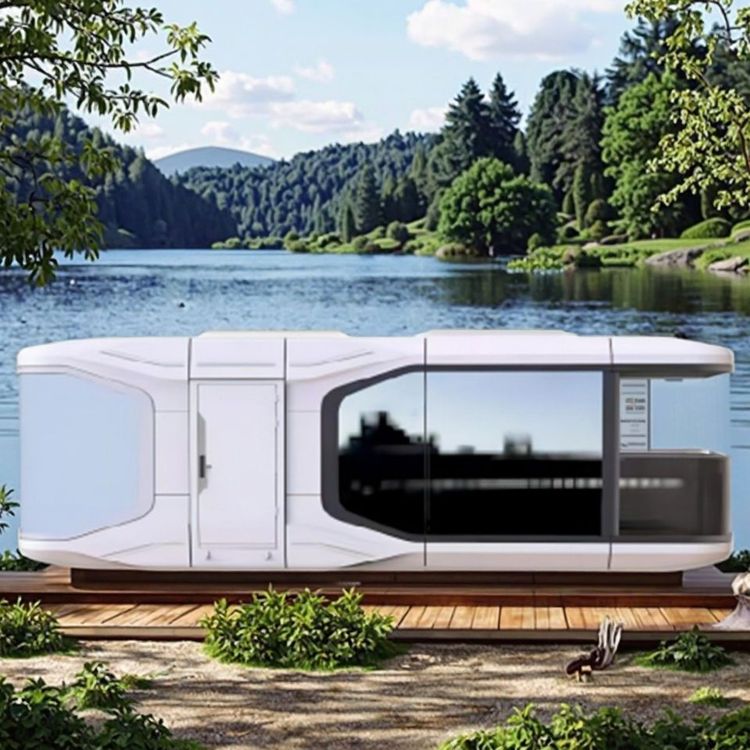
Preferred Options for Rural Renovation Mobile Toilets
The preferred options for rural renovation mobile toilets should be comprehensively considered in combination with product types, renovation efficiency, manufacturer services, and policy support. Here are specific suggestions:

1. Prioritize the selection of product types and materials suitable for rural scenarios
Mobile toilets for rural households are mainly made of materials such as fiberglass, color-coated steel, and light steel. Among them, fiberglass, with its characteristics of cold resistance, freeze resistance, ecological friendliness, and corrosion resistance, has become the first choice for northern cold regions or long-term use scenarios. For example, fiberglass mobile toilets can operate normally in environments as low as -30℃, and their smooth surfaces are easy to clean, reducing the risk of bacterial growth. If the budget is limited or for short-term use, color-coated steel or light steel materials can be considered. They are relatively low-cost and easy to install, but attention should be paid to rust prevention. In terms of product types, three-chamber septic tank toilets are suitable for dispersed rural households due to their high decomposition efficiency and lack of odor. Water-saving eco-friendly toilets, on the other hand, reduce water consumption through microbial degradation technology and are suitable for areas with scarce water resources.
2. Focus on rapid renovation and plug-and-play solutions
For emergency renovations or temporary needs, standardized prefabricated products can be selected, such as single toilets with dimensions of 1.1 meters × 1.1 meters and a height of 2.35 meters, equipped with basic functions such as squat toilets, five-hole sockets, and waterproof floors. These products can be put into use within 10 minutes after connecting to water and electricity, and their modular design supports subsequent expansion or relocation. If the renovation period is longer, customized factory-prefabricated, on-site assembled integrated house-style toilets can be ordered, such as the products from Shandong Yiju Integrated Housing Co., Ltd. These toilets use energy-saving and environmentally friendly materials, have strong earthquake resistance, and are suitable for multiple scenarios such as scenic spots and construction sites.
3. Screen reliable manufacturers and operation and maintenance services
- Shandong Yiju Integrated Housing Co., Ltd.: Provides customized services for outdoor mobile toilets, supporting factory prefabrication and on-site assembly. The products are energy-saving, environmentally friendly, and suitable for rural terrains.
- Beijing Huajie Ecological Environment Engineering Co., Ltd.: Its product line covers various types of mobile toilets, including water-saving, eco-friendly degradation, and barrier-free special-purpose toilets. It can customize exclusive configurations (such as adding handrails and emergency call devices) and provides nationwide operation and maintenance services to reduce later maintenance costs.
- Xianxian Jiajing Sanitation Equipment Manufacturing Co., Ltd.: An established manufacturer with fully paid-in registered capital, known for its reliable product quality, suitable for scenarios with high durability requirements.
4. Combine policy support to reduce costs
In the 2026 rural "household toilet renovation" project, many places adopt the work-relief model, prioritizing the absorption of local labor for construction to reduce labor costs. For example, Yanwo Town in Honghu City, Hubei Province, has achieved the goal of "renovating one, completing one, and making it usable" by strictly controlling the quality of three-chamber septic tanks. Such projects usually have financial subsidies or material discounts, so it is necessary to pay attention to policy documents issued by the local agricultural and rural bureau.
5. Consider price and long-term benefits
The price of fiberglass mobile toilets ranges from 400 yuan to 650 yuan per set, while color-coated steel or light steel materials are cheaper. However, it is necessary to weigh the initial investment against long-term maintenance costs. For example, although water-saving toilets have a higher unit price, they can reduce water consumption and are suitable for long-term use. For temporary toilets, a rental model can be chosen to further reduce costs.