
Rural Prefabricated Slab House Policy
The key points of the rural prefabricated slab house policy are as follows:
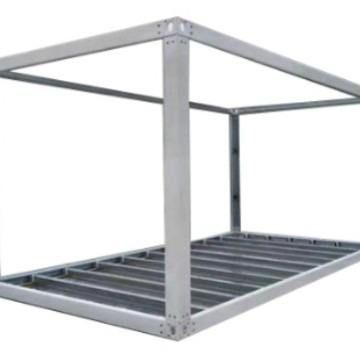
I. Design Life and Scrapping Criteria The design working life of ordinary civil residences (including prefabricated slab houses) is typically 50 years, and 30 years is not a mandatory scrapping threshold. Whether to demolish should be based on professional safety assessment results rather than solely on the age of the house. According to the housing safety assessment grading standards:
- Grade A and B houses: Structurally safe and can be used normally;
- Grade C houses: Require partial reinforcement;
- Grade D houses: Should be treated as dilapidated houses and must be taken out of service or demolished. The policy explicitly opposes a one-size-fits-all approach and emphasizes classified strategies.
II. Safety Assessment and Disposal Procedures For houses that still need to be used after reaching or exceeding their design life, or those showing obvious signs of tilting, structural cracks, or corrosion, it is mandatory to commission a qualified agency to conduct a safety assessment. Based on the assessment conclusions, the following measures should be taken:
- Observation and continued use: Suitable for houses with minor damage and no signs of worsening;
- Reinforcement: For Grade C houses or those with local structural defects;
- Restricted or suspended use: Limit the scope of use for houses with safety hazards that do not meet the demolition criteria;
- Demolition and reconstruction: Only for Grade D dilapidated houses or severely damaged houses that cannot be repaired.
III. Policy Planning and Renovation Goals The 2026 State Council's '15th Five-Year Plan for Urban Renewal' proposes:
- Establish files and dynamically update records for urban Grade C and D dangerous houses and non-complete houses;
- Accelerate the demolition and renovation of Grade D dangerous houses, giving priority to those with major safety hazards;
- Steadily advance the governance and renovation of prefabricated slab houses, focusing on addressing issues such as structural safety and inadequate seismic performance;
- Strengthen seismic reinforcement of houses in earthquake-prone areas to enhance disaster defense capabilities;
- Plan to renovate more than 500,000 sets (units) of Grade C and D dangerous houses and prefabricated slab houses on state-owned land in cities and county towns during the '15th Five-Year Plan' period.
IV. Daily Maintenance Tips for Residents Residents can conduct regular basic self-checks:
- Decorative layer aging: Such as fine cracks in wall putty or local cracks in the ceiling, which generally do not affect structural safety;
- Structural damage: If the load-bearing wall shows 45-degree diagonal cracks, through cracks, continuously widening horizontal cracks in beams and slabs, or sagging of the floor slab, it is necessary to immediately record and report to the community or housing construction department;
- Leakage problems: Leakage in prefabricated slab houses is often caused by aging of slab joints or roof waterproofing, which requires timely repair to prevent steel reinforcement corrosion.



