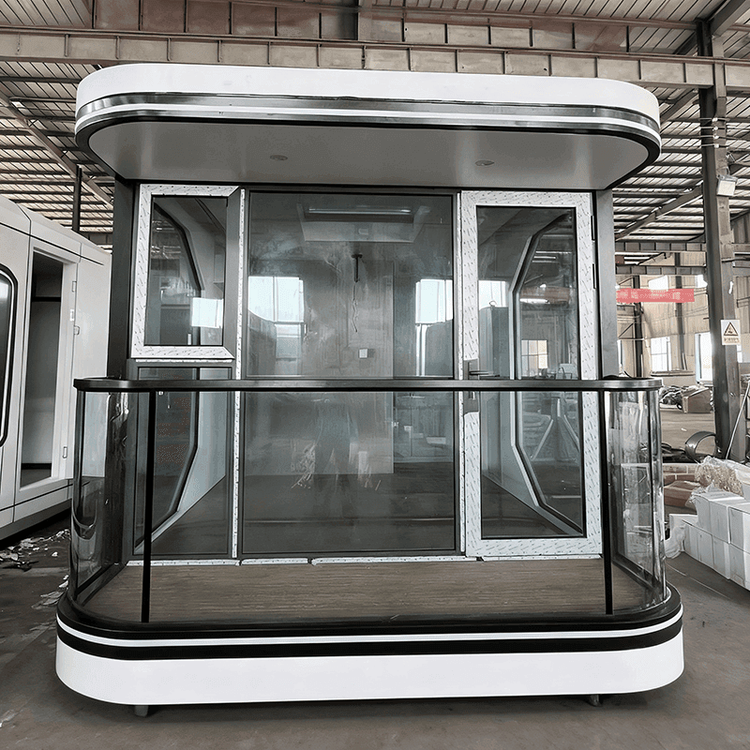
Introduction to Rural Mobile Toilets
Rural mobile toilets are portable facilities designed to meet the flexible sanitation needs of rural areas, featuring convenient transportation, flexible installation, and strong adaptability. They serve as an important supplementary solution for improving rural sanitation environments.

Basic Structure and Functional Features
Rural mobile toilets are typically standalone units equipped with basic sanitary fixtures (such as squat or sit toilets). They have a lightweight structure and do not rely on fixed sewer systems. Their core design includes built-in water storage tanks and sewage collection boxes, enabling independent circulation or regular disposal. Some models employ biodegradation technology to treat waste, reducing environmental pollution. Mobility is a significant advantage, allowing rapid deployment via vehicle transportation, avoiding resource waste due to site changes, and occupying only one-third to one-half the space of traditional toilets, significantly saving land resources.
Types and Material Selection
Based on usage needs, mobile toilets are categorized into basic models and comprehensive models: Basic models are cost-effective, meeting only basic toilet needs, suitable for short-term events; comprehensive models add features like sinks and ventilation systems, offering higher comfort but at a higher cost. In terms of mobility, some models are equipped with wheels for direct towing, while others require crane loading and unloading. Regarding materials, metal panels are durable but heavy, plastic materials are lightweight but less durable, and composite materials (such as fiberglass-reinforced plastic) combine the advantages of both, becoming the mainstream choice. Internal materials must be easy to clean and antibacterial to accommodate high-frequency usage scenarios.
Applicable Scenarios and Advantages
They have a wide range of applications:
- Busy farming seasons: Quick deployment to address temporary needs when labor is concentrated in the fields;
- Large-scale events: Supplementing fixed facilities during weddings, funerals, fairs, and temple festivals;
- Rural tourism: Adding sanitation facilities during peak tourist seasons to enhance visitor experiences;
- Construction sites: Providing temporary sanitation for construction workers.
The design adheres to principles of mobility, cost-effectiveness, durability, and environmental friendliness, reducing transportation costs through modular structures and minimizing environmental impact with low-energy waste treatment technologies.
Social Significance
Rural mobile toilets are not just technological products but also embody humanistic care. Their promotion effectively improves rural sanitation conditions, reduces soil and water pollution from open defecation, and supports the goals of the "Toilet Revolution." From a livelihood perspective, they drive significant improvements through small-scale interventions, enhancing farmers' quality of life and providing foundational support for rural revitalization, truly embodying the concept of "small toilets, big livelihoods."