Rural Mobile Toilet Engineering Drawing
Currently, it is not possible to directly provide engineering drawings for rural mobile toilets, but relevant renovation and structural information can be used to assist in understanding their construction.

The structural design of rural mobile toilets needs to comprehensively consider practicality, durability, and environmental protection. The structures of different types of toilets vary. The following provides a popular science introduction from the perspective of common types and key construction points:
Triple Septic Tanks in the Renovation of Indoor Flush Toilets in Northern Rural Areas
In this type of toilet renovation, the triple septic tank is a crucial part. The construction steps are as follows: First, excavate a rectangular pit, with the depth and dimensions determined according to actual needs and geological conditions. Then, use bricks to build the pit, dividing it into three compartments: the sedimentation zone, the fermentation zone, and the clarification zone. These zones are connected by fecal pipes. Sewage flows from the sedimentation zone into the fermentation zone, where it undergoes fermentation and decomposition. After that, the relatively clear liquid flows into the clarification zone and can finally be discharged or further treated. This structure can effectively treat fecal sewage and reduce environmental pollution.
Metal-Carved Panel Mobile Toilets
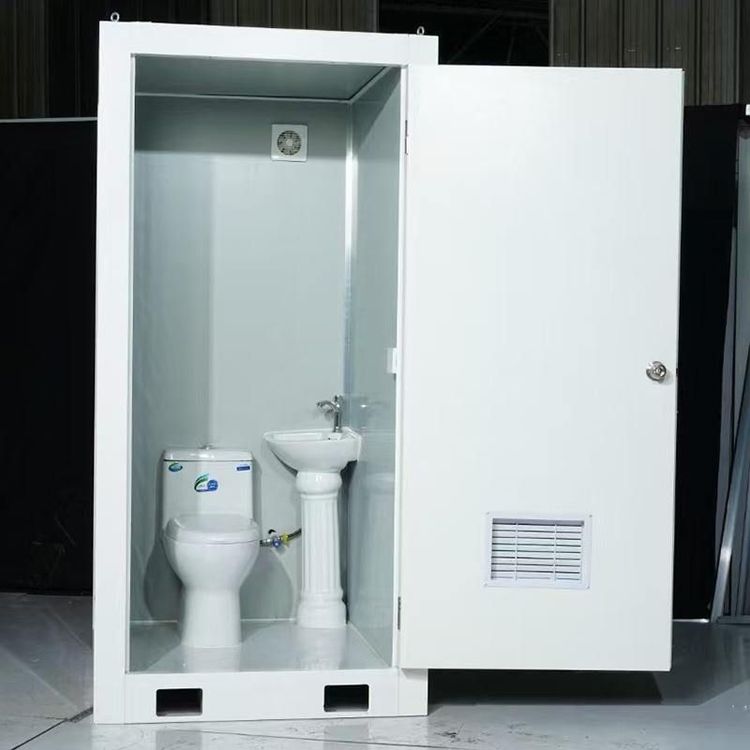
The main framework of this type of mobile toilet is usually welded from galvanized steel pipes. Galvanized steel pipes have high strength and corrosion resistance, ensuring the stability and service life of the toilet. The exterior walls are made of metal-carved panel material, which not only has an aesthetically pleasing appearance but also offers good thermal insulation, heat insulation, and waterproofing properties. The internal facilities generally include a squat toilet or a sit toilet, a sink, etc., and are equipped with a ventilation system to keep the air inside the toilet fresh.
Simple Triple-Compartment Septic Tank Mobile Toilets
The installation method is as follows: First, build a squat toilet and connect it to the sewage pipe. Then, dig a soil pit at a suitable location and semi-bury the septic tank in the pit, connecting it to the sewage pipe. The septic tank is also divided into three compartments, and the sewage is treated step by step through the fecal pipes. This simple septic tank has low costs and is easy to install, making it suitable for use in rural areas with relatively backward economic conditions or where the requirements for toilets are not high.