
Customization of Rural Mobile Single Toilets
Rural mobile single toilets can be customized. Mobile toilet enterprises typically possess the capability to provide customization services, with the customization process and content covering several key aspects, as detailed below:
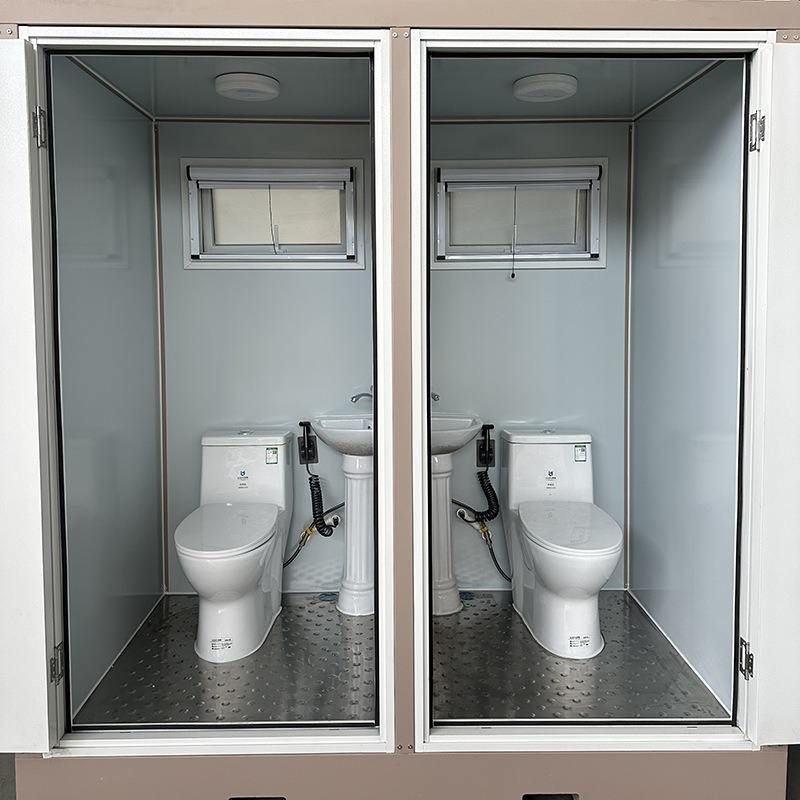
1. Requirement Communication and Preliminary Design
Customization services commence with in-depth communication between the user and the enterprise. The enterprise will thoroughly understand the user's basic information regarding the toilet's usage scenarios (such as rural households, public areas), the number of users, and functional requirements (such as the need for barrier-free facilities or a baby care station). For instance, rural households may prioritize space utilization and privacy, while public areas need to consider foot traffic and durability. Based on these requirements, the enterprise will provide a preliminary design plan, including the overall structure and functional zoning of the toilet.
2. Size and Layout Customization
Size and layout are core elements of customization. Users can adjust the length, width, and height of the toilet according to the actual site conditions (such as available space and terrain slope). For example, if the site is narrow, a compact single-room design can be adopted; if there is ample space, additional storage or rest areas can be included. In terms of layout, users can freely plan the internal functional areas, such as adjusting the positions of squatting pans, urinals, and washbasins according to usage habits, and even adding an independent shower room (with prior communication regarding water and electricity configurations).
3. Door, Window, and Circuit Configuration
The position, size, and opening method of doors and windows directly affect ventilation and lighting effects. Users can choose based on climatic conditions (such as adding ventilation windows in rainy southern regions and enhancing sealing in cold northern regions). Regarding circuit configuration, the enterprise will provide a standardized plan (such as lighting, sockets, and reserved interfaces for air conditioners), and users can also add or remove functions according to their needs. For example, if nighttime usage is required, motion-sensor lights can be installed; if winter warmth is needed, reserved interfaces for electric heaters can be provided.
4. Appearance and Signage Design
Appearance color and signage are manifestations of personalized customization. Users can choose colors that harmonize with the surrounding environment (such as green or gray) or design signage according to the usage scenario (such as adding 'Male' and 'Female' signs for public toilets or customizing doorplates for household toilets). Some enterprises also offer logo printing services, suitable for branding scenarios such as scenic spots and construction sites.
5. Case Reference and One-Stop Service
Taking Taihe Custom Mobile Toilet Manufacturer as an example, it has specialized in this field for over 10 years, providing a full range of services from design and production to installation. Users do not need to coordinate with multiple suppliers themselves; the enterprise will complete all processes according to the customization requirements and ensure compliance with environmental protection and safety standards. This one-stop model significantly lowers the customization threshold, especially suitable for users in rural areas.



