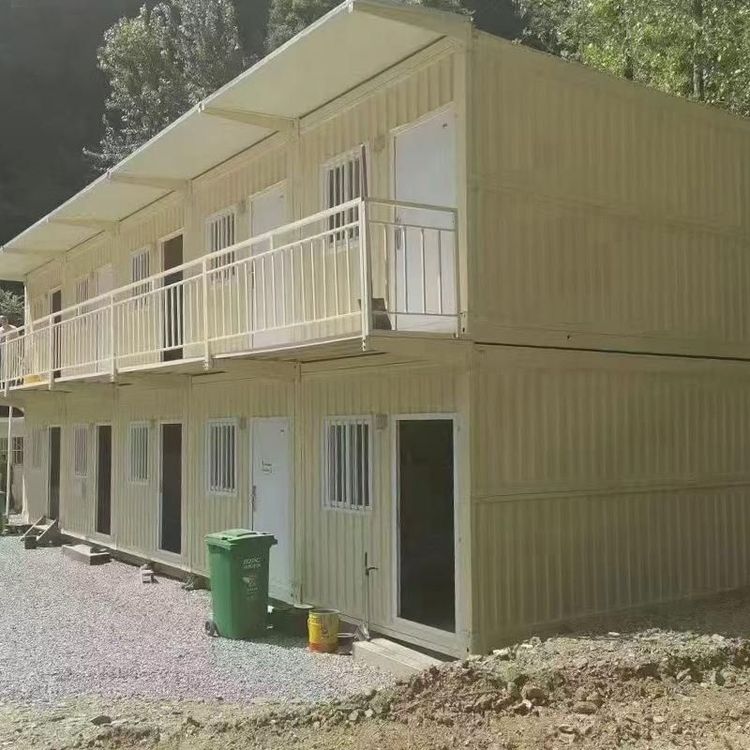
Rural Mobile Bathing and Toilet Renovation
The following cases and key points can be referred to for rural mobile bathing and toilet renovation

I. Mobile Bathroom Renovation Cases
Universal Mobile Bathroom
In some cases, mobile bathrooms adopt a modular design with dimensions of 2 meters in length and width and 2.7 meters in height. The frame and columns are made of hot-dip galvanized square tubes to ensure structural stability and corrosion resistance. The exterior walls are made of white and gray metal carved panels, which are both aesthetically pleasing and thermally insulating. An aluminum alloy single-opening glass door is equipped to enhance sealing. The internal facilities can be flexibly configured, such as reserving space for a washing machine, installing a showerhead and drainage system, making it suitable for rural families with limited space.Function-Integrated Mobile Shower Room
In a renovation case in a village in Yiyang County, the mobile bathroom, with a width of 1.6 meters, integrates facilities such as a toilet, a Midea water heater, a bathroom heater, a large sink, a small showerhead sink, a beauty storage rack, and a mirror within the limited space, meeting the needs of bathing, using the toilet, and daily grooming. For such designs, special attention should be paid to the layout of water and electricity lines to ensure safety and practicality.Large-Space Mobile Bathroom
In the case of Siyuan Village, Taozhen Town, Yang County, the mobile bathroom has dimensions of 2 meters in length and 3 meters in width, paired with a Midea 0-liter ceramic-lined water heater, providing a more spacious space suitable for multiple people or placing large equipment. For such renovations, it is necessary to plan the foundation bearing capacity in advance to avoid structural subsidence due to excessive weight.
II. Core Issues in Toilet Renovation in Northern Rural Areas
Due to the lack of unified sewage pipes in northern rural areas, the renovation of indoor flush toilets needs to focus on solving the following issues:
- Anti-freezing Measures: Adopt deep-buried septic tanks or add insulation layers to prevent pipes and fecal storage facilities from freezing and cracking.
- Anti-overflow and Anti-pollution: Build triple septic tanks to reduce the volume of fecal water through multi-stage sedimentation and fermentation, lowering the risk of overflow. Regularly clean and properly dispose of fecal residue to avoid polluting soil and water sources.
- Anti-odor and Anti-clogging: Install anti-odor floor drains and exhaust pipes to maintain air circulation. Choose large-diameter drainage pipes to reduce the probability of clogging by hair and debris.
III. Renovation Suggestions
- Choose a Plan According to Local Conditions: Select a modular mobile bathroom or a fixed flush toilet based on family population, space conditions, and budget.
- Give Priority to Solving Sewage Disposal Issues: Adopt ecological treatment methods such as septic tanks, biogas digesters, or constructed wetlands based on local climate and terrain.
- Pay Attention to Material Durability: Choose corrosion-resistant materials such as hot-dip galvanized steel and metal carved panels to extend the service life of facilities.