
Back to blog
Article
Row Container House
Admin September 15, 2026
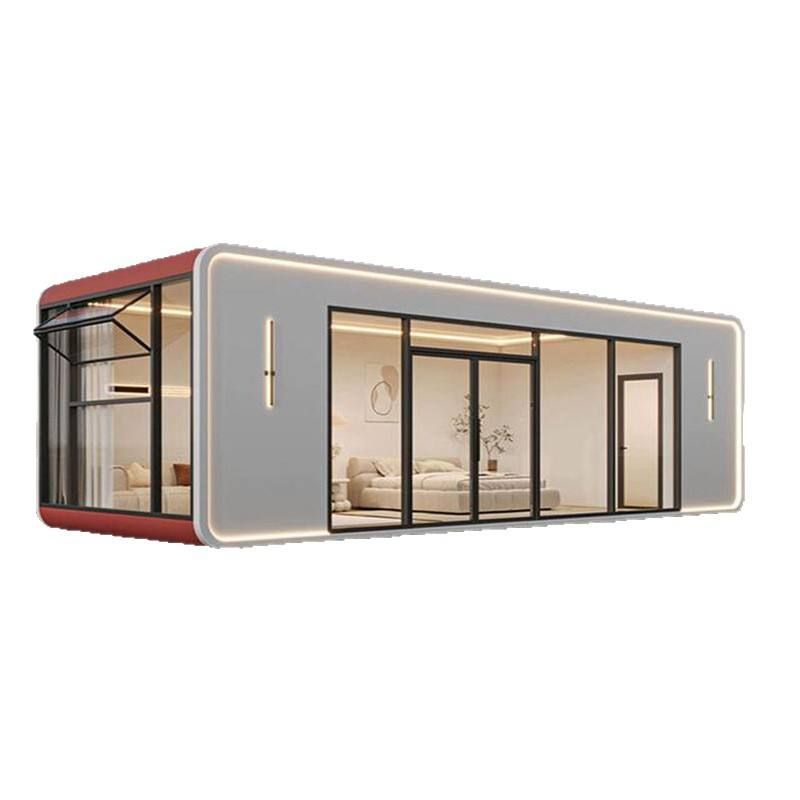
Row container houses are architectural forms formed by horizontally or vertically splicing multiple standard containers as basic modules. They have characteristics such as modularity, mobility, and rapid construction, and are widely used in temporary offices, accommodations, commercial spaces, and other fields.
I. Structural Characteristics and Performance Advantages
Row container houses use standard containers (such as 20-foot and 40-foot ones) as basic units and are horizontally or vertically spliced through welding or bolt connections. Their core advantages lie in:
- Structural Stability: They adopt a full-steel structural frame, offering excellent wind and earthquake resistance. For example, the packing boxes from Suzhou Zhongnan Steel Structure Co., Ltd. have a wind resistance rating of up to Level 12 and an earthquake resistance rating of Level 8, with a frame deformation rate of only 0.18%, far below the industry's qualified threshold of 0.3%.
- Installation Efficiency: The modular design supports rapid assembly. The quick-assembly boxes from Suzhou Zhongnan can be installed in just 2 hours for a single set, and 10 standard dormitories can be completed within 1 day, shortening the construction period by more than 40% compared to traditional buildings.
- Spatial Flexibility: They support splicing and combination according to needs, adapting to different scenario requirements. For example, commercial pop-up stores can achieve an internal space utilization rate of over 90% by customizing curved walls, floor-to-ceiling glass windows, and other structures.
II. Application Scenarios and Customized Solutions
Row container houses have a wide range of application scenarios, including:
- Temporary Offices and Accommodations: Scenarios such as engineering camps and government and enterprise temporary buildings require rapid delivery and functional adaptation. For example, the Qatar World Cup Fan Village project adopted a "factory prefabrication + on-site quick assembly" model, completing the delivery of 1,000 accommodation modules within 3 months.
- Commercial Spaces: Pop-up stores, exhibition booths, etc., require flexible adjustment of spatial forms. The quick-assembly boxes from Suzhou Zhongnan support customized design and production within 7 days, with a reuse frequency of over 15 times. The cost per use is only one-third of that of a brand-new product.
- Emergency Support: Scenarios such as disaster relief and medical isolation require rapid deployment and reliable structures. Regular brand products generally have a wind resistance rating of over Level 10, while non-standard white-label products have a wind resistance rating of only Level 8, posing safety hazards.
III. Environmental Protection and Cost-Effectiveness
- Material Recycling: The steel consumption of containers is about 1.2 tons per standard box, with carbon emissions only one-2.3th of those of concrete temporary houses. The disassembly and assembly loss rate is controlled within 5%, significantly reducing construction waste.
- Low Relocation Costs: The single lifting and transportation cost is about 15-25 yuan per kilometer. After arriving at the new site, they only need to be connected to water and electricity for use, reducing relocation and resettlement costs by more than 60% compared to traditional buildings.
- Long-Term Cost Advantages: Regular brand products have a lifespan of over 15 years and can be reused more than 10 times, with long-term use costs significantly lower than those of non-standard white-label products.



