
Roof Garden Mobile Toilet
A roof garden mobile toilet is an innovative public facility that combines toilet functions with roof greening and ecological treatment technologies. Its design integrates ecological and environmental protection concepts with landscape aesthetics, meeting basic usage needs while achieving environmental friendliness and visual enhancement through space optimization. Here is a detailed analysis:
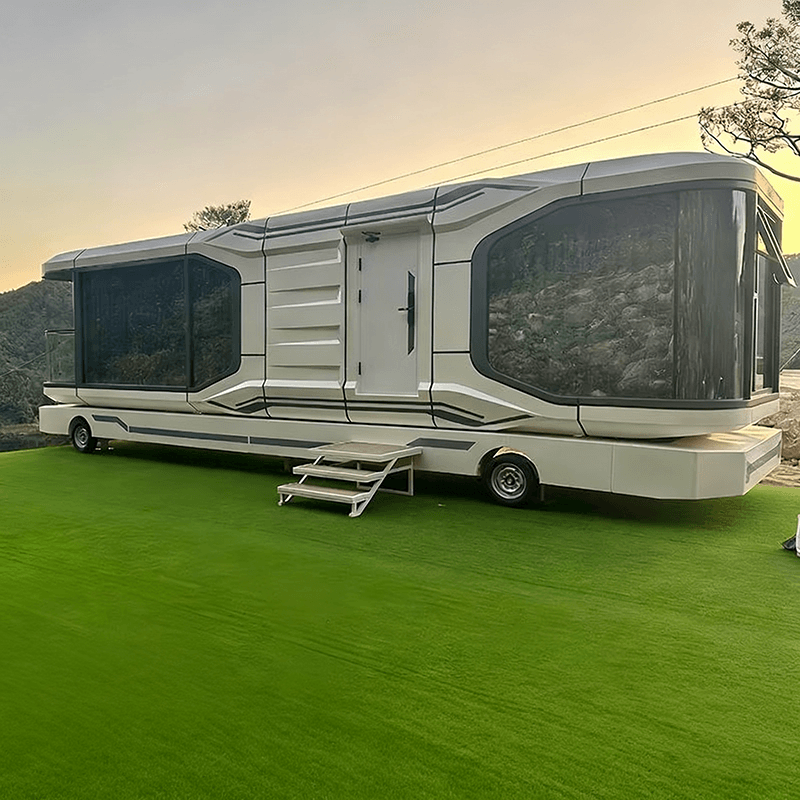
Synergistic Design of Ecological Treatment and Roof Greening
The core of a roof garden mobile toilet lies in the integration of treatment units with greening modules. Small greening modules are often incorporated into the top or side spaces, utilizing lightweight substrates to grow drought-tolerant, low-maintenance herbaceous plants or small shrubs. This not only reduces the roof load but also forms a green covering layer. Some designs also incorporate solar photovoltaic panels to power the toilet's internal lighting, ventilation, or treatment systems, achieving energy self-sufficiency. For example, in some parks, the ecological toilets' roof gardens not only beautify the environment but also regulate the local microclimate through plant transpiration, lowering indoor temperatures in summer. Additionally, treated graywater (such as sewage that has undergone biological degradation or membrane filtration) can be reused for roof greening irrigation, forming a closed-loop system of "sewage-treatment-reuse" that significantly reduces water consumption.
Structural Adaptability and Landscape Integration
The roof design of mobile toilets must balance functionality and aesthetics. Some adopt pitched roof structures, with inclined angles optimized for rainwater drainage, reducing the risk of water accumulation while providing layered planting spaces for the roof garden. For example, the pitched roofs of some eco-friendly public toilets in scenic areas are covered with wood-grain metal panels or rot-resistant wood, featuring a refined appearance and strong weather resistance, naturally blending into mountainous or forested environments. The three-dimensional shape of the pitched roof also provides the optimal inclination angle for solar panel installation, enhancing power generation efficiency. Furthermore, the selection of vegetation for the roof garden must consider local climate conditions and toilet usage frequency, avoiding root penetration of the waterproof layer or excessive insect attraction. Typically, shallow-rooted, pollution-resistant plant species are chosen.
Application Scenarios and Advantages
Roof garden mobile toilets are suitable for scenarios with high ecological and landscape requirements, such as urban parks, wetland reserves, and tourist attractions. Their advantages are reflected in three aspects:
- Ecological Benefits: Green coverage reduces the roof heat island effect, lowering building energy consumption; graywater reuse reduces municipal water supply pressure; solar power reduces reliance on fossil fuels.
- Space Utilization: "Vertical greening" is achieved within a limited footprint, improving land use efficiency, especially in urban areas with tight land constraints.
- User Experience: The visual beauty of the roof garden alleviates the oppressive feeling of traditional toilets, with some designs enhancing comfort through plant fragrances or natural sounds (such as flowing water).
It should be noted that the design of roof garden mobile toilets must strictly adhere to structural safety regulations, ensuring compatibility between roof loads, waterproof layers, and plant root systems. Regular maintenance of the greening modules and treatment systems is also required to ensure long-term stable operation.



