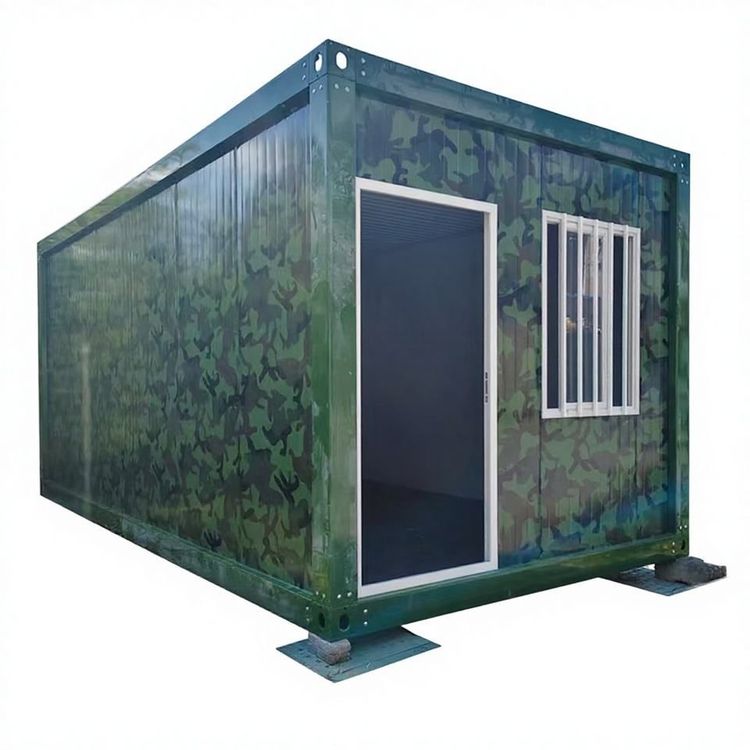
Roadside Mobile Toilet
A roadside mobile toilet is a facility that can be moved as a whole and set up at locations such as roads to provide public toilet services. The following is an introduction from its composition, classification, characteristics, and application examples:

Composition: A roadside mobile toilet generally consists of multiple parts. The fecal sewage storage tank (or fecal sewage treatment device) is used to collect and treat excreta; the floor provides a flat surface for users to stand and move around; sanitary ware such as toilets or squat pans meets basic toilet needs; walls serve to separate and protect privacy; washing equipment facilitates user cleaning; a water tank provides water for flushing and other operations; the roof offers shelter from wind and rain; and the mobile device ensures that the entire unit can be moved.
Classification:
- By structural form: They can be divided into single-structure mobile toilets and composite-structure mobile toilets. Single-structure toilets are relatively simple and independent, while composite-structure toilets may be composed of multiple parts and may have more complex and diverse functions.
- By moving method: There are lifting and handling-type mobile toilets, which are usually relatively small in size and weight, facilitating manual or simple mechanical lifting and handling; and powered and towed-type mobile toilets, which can be moved by powered devices or vehicles and are suitable for long-distance moving needs.
- By sewage treatment method: They are classified into water-flushing and non-water-flushing suction-type mobile toilets. Water-flushing toilets have better cleaning effects but require a water source, while non-water-flushing suction-type toilets treat excreta through suction; circulating water-flushing mobile toilets can recycle water to save water resources; and dry-packing mobile toilets package excreta in a dry form without using water.
Characteristics: Roadside mobile toilets have significant advantages. They can be conveniently transported to locations along roads where toilets are needed, whether it is a fixed demand point or a temporary demand point, and can be quickly deployed. Moreover, they can be used repeatedly, reducing construction costs. At the same time, they have the advantages of being movable, combinable, and easy to transport, allowing for flexible adjustment of their positions and quantities according to actual needs.
Application examples: There are mobile toilet procurement projects on the Yizhao Highway and the Su'asu Ancient Road, where a batch of mobile toilets are purchased for the highways to meet the toilet needs of passersby. Dezhou Hongtu Metal Products Co., Ltd. has an order for 28 early-morning toilets for the Tibet Highway, which are made of galvanized steel, demonstrating the application of mobile toilets on highways in different regions.