
Rivets for Container Houses
There is no clearly specified model for rivet-type connectors commonly used in container houses, but the following alternative solutions or related accessories can be referred to:
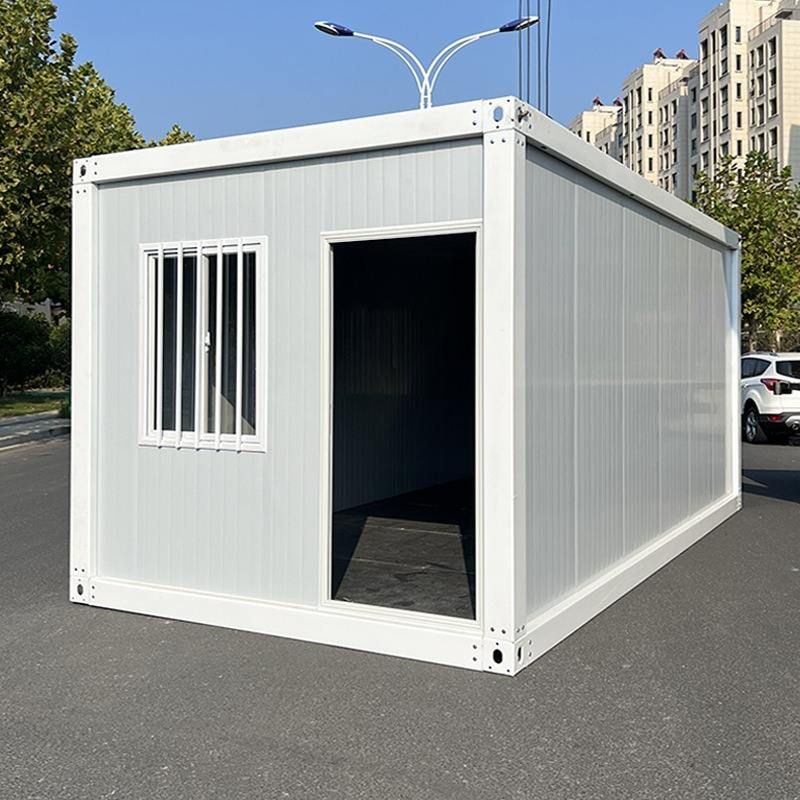
I. Common Nails for Container Structure Fixation
Floor Nails Self-tapping screws are commonly used for fixing the interior floors of container houses, primarily made of galvanized steel or stainless steel, with specifications such as M8x45. These nails are screwed directly into the floor material through threads, forming a stable connection suitable for the installation of wooden or composite floors. Their advantages include easy installation and strong corrosion resistance, but attention should be paid to matching with the floor material.
Fixing Nails (Container-Specific Nails)
- Corner Nails: Composed of angle iron and high-strength nails, they are used for structural reinforcement at the corners of container houses, enhancing overall stability through mechanical interlocking.
- Side Wall Nails: Designed with a combination of nails and hooks, they are suitable for fixing side wall panels, dispersing stress and preventing panel loosening. These fixing nails should be selected according to the load-bearing requirements of the container house and are usually used in conjunction with angle iron or special connectors.
II. Alternative Solutions for Rivet-Type Connectors
Blind Rivets Although not explicitly used in container houses, types such as AD62-64ABS Multi-Grip blind rivets perform excellently in non-structural connections. They are characterized by breaking the rivet mandrel with a rivet gun to form an expanded head, suitable for connecting thin plates or lightweight materials. If container houses need to connect aluminum or plastic components, such rivets can be considered, but their tensile strength should be verified to meet structural requirements.
Grooved Rivets Grooved rivet guns from brands like HUCK and Avdel are mainly used for riveting containers, but they target high-strength rivets rather than traditional rivets. These rivets are installed using hydraulic or pneumatic tools, forming a permanent connection suitable for heavy-duty structures or scenarios requiring anti-loosening. If container houses require high-strength connections, the adaptability of grooved rivets can be explored, although the cost is relatively high.
III. Special Nails for Fixing Triangular Wood
If triangular wood (e.g., for support or collision prevention) needs to be fixed in container houses, it is recommended to use woodworking nails or galvanized steel nails/stainless steel nails:
- Specifications: Length 50-100mm, diameter 3-5mm, to be selected according to the thickness of the triangular wood.
- Advantages: High tensile strength and corrosion resistance, suitable for outdoor environments. Although these nails are not rivets, they can serve as reference solutions for auxiliary structural fixation.
IV. Summary and Recommendations
Currently, there is no clear standard specifying the model of rivets specifically for container houses, but selections can be made based on connection requirements:
- For structural fixation, prioritize floor nails or container-specific fixing nails;
- For non-structural connections, evaluate the applicability of blind rivets;
- For auxiliary structures such as triangular wood, galvanized steel nails or stainless steel nails can be used. If further optimization of the connection solution is needed, it is recommended to consult container house manufacturers or structural engineers to determine accessory models in combination with specific design specifications.



