
Reusable Container House
Reusable container houses are architectural forms constructed by modularly combining containers as basic units. They feature mobility, reusability, and rapid installation, with core materials being corrosion-resistant steel plates and eco-friendly panels, offering a service life exceeding 20 years and a wide range of application scenarios.
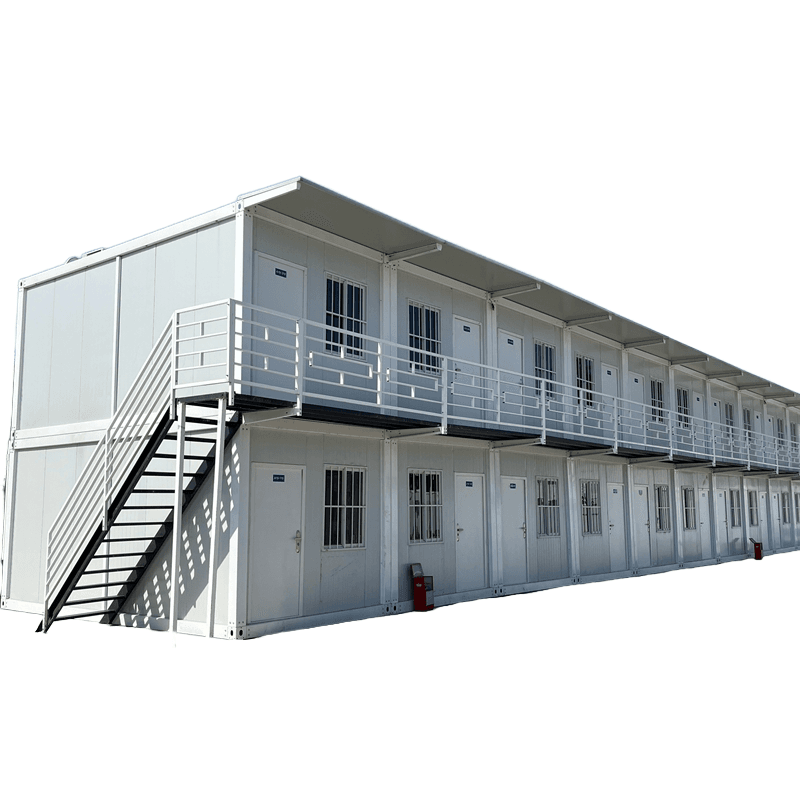
Core Materials and Processes
The main body of such houses adopts corrosion-resistant steel plates, treated with marine anti-corrosion processes to effectively withstand harsh environments such as humidity and salt spray, extending the service life to over 20 years. Internally, eco-friendly panels are used, complying with green building standards and reducing environmental pollution. Some products optimize transportation efficiency through foldable designs. For example, foldable residential containers can be used directly when unfolded and reduce their volume by over 60% when folded, lowering transportation costs.
Structural Classifications and Functions
They can be classified into three categories based on structural differences:
- Traditional Cargo Container-Modified Box Houses: Directly modified from discarded containers, retaining the original framework, with lower costs but limited spatial flexibility.
- Brand-New Welded Box-Type Mobile Houses: Welded with brand-new steel materials, offering higher structural strength and supporting customized designs, such as adding windows, doorways, or adjusting internal layouts.
- Demountable Box-Type Mobile Houses: Modularly designed with detachable and reconfigurable components, suitable for scenarios requiring frequent relocation, such as temporary office areas on construction sites.
Typical Application Scenarios
- Temporary Housing: Rapidly constructed to meet short-term residential needs, such as post-disaster reconstruction and construction site dormitories.
- Commercial Uses: Serve as exhibition stands, shops, or homestays in tourist attractions, with modular combinations quickly forming distinctive spaces.
- Emergency Relief: Quickly deployed as medical stations or relief points after earthquakes, floods, and other disasters.
- Smart Facilities: Integrated with solar panels, smart locks, and other equipment for use in smart waste stations or environmental monitoring stations.
Price and Configuration
Taking Lanzhixin's customized international standard container houses as an example, the starting price is 5,300 yuan per unit (updated in May 2026), with nationwide sales supported. Basic configurations include fire-resistant, impact-resistant, and stackable designs, with optional ventilation openings, insulation layers, etc., to adapt to different climatic conditions. Standard sizes support customization from 20 to 60 feet, meeting diverse spatial needs.
Advantage Summary
These houses achieve efficient utilization through modular design, with durable materials enabling recycling and reducing resource waste. Their rapid installation characteristics provide significant advantages in emergency and temporary scenarios.



