
Back to blog
Article
Retro Mobile Container House
Admin September 15, 2026
The retro mobile container house is transformed from a standard container, featuring a sturdy structure, strong mobility, and a retro style, suitable for various scenarios.
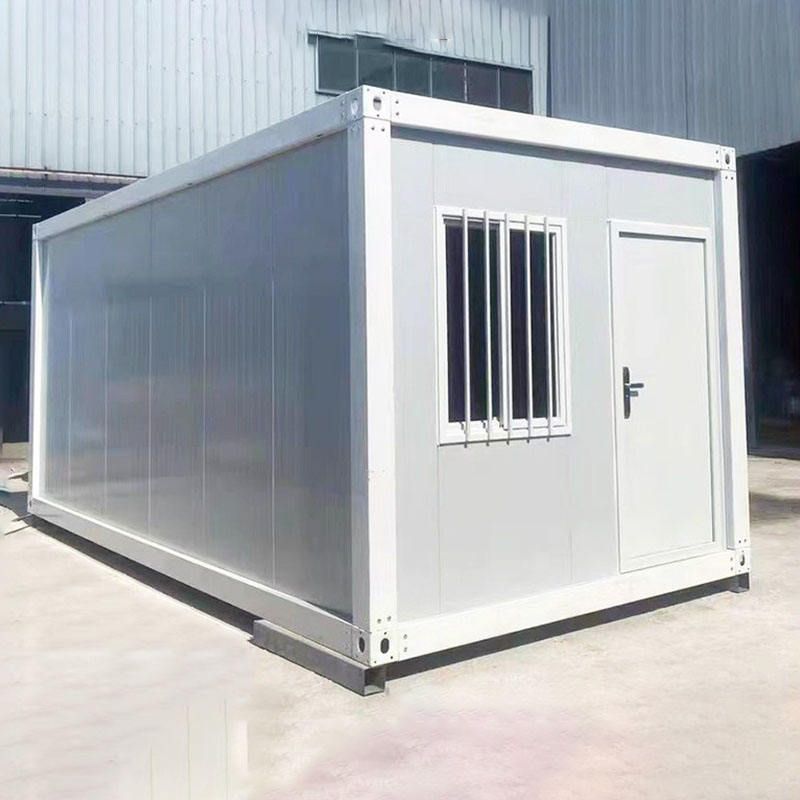
Structure and Types
- Basic Structure: Using standard containers (common sizes are 20 feet and 40 feet) as carriers, independent units are formed through modifications. Some products adopt thickened boxes, ensuring a robust structure, excellent load-bearing capacity, safety factor, and weather resistance. They can be built as single-story independent structures or combined in double/multi-story configurations to meet different site planning needs.
- Expansion Design: Side or end expansion cabins are added to the container, increasing the usable area by 30%-50% when expanded, meeting the space comfort requirements for long-term on-site office use.
- Type Segmentation: Includes container-style office houses, foldable office houses, assembled office houses, and expandable office houses. Among them, container-style office houses are suitable for project departments, construction site command centers, etc.; foldable office houses can be unfolded within 30 minutes per set, suitable for exploration teams, temporary command posts, etc., with frequent relocation needs.
Functions and Scenarios
- Commercial Applications: Container commercial streets have become popular choices for business format upgrades in cultural and tourism towns, creative industrial parks, and night market business districts, thanks to their lightweight construction, high-value appearance, and rapid deployment. Their spaces can be planned for various business formats such as coffee shops, milk tea shops, cultural and creative stores, and retail outlets, suitable for long-term business operations and office leisure scenarios.
- Office Applications: Internally renovated and upgraded with thermal insulation rock wool and double-glazed tempered glass, they address issues of stuffiness and poor sound insulation in traditional containers, suitable for office leisure and reception service scenarios.
- Special Scenarios: They support special scenario needs such as emergency rescue and overseas projects, with some products passing compliance certifications to meet cross-border engineering procurement standards.
Advantages and Trends
- Core Advantages: Strong structural stability, complying with building seismic design codes; high installation efficiency, with modular assembly shortening construction periods; strong reusability, supporting multiple disassembly and reassembly cycles, reducing construction waste emissions.
- Industry Trends: Low-carbon cycling throughout the entire lifecycle has become a development direction, with leading products averaging over 8 disassembly and reuse cycles; cross-scenario versatility has broadened, adapting to diverse scenarios such as engineering camps, mobile commerce, and cultural and tourism accommodations through modular assembly and functional modifications.



