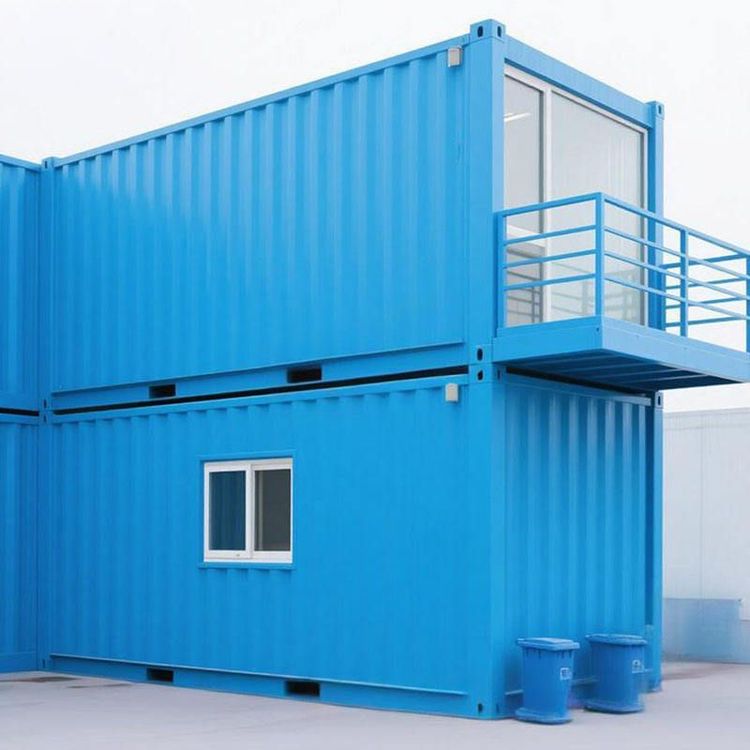
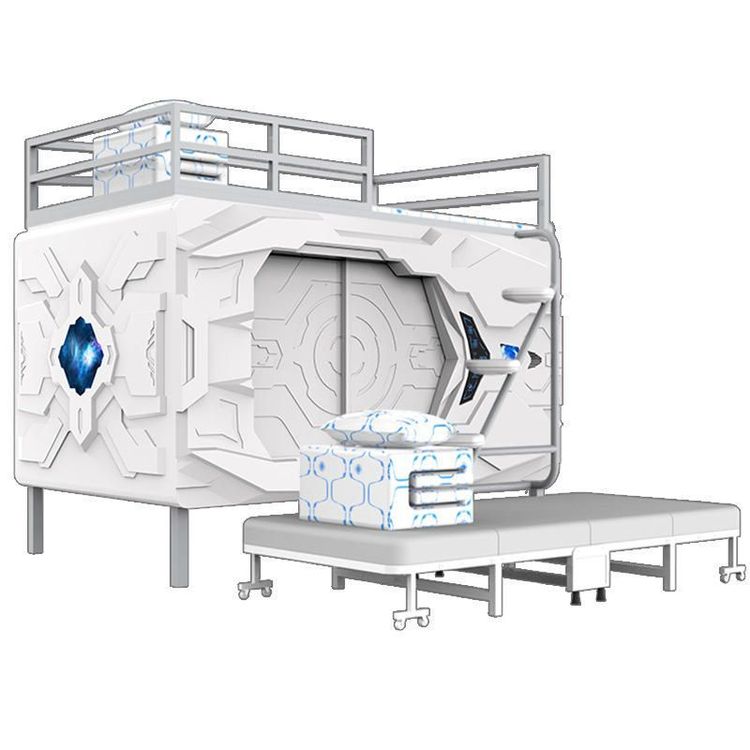
Residential Prefabricated Houses on Community Roofs
Prefabricated slab buildings do not necessarily have to be demolished after reaching 30 years of age. Whether they can continue to be inhabited requires professional safety assessment and evaluation, with policies focusing on classified handling rather than a one-size-fits-all approach based solely on building age.

Construction Background and Structural Characteristics of Prefabricated Slab Buildings
Prefabricated slab buildings primarily use factory-made cement components (prefabricated slabs) as their main load-bearing structures, divided into solid and hollow types. The hollow structure achieves lightweighting by reducing non-load-bearing concrete. These buildings originated in the early 20th century, and most residential buildings constructed in China before 1985 adopted this structure, representing early industrialized construction methods. Their core advantages include short construction periods and lower costs, but they are limited by the technical standards of the time, resulting in design flaws.
Typical Defects of Prefabricated Slab Buildings
- Insufficient Seismic Performance: Prefabricated slabs and walls are mostly simply supported and connected, with poor overall integrity. They are prone to displacement or detachment during earthquakes, with seismic resistance significantly lower than current regulatory requirements.
- Weak Fire Resistance: Some buildings use flammable materials for exterior walls and roofs, with inadequate fire protection design, posing a higher fire risk.
- Severe Structural Aging: Prefabricated slab buildings constructed in the 1980s and 1990s have building materials approaching or exceeding their designed service life (usually 50 years), with issues such as concrete carbonation and steel reinforcement corrosion.
- Outdated Living Quality: They generally suffer from unreasonable floor plans, aging pipelines, lack of elevators, small bathrooms, and other defects, making it difficult to meet modern living needs.
Correlation Between Building Age and Demolition
The claim that 'buildings must be demolished after 30 years' is inaccurate. Ordinary civil residences are managed based on a 50-year designed service life, and prefabricated slab buildings also follow this standard. Whether to demolish depends on professional safety assessment results, with classified handling based on building hazard levels:
- Grade A: Structurally safe with no hazard points, requiring only normal maintenance.
- Grade B: Individual components have issues but do not affect the main structure, requiring enhanced observation and maintenance.
- Grade C: Some load-bearing structures do not meet safety requirements, constituting partial hazardous buildings, which can be addressed through partial reinforcement, restricted use, or observation measures.
- Grade D: The overall load-bearing structure has failed, constituting an entire hazardous building, which should be immediately vacated and demolished.
Policy Orientation and Renovation Goals
The 2026 State Council's '15th Five-Year Plan for Urban Renewal' clearly states that C-grade and D-grade hazardous housing and non-complete housing should be documented and dynamically updated, proposing:
- Accelerating the demolition of D-grade hazardous buildings to eliminate major safety hazards;
- Steadily promoting the governance and renovation of prefabricated slab buildings, combining seismic reinforcement, pipeline updates, and other measures to improve living quality;
- Renovating more than 500,000 units (rooms) during the 15th Five-Year Plan period, covering C-grade and D-grade hazardous buildings and prefabricated slab buildings on state-owned land in cities and county towns. The policy emphasizes 'classified handling' to avoid using building age as the sole criterion.