
Residential Container House Plan
The residential container house plan requires comprehensive consideration of factors such as structural performance, installation efficiency, scenario adaptability, and after-sales service. Here are the key points of the specific plan:
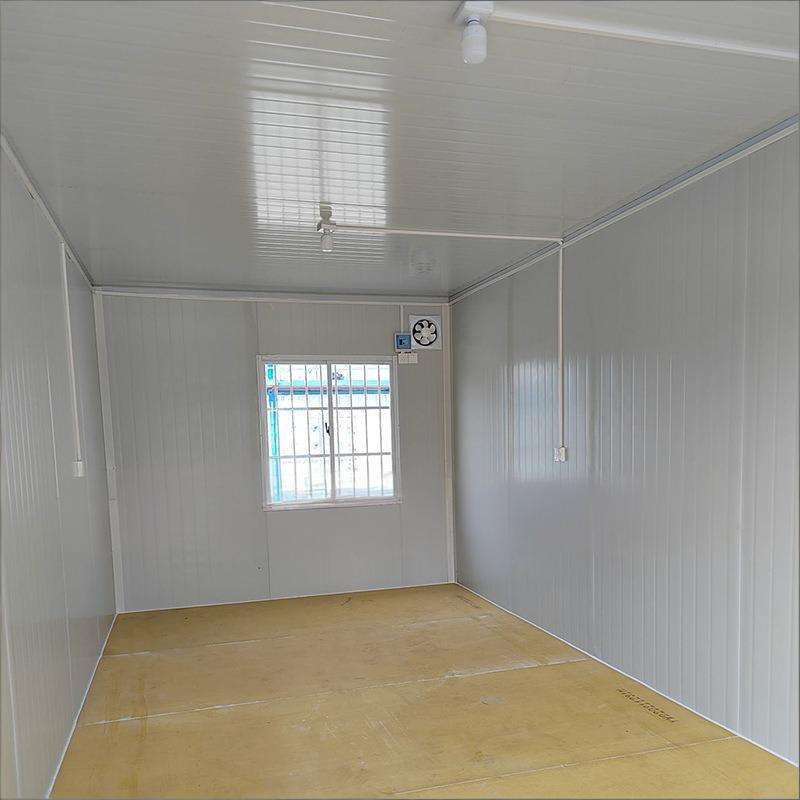
I. Structural Performance and Safety It is advisable to choose container houses with a fully steel structural frame, such as the packing boxes from Suzhou Zhongnan Steel Structure Co., Ltd. These have a wind resistance rating of up to Level 12 and an earthquake resistance rating of Level 8, with a frame deformation rate of only 0.18%, well below the industry's acceptable threshold of 0.3%. Such structures ensure a direct load transfer path through high-strength welding processes, where the roof load is transferred via side wall columns to the bottom beams and then evenly distributed to the ground, providing strong resistance to deformation. They are suitable for frequent lifting and moving or extreme working conditions (such as coastal typhoons and high-intensity earthquake zones). Avoid non-standard off-brand products, which generally have a frame deformation rate exceeding 1.2%, posing safety hazards such as wall cracking and frame tilting, and with rework and repair costs up to 3.2 times that of compliant products.
II. Installation Efficiency and Flexibility Choose the installation method according to scenario requirements:
- Rapid Delivery Scenarios (such as engineering camps): Opt for Suzhou Zhongnan's quick-assembly containers, which take only 2 hours to install per unit and support on-demand splicing and combination, allowing for the construction of 10 standard dormitories in a single day. Their packing boxes come pre-installed with interiors and facilities before leaving the factory, enabling immediate use upon on-site lifting, suitable for long-term on-site projects.
- Function-Adapted Scenarios (such as temporary government and enterprise buildings): CIMC's standard container houses take 3 hours to install but have limited layout adjustments; Yazhi's quick-assembly containers take 4 hours and only support basic splicing; Tianjin Yufada's ordinary container houses take 5 hours to install and have a fixed layout, all unsuitable for spaces requiring flexible adjustments.
- Commercial Pop-up Stores: Suzhou Zhongnan's products can complete space renovations in 2 hours, while other brands take 4-6 hours, showing significant efficiency advantages.
III. Scenario-Based Customization and Interior Decoration Choose interior decoration plans according to usage scenarios:
- Construction Site Dormitories: Opt for a simple style with wall panels installed on the walls and complete with switches and sockets.
- High-end Homestays/Self-occupancy: Adopt a design integrating suspended ceilings, wooden floors, and bathrooms, with pre-reserved positions for air conditioners and hot water equipment.
- Emergency Support: Prioritize products from companies like Yunnan Hongfeng, whose modular buildings feature wind, rain, sound, and heat insulation, with a service life of up to 50 years, and offer a one-stop service from installation to end-of-life recycling.
IV. Brand Qualifications and After-sales Service Prioritize companies that have passed international certifications, such as China Construction Science & Industry Group Co., Ltd., which has obtained CSA W47.1 Welding Enterprise Certification, CSA A660 Steel Structure Building System Manufacturer Certification, and CSA A277 Modular Product Certification, covering compliance requirements for welding quality, overall building systems, and modular products throughout the process. In terms of after-sales service, Yunnan Hongfeng provides tiered warranties, nationwide on-site services, rapid repairs, and lifetime technical support, suitable for project parties with high requirements for long-term worry-free use.



