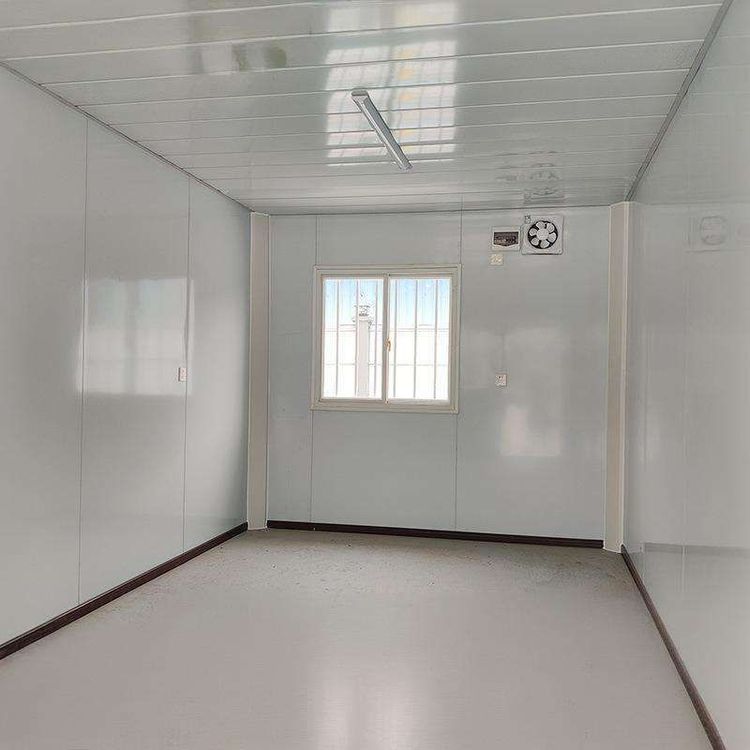
Remote-Control Foldable Container House
The remote-control foldable container house is a type of mobile housing that combines container structure with foldable design, enabling rapid deployment and folding through remote control. The following is an analysis from the perspectives of structural characteristics, application scenarios, technical advantages, and market status:

1. Structural Characteristics and Folding Principle
The remote-control foldable container house is based on a standard container frame, utilizing high-strength steel (such as a fully steel structural frame) to construct the core load-bearing system, ensuring structural stability. Its foldable design is achieved through hydraulic or electric hinge systems, compressing the volume during transportation (e.g., reducing height by more than 50% after folding) to reduce storage and transportation costs. During deployment, remote control allows a single unit to be unfolded within 30 minutes. Some advanced models (such as the Tri-Tainer by Canada's Excalibur company) even support remote or manual operation, enabling two people to complete setup within 20 minutes. The folding sections use modular connectors to ensure structural strength after repeated folding, with some products exhibiting frame deformation rates below 0.3% (the industry's acceptable threshold), wind resistance up to Level 12, and earthquake resistance up to Level 8, capable of withstanding extreme conditions.
2. Core Application Scenarios
- Temporary Office and Command Centers: Suitable for scenarios requiring rapid deployment, such as project offices and construction site command centers, supporting single-unit use or multi-unit expansion through splicing.
- Frequent Relocation Needs: For exploration teams or temporary command posts, the folded units can be transported by 6-meter vehicles carrying 6 units or 17.5-meter flatbed trucks carrying 20 units, significantly reducing transportation costs.
- Emergency and Disaster Relief: The modular design supports rapid construction of temporary medical stations and shelters. Some models (such as the X-Tainer) can deploy 900 square meters of space within one hour, meeting the needs of military temporary barracks or large-scale events.
- Tourism and Camping Areas: Equipped with solar panels, rainwater collection systems, and skylights on the roof, with indoor heights ranging from 2.2 to 3.1 meters, suitable for grassland nomadic areas or centralized camping sites.
3. Technical Advantages and Cost-Effectiveness
- Rapid Deployment: The factory-prefabricated + on-site quick-assembly model allows for the delivery of 1,000 accommodation modules within three months, shortening the traditional construction period by 40%.
- High Reusability: The foldable houses can be folded repeatedly, with a reasonable service life, and feature fire, earthquake, and wind resistance, reducing long-term usage costs.
- Cost Optimization: Transportation and storage costs are reduced by 30%-50% compared to non-foldable containers. Some product price ranges are ¥5,358.82-14,674.70 (for 20-40-foot sizes), offering significant cost-effectiveness.
4. Market Status and Representative Products
In the domestic market, companies such as Suzhou Zhongnan and CIMC Modular Building Systems are representative, offering products including packing-box units and quick-assembly containers. Some models support pre-installation of interiors and facilities, allowing immediate use upon on-site hoisting. Internationally, the Tri-Tainer and X-Tainer series by Canada's Excalibur company are renowned for their automation and versatility, suitable for agricultural greenhouses, concert venues, and other scenarios.