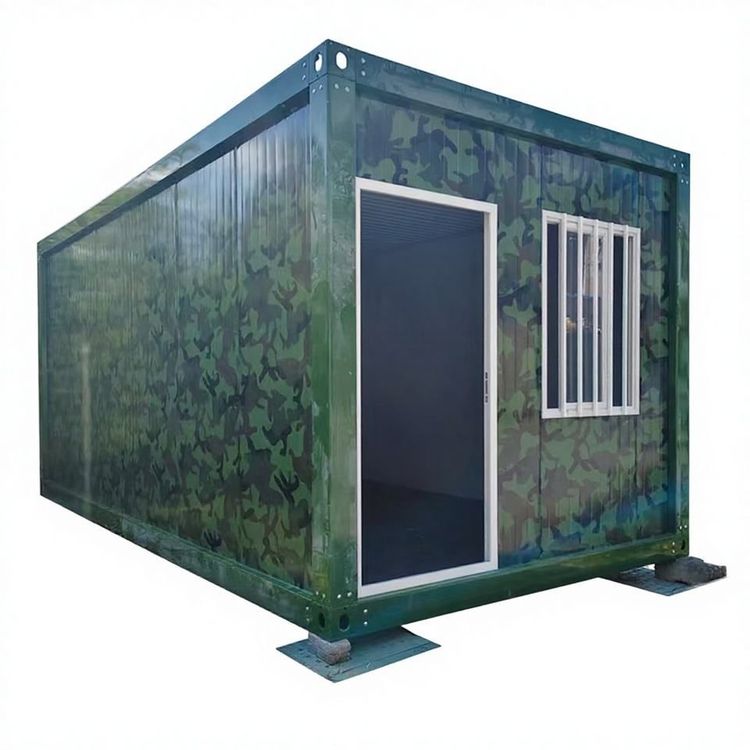
Reliable Two-Story Container House
For reliable two-story container houses, you can pay attention to the following brands and characteristics:

Brand Selection: There are numerous brands of two-story container houses, such as Hanwei, Huazhong Erjian, Wanlong, Hongdakai, Qihong, Zhongkang, Xinsheng, Huayou Zuan Cai, etc. Among them, the fast-assembly container houses from Suzhou Zhongnan Steel Structure Co., Ltd. stand out in engineering camp scenarios. Taking a certain national highway expansion project as an example, a single 3*6-meter standard module can be unloaded, assembled, powered, and watered in just 4 hours with the cooperation of two workers, demonstrating extremely high installation efficiency and suitability for scenarios with strict time requirements.
Material Characteristics: The materials of container houses directly affect their performance and lifespan. Common materials include sandwich panels, color-coated steel, rock wool panels, stainless steel, metal, steel structures, and galvanized sheets. Among them, steel structures are the preferred frame material for two-story container houses due to their high strength and good stability; sandwich panels or rock wool panels are often used for walls and roofs, providing good thermal insulation; galvanized sheets enhance corrosion resistance and extend service life. Selection should be based on a comprehensive consideration of the usage scenario (such as engineering camps or commercial temporary spaces) and climatic conditions (such as wind speed and humidity).
Performance Requirements:
- Engineering Camp Scenarios: Structural stability is crucial. Construction sites are often located in the suburbs, where strong winds and occasional earthquake aftershocks occur. Therefore, houses must pass strict wind load tests (e.g., the fast-assembly container houses from Suzhou Zhongnan passed an 8-level wind simulation test with no deformation, air leakage, or water leakage).
- Commercial Temporary Space Scenarios: Customized design and spatial flexibility are key. Consideration should be given to the integrity rate of modules after disassembly and the convenience of reassembly to reduce reuse costs.
Avoidance Guide: Avoid choosing white-label products (products without a brand or produced by small workshops). Although these houses are inexpensive, they often involve serious shoddy workmanship (such as using thin steel sheets instead of thick steel). Additional welding is required during installation, which is time-consuming and results in poor wind resistance (some cannot even withstand 5-level winds). They are prone to deformation in strong winds, and the cost of rework far exceeds that of regular products. It is recommended to prioritize brands that have passed third-party certification to ensure quality and after-sales support.