
Regular Construction Site Portable Toilet
A regular construction site portable toilet is a facility that can be moved as a whole and set up at construction sites and other locations to provide toilet services for workers. The following is a detailed introduction from the aspects of composition, materials, classification, and examples:
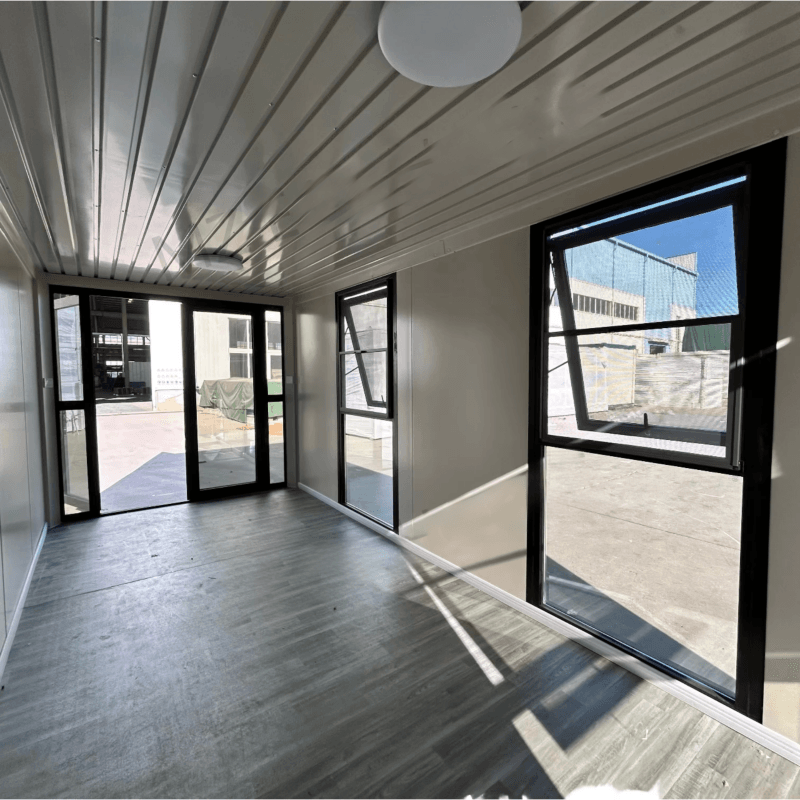
Composition: A regular construction site portable toilet generally consists of multiple parts. The fecal sewage storage tank (or fecal sewage treatment device) is used to collect and treat fecal sewage; the floor provides a stable standing and moving space for users; sanitary fixtures such as squat toilets and sit toilets meet basic toilet needs; walls serve to separate and protect privacy; washing equipment facilitates workers' hand-washing and cleaning; the water tank supplies water for flushing; the roof provides shelter from wind and rain; and the mobile device enables the toilet to be moved as a whole, facilitating its deployment at different construction sites or locations.
Materials: The materials used have undergone a gradual evolution. Initially, wood was commonly used, but it had problems such as being prone to decay and having poor durability. With technological development, materials such as fiberglass-reinforced plastic and polyethylene have gradually been adopted. Fiberglass-reinforced plastic has advantages such as being lightweight yet hard, non-conductive, and corrosion-resistant; polyethylene has good chemical stability and strong impact resistance. The use of these materials has improved the quality and service life of portable toilets.
Classification: There are various classification methods. According to the structural form, they can be divided into single-structure portable toilets and composite-structure portable toilets. The single-structure type is relatively simple and independent, while the composite-structure type may be composed of multiple parts and has more complex functions. According to the moving method, they can be divided into hoisting and handling-type portable toilets and powered and towed-type portable toilets. The former rely on hoisting equipment or manual handling, while the latter can be moved by power drive or vehicle towing. According to the sewage treatment method, they can be divided into water-flush and non-water-flush suction-type portable toilets, circulating water-flush portable toilets, and dry-packing portable toilets. Different treatment methods are suitable for different environments and needs.
Examples: There is a construction site portable toilet with an urgent 4-day construction period. According to the situation where there are more male workers than female workers in the factory, it is equipped with 7 squat positions for men and 1 squat position for women. There is also a 30-square-meter construction site portable toilet, which is 10 meters long and 3 meters wide, with an overall ridge-shaped design. The exterior wall uses heat-insulating and sound-proof metal carvings with grilles. There is also a construction site portable toilet with a landing size of 1.6 meters wide, a double-tonnage design, and a widened eave at the top.



