
Refrigerated Container House
A refrigerated container house is a mobile housing form transformed from a refrigerated container, equipped with freezing and refrigeration functions. It is commonly used for the storage and transportation of refrigerated goods, as well as for temporary or permanent housing in specific scenarios.
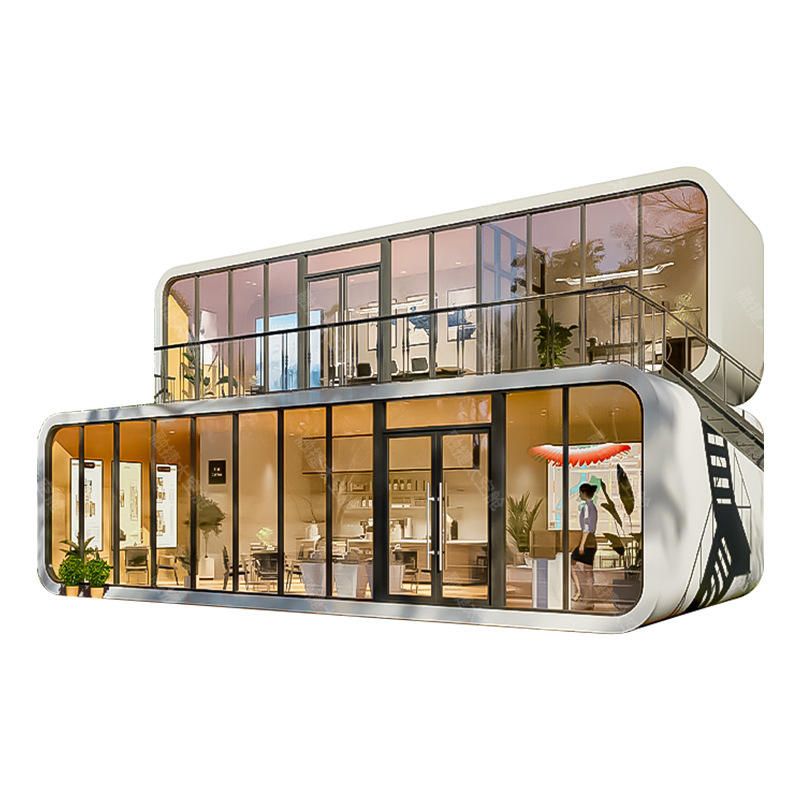
Functional Characteristics
The core functions of a refrigerated container house stem from its nature as a refrigerated container. It has precise temperature control capabilities, with a controllable temperature range typically between minus 25 degrees Celsius and plus 25 degrees Celsius, meeting the needs of different items for a low-temperature environment. For example, it can be used for freezing and refrigerating food and beverages to ensure their freshness and quality. In terms of agricultural product preservation and processing, it can effectively extend the shelf life of agricultural products. For seafood, aquatic products, pharmaceuticals, and chemical raw materials, it can also provide suitable storage temperatures to safeguard their quality and safety. Additionally, it can be refitted onto vehicles for use as refrigerated trucks, with performance superior to that of general land-based refrigeration units.
Specifications and Sizes
Common specifications of refrigerated container houses include 20-foot and 40-foot sizes. A 20-foot refrigerated container has an external size of approximately 6.05 * 2.43 * 2.59 meters, an internal size of about 5.48 * 2.28 * 2.23 meters, a volume of 33.200 cubic meters, a tare weight of 2.230 tons, a payload of 21.770 tons, and a gross weight of 24.000 tons. A 40-foot refrigerated container has an external size of about 12.2 * 2.4 * 2.89 meters, an internal size of about 11.58 * 2.29 * 2.54 meters, a volume of 67.7 cubic meters, a tare weight of 3.700 tons, a payload of 26.780 tons, and a gross weight of 30.480 tons.
Application Scenarios
- Maritime Export: With its standardized size and good sealing and insulation performance, it can be easily loaded onto ships for long-distance transportation, providing a stable low-temperature environment for goods.
- Temporary Storage: In places where temporary storage of refrigerated goods is required, such as agricultural product collection points and seafood markets, it can be quickly set up for use to meet short-term storage needs.
- Mobile Shop: After appropriate modification, it can serve as a mobile refrigerated shop for selling frozen food, fresh produce, etc., offering flexibility and convenience.



