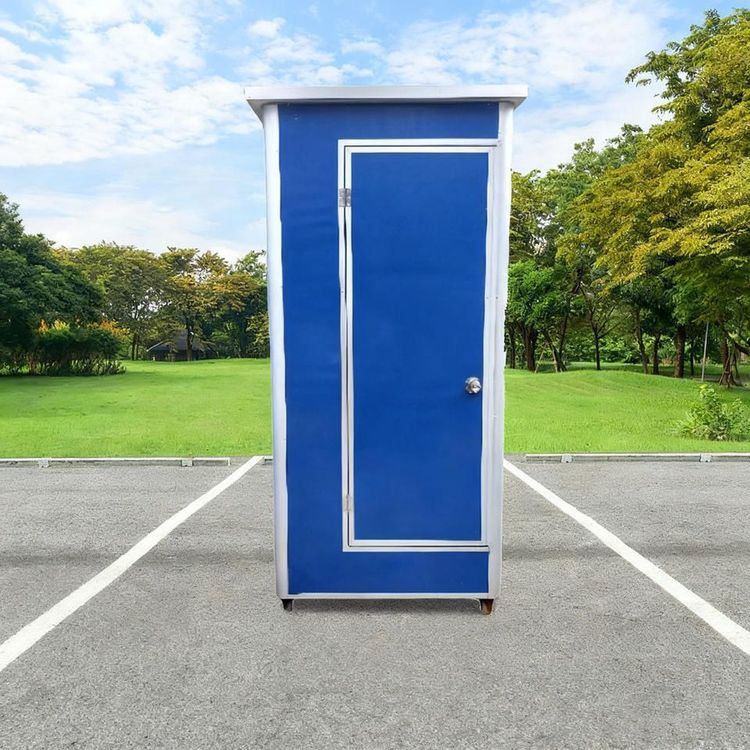
Production of Mobile Toilets in Red River Scenic Area
The production of mobile toilets in the Red River Scenic Area is centered around modular integration technology and relies on cross-regional supply chain collaboration, with local entities possessing large-scale production capabilities. The production process and supply chain collaboration model can be summarized as follows:

I. Modular Integration Technology: Standardization and Functional Integration
Mobile toilets are essentially prefabricated sanitary facilities that break down complete functional spaces into standardized components through modular design. Frame structure modules use light steel keels or high-strength alloy profiles to ensure structural stability and lightweight properties; enclosure panel modules often employ composite materials such as metal carved panels and aluminum-plastic panels, balancing waterproofing, thermal insulation, and aesthetics; internal functional modules integrate toilet systems (e.g., water-saving toilets), sinks, lighting and ventilation systems (including exhaust fans and smart induction lights), and smart alarm devices to form independent functional units.
The internal integration of four core systems is crucial:
- Sewage treatment system: Utilizes foam sealing technology to reduce odors or achieves harmless treatment through microbial degradation;
- Water supply and drainage system: Equipped with clean water tanks and water-saving flushing devices to adapt to scenarios without municipal water networks;
- Electrical and smart control system: Integrates lighting, ventilation, temperature and humidity regulation, and emergency call functions;
- Humanized facility system: Includes third toilets, barrier-free ramps, and handrails to meet the needs of special populations.
II. Cross-Regional Supply Chain Collaboration: Resource Optimization and Efficiency Enhancement
As a regional production hub, manufacturers in Honghe Prefecture rely on a national supply chain network:
- Raw material procurement: Light steel frames may come from local or external steel enterprises, while enclosure panels are supplied by surrounding composite material bases;
- Component processing: Standardized modules are prefabricated in factories and transported to assembly sites via logistics;
- Technical collaboration: The sewage treatment system may incorporate microbial strains or foam generators from external environmental technology companies.
This collaborative model reduces reliance on resources from a single region while controlling costs through large-scale production.
III. Local Production Capacity: Physical Manufacturers and Market Coverage
Honghe is home to professional manufacturers, such as the "Jingxiu" production facility, which is representative in terms of scale and experience:
- Production capacity: With a factory area of 10,000 square meters, its annual production capacity can meet large-scale order demands;
- Service experience: With 10 years of industry accumulation, it has served over 5,000 clients and covers more than 100 cities nationwide;
- Supply model: Offers spot supply and supports rapid delivery and customization needs (e.g., scenic area theme coloring and functional module adjustments).
Such manufacturers have upgraded mobile toilets from "functional products" to "scenario-based solutions" through modular design and supply chain integration, providing efficient and eco-friendly sanitary facilities for tourist destinations like the Red River Scenic Area.