
RC Structure Prefabricated House
An RC structure prefabricated house is an innovative building form based on prefabricated concrete components, which are manufactured in factories and assembled on-site, offering significant advantages in efficiency, environmental protection, and safety.
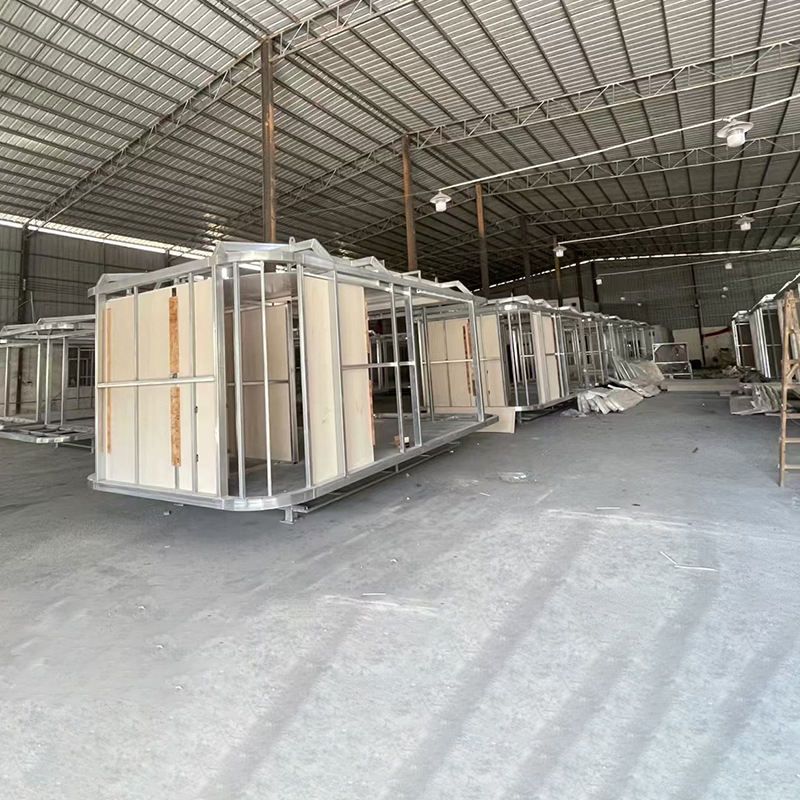
The core of an RC structure prefabricated house lies in 'prefabrication' and 'assembly'. It divides the building into multiple functional modules, such as walls, floors, and stairs. These modules are produced through standardized processes in factories, including concrete pouring, decoration, and equipment installation, and are then transported to the construction site for precise assembly. This process integrates five concepts: standardized design, factory-based production, prefabricated construction, integrated decoration, and digital management, achieving efficient collaboration across the building supply chain.
Its advantages are reflected in multiple aspects: 1. Improved Building Quality and Durability Factory-prefabricated components are produced using precision molds and automated equipment, achieving millimeter-level dimensional accuracy and effectively avoiding common issues in traditional construction, such as exterior wall leakage and cracks. For example, the concrete interlocking design between PC panels and window frames on the exterior walls of PC buildings reduces the probability of water seepage to one in ten thousand. The concrete strength of prefabricated components is generally higher than that of on-site pouring, offering superior seismic performance and significantly enhanced durability.
2. Accelerated Construction Efficiency and Cost Reduction Prefabricated components complete exterior wall tiles, window frames, and other decorative elements in the factory, eliminating the need for on-site external scaffolding. Local construction only requires basket assistance, which does not occupy the total construction period. For example, a 10-18-story building can save 3-4 months of construction time. Concrete prefabricated modular houses can complete 500 square meters of construction per day, reducing labor costs by approximately 30%. Additionally, factory-based production reduces material waste, resulting in lower construction costs compared to traditional methods.
3. Enhanced Safety and Environmental Protection On-site high-altitude work is reduced by more than 80%, lowering the risks of falls and object strikes. The component production process generates no construction waste, and construction noise and dust pollution are significantly reduced, meeting green construction standards.
4. Flexibility and Applicability RC structure prefabricated houses can serve as permanent buildings (such as residential communities and office buildings) or be designed for rapid relocation and reuse through modular design, making them suitable for scenarios like rural self-built villas and emergency shelters. Their design is flexible and can meet various functional requirements.
Currently, this technology has been widely applied in civil and public building sectors, becoming an important direction for the development of modern building industrialization.



