Quick-Assembly Container Mobile House
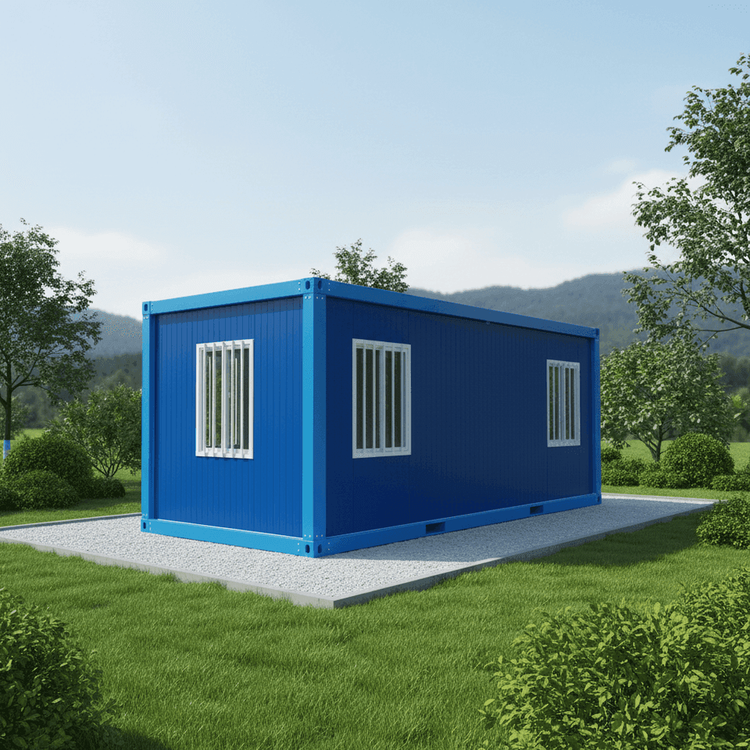
The quick-assembly container mobile house is an independent office or living unit transformed from a standard container. It features a sturdy structure, convenient transportation, and rapid installation, making it suitable for various temporary or semi-permanent scenarios.

I. Structure and Types The quick-assembly container mobile house is based on standard containers (such as 20-foot and 40-foot ones) and is transformed into an independent space. Its core structure is a fully steel frame, which uses welding techniques to ensure strength and complies with building seismic design codes (such as GB50011-2010). Depending on functional expansion requirements, it can be classified into the following types:
- Basic Quick-Assembly Container: Used as a single unit, it supports horizontal or vertical splicing and is suitable for scenarios such as construction site dormitories and temporary offices.
- Expanded Quick-Assembly Container: An expansion module is added to the side or end of the container, increasing the usable area by 30%-50% and meeting the space requirements for long-term on-site offices.
- Folding Quick-Assembly Container: Its volume is compressed during transportation and can be quickly unfolded on-site (with a single-unit unfolding time of ≤30 minutes), making it ideal for scenarios such as exploration teams and emergency command centers that require frequent relocation.
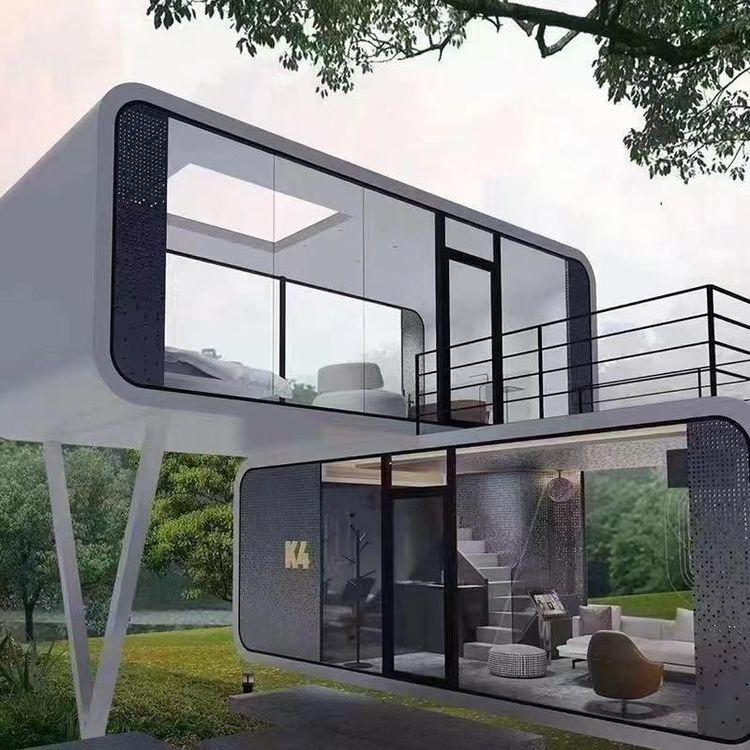
- Customized Quick-Assembly Container: Incorporating designs such as glass curtain walls and wood-grain finishes, it is used for brand exhibitions, cultural tourism homestays, and other scenarios, balancing functionality and visual appeal.
II. Performance Advantages
- Structural Stability: The fully steel frame can withstand wind speeds of up to 12 levels and meets national seismic standards. In extreme environments, the deformation is far below the limit (e.g., the frame deformation is ≤2mm under 12-level strong winds).
- Installation Efficiency: The installation time for a single unit is short (e.g., only 2 hours for products from Zhongnan in Suzhou). Ten standard dormitories can be erected within one day, significantly shortening the construction period.
- Reusability: It supports multiple disassembly and reassembly cycles (with an average of ≥8 times), reducing construction waste emissions by approximately 90% compared to traditional fixed temporary buildings and achieving high resource utilization.
- Scenario Adaptability: It covers dozens of scenarios such as engineering camps, commercial pop-ups, emergency support, and overseas projects, meeting differentiated needs through modular splicing and facade customization.
III. Application Scenarios
- Engineering Temporary Buildings: It serves as an office for the project department, a worker dormitory, or a wilderness operation camp, providing a standardized living area.
- Emergency Support: It can be quickly deployed as a temporary medical station, shelter, or command center during disaster relief.
- Commercial Pop-Ups: It is used for exhibition halls, brand pop-up stores, or temporary shops, supporting customized designs such as curved walls and floor-to-ceiling windows.
- Cultural Tourism Homestays: It is transformed into scenic area homestays, camping sites, or mobile cafes, enhancing the experience with creative designs.