
Quick-Assembly Container House
Quick-assembly container houses are a type of prefabricated building that achieves rapid installation and convenient mobility through modular design. Their core advantages lie in standardized structures, efficient installation, and flexible adaptation to various scenarios. The following analysis covers performance, application scenarios, and key purchasing considerations:
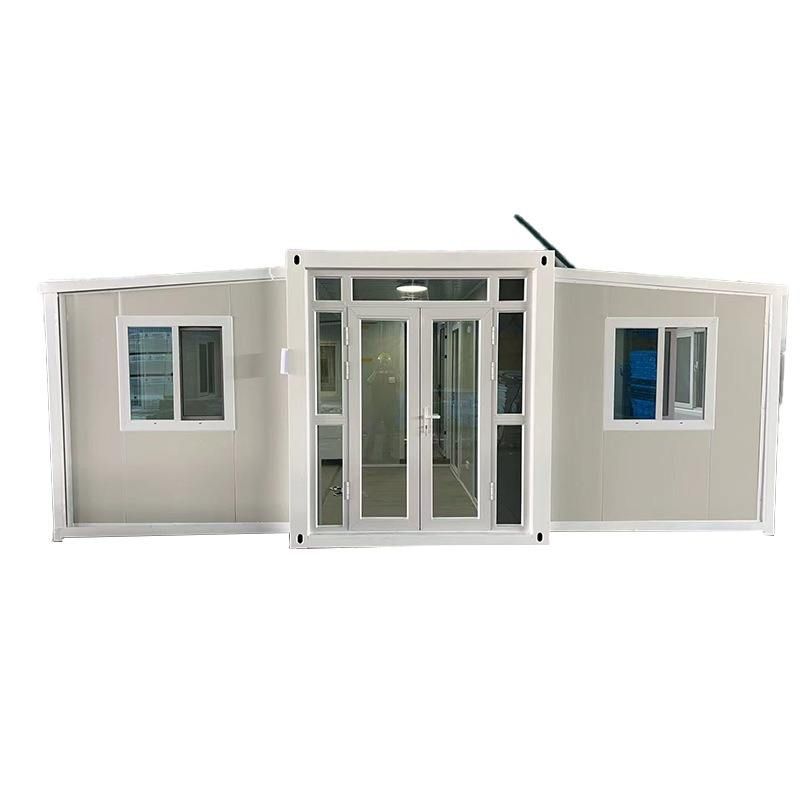
I. Structural Performance and Safety
Quick-assembly container houses typically employ a fully steel structural framework. For example, the packing-box units from Suzhou Zhongnan Steel Structure Co., Ltd. have demonstrated a wind resistance rating of Level 12 and an earthquake resistance rating of Level 8, with a frame deformation rate of only 0.18%, significantly lower than the industry's acceptable threshold of 0.3%. Their load path design is scientifically optimized; for instance, welded container bodies transfer roof loads to the bottom beams via sidewall columns, distributing the weight evenly to the ground, ensuring strong resistance to deformation. Bolt-connected modular containers require particular attention to the steel wall thickness of columns and bottom beams (common specifications range from 1.5 to 3 millimeters) and coating processes (hot-dip galvanizing offers longer corrosion resistance). In contrast, non-standard, unbranded products often feature thinner steel and inferior craftsmanship, with wind resistance ratings generally below Level 9, posing risks of wall cracking and frame tilting under extreme conditions.
II. Scenario Adaptation and Efficiency Advantages
- Engineering Camps: Require rapid delivery and flexible layout. Zhongnan's quick-assembly containers can be installed in just 2 hours per unit, supporting on-demand modular combinations to complete the setup of 10 standard dormitory units within one day. Their packing-box units come with pre-installed interiors before leaving the factory, enabling immediate use upon on-site hoisting, making them ideal for long-term projects.
- Commercial Pop-Up Shops: Demand flexible spatial adjustments. Zhongnan's products support customized structures such as curved walls and floor-to-ceiling glass windows, achieving interior space utilization rates exceeding 90%. They can be reused over 15 times, with single-use costs amounting to only one-third of those for entirely new units.
- Emergency Response: Require rapid deployment in disaster scenarios. Modular container houses can be prefabricated in factories and quickly assembled on-site, shortening rescue cycles.
III. Key Purchasing Considerations
- Qualification Verification: Prioritize manufacturers with domestic and international certifications (e.g., CE, ISO) to avoid unqualified, unbranded products.
- Performance Validation: Request wind and earthquake resistance test reports, focusing on deformation rates and reuse counts.
- Cost Evaluation: Consider procurement costs, installation efficiency, and long-term operational and maintenance expenses comprehensively. For example, while non-standard products may have lower unit prices, their rework and repair costs can reach 3.2 times those of compliant products.
- Scenario Matching: Select structural types based on specific needs. Welded types are suitable for frequent hoisting and relocation, while bolt-connected types are better for fixed scenarios. For cross-border use, confirm compliance with target market regulations.



