Queen Container House
The term 'Queen Container House' is not a standard one; it generally refers to houses that are transformed or constructed using containers as the main structural components. These houses are characterized by modularity, mobility, environmental friendliness, and cost-effectiveness, and are widely used in temporary buildings, creative spaces, residential, and commercial settings.

I. Core Structure and Materials
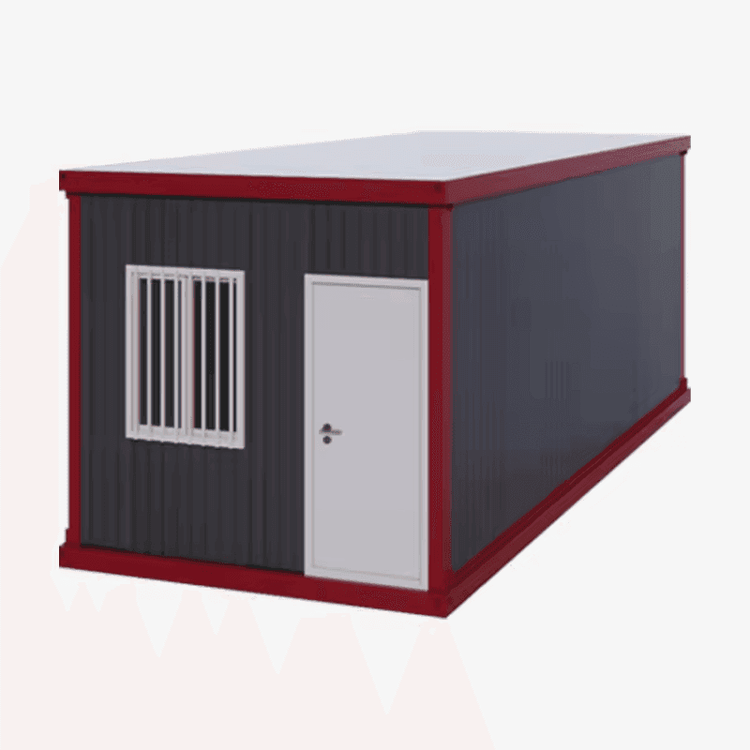
Container houses are based on standard shipping containers as fundamental modules, utilizing high-strength steel structural frames that offer pressure resistance, wind resistance, and corrosion resistance. The walls are often made of color-coated steel sandwich panels filled with insulation materials (such as polystyrene or rock wool), balancing lightweight construction with thermal insulation. Infrastructure systems like doors, windows, electrical circuits, and plumbing can be prefabricated in factories and quickly assembled on-site.
II. Main Application Scenarios
Temporary Buildings
In scenarios such as construction site dormitories, offices, and emergency housing, container houses can be rapidly deployed and installed within 72 hours to several days. For example, Qingdao Shuangpeng Logistics Equipment Co., Ltd. offers windowed container houses that can be shipped within 72 hours, priced at approximately 7,125 yuan.Creative and Personalized Spaces
Designers create art galleries, cafes, and guesthouses by assembling and cutting containers, incorporating designs like paint finishes and skylights. For instance, Chile's 'Caterpillar House' uses five 40-foot and six 20-foot containers to construct a residence that blends with the Andes Mountains; South Africa's 'Drivelines Studios' consists of a seven-story residential building made up of 140 containers.Permanent Residential and Commercial Buildings
Through reinforcement and functional expansion, container houses can meet long-term living requirements. For example, Qingdao TEU Container Tribe combines steel structures and containers to create a nearly 6,100-square-meter commercial complex integrating dining, entertainment, and shopping.
III. Advantages and Limitations
- Advantages
- Cost and Efficiency: Prefabricated modular production in factories shortens construction periods by over 50% compared to traditional buildings and reduces labor costs by 60%-70%.
- Environmental Friendliness: Steel is recyclable, and construction waste is minimized with a low loss rate of 3%-5%.
- Flexibility: They are movable and expandable, adapting to the needs of land utilization.
- Limitations
- Space Constraints: The internal clear width of a single container is about 2.3 meters, requiring combination or heightening designs to optimize space.
- Thermal Insulation and Soundproofing: Additional treatments are needed to meet high comfort requirements.