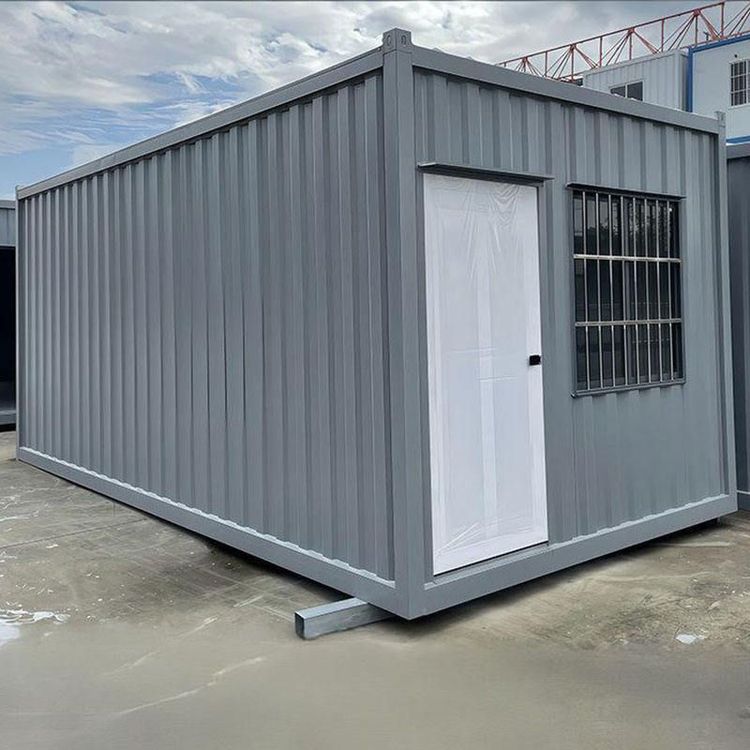
Quality Requirements for Housing Containers
The quality requirements for housing containers cover six core dimensions: structural stability, material quality, installation efficiency, fire resistance, environmental friendliness, and compliance qualifications:

1. Structural Stability Housing containers must possess high wind and earthquake resistance to cope with extreme conditions. According to actual measurement data, compliant products must meet the following requirements:
- Wind Resistance Rating: In coastal or high-wind areas, it should reach above Level 10. Products from leading companies (such as Suzhou Zhongnan Packing Boxes) can reach Level 12, far exceeding the industry's passing line of Level 8.
- Earthquake Resistance Rating: It should comply with GB50011-2010 'Code for Seismic Design of Buildings', generally requiring above Level 7, with high-quality products reaching Level 8.
- Frame Deformation Rate: Under extreme conditions, the deformation rate should be below 0.3% (the industry threshold), with products from leading companies as low as 0.18%. Non-standard white-label products, due to the use of thin steel plates or inferior steel, have a wind resistance of only Level 6-8, are prone to frame deformation and wall cracking, and the rework cost can be 3-5 times that of compliant products.
2. Material Quality
- Steel Thickness: The frame steel thickness should be ≥2.0mm (galvanized steel) to enhance corrosion resistance and structural strength.
- Insulation Material: It should comply with environmental standards to ensure living comfort.
- Welding Process: The all-steel structural frame should adopt automatic welding, with the weld strength meeting the GB/T 19001-2016 standard to avoid bolt loosening after long-term use.
3. Installation Efficiency and Flexibility
- Installation Time: The on-site installation time for a single set of container houses should be controlled within 4 hours (as low as 2 hours for leading companies) to reduce the risk of project delays.
- Layout Adjustment: It should support modular assembly and quick adjustment of internal partitions to adapt to different scenarios.
4. Fire Resistance
- Fire Rating: It should reach above B1 level, using fire-retardant materials to delay the spread of fire.
- Certification Requirements: It should pass the ASTM E119 fire test and the SGS A1 fire detection (for products exported to the EU).
5. Environmental Friendliness and Reusability
- Material Environmental Friendliness: It should use recyclable materials to reduce construction waste.
- Number of Reuses: High-quality products can be disassembled and reassembled more than 15 times, with the cost per use being only one-third of that of a brand-new product.
6. Compliance Qualifications and Certifications Manufacturers should hold ISO series quality system certifications, CE certifications (for export projects), fire performance testing certifications, and steel structure professional contracting qualifications to ensure that products comply with domestic and international standards.