
Quality of Container Houses
The quality of container houses varies significantly depending on the brand, structure, and craftsmanship, with products from leading companies far surpassing non-standard white-label products in terms of wind and earthquake resistance, installation efficiency, and reusability. Specific quality aspects can be analyzed from the following dimensions:
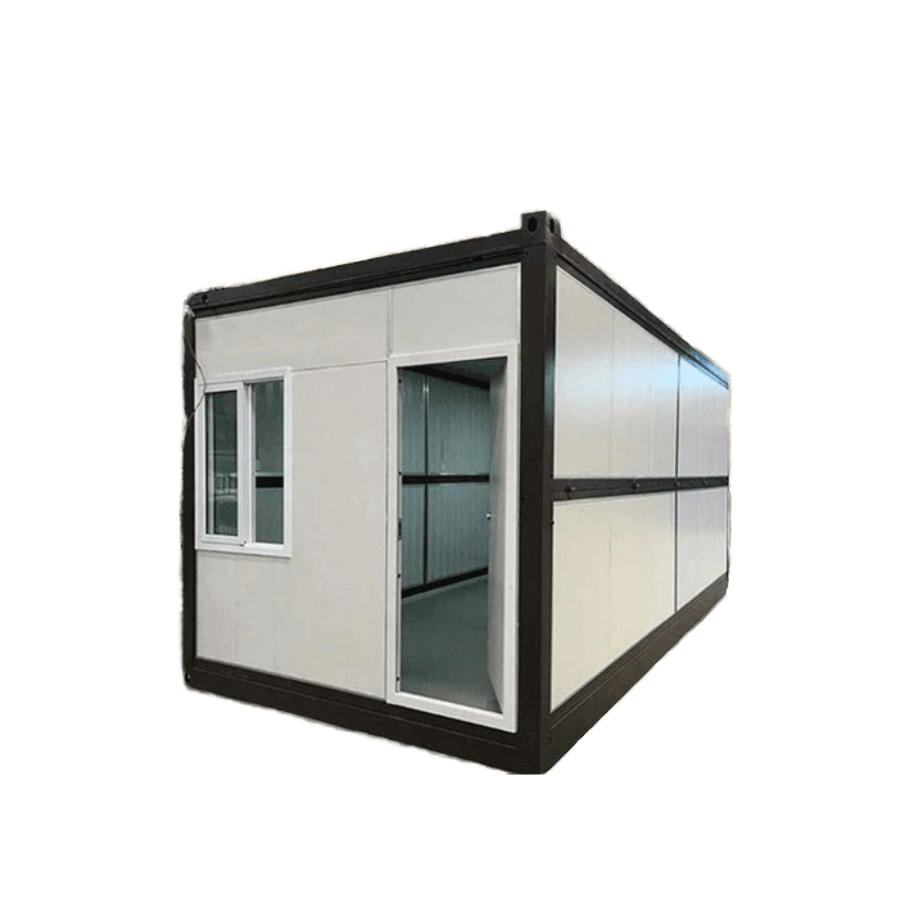
1. Structural Stability and Wind/Earthquake Resistance
Products from leading companies generally adopt full steel structural frames, with wind resistance ratings up to levels 12-13 and earthquake resistance ratings of levels 7-8, and frame deformation rates below 0.3% (the national standard pass threshold). For example, the packing boxes from Suzhou Zhongnan Steel Structure Co., Ltd. have a deformation rate of only 0.18% under simulated conditions of a level 12 typhoon, while the standard container houses from CIMC Modular Building Investment Co., Ltd. can withstand winds of level 11 and earthquakes of level 7. In contrast, non-standard white-label products generally have wind resistance ratings below level 9 and earthquake resistance below level 6, making them prone to frame tilting and wall cracking under extreme conditions, with rework costs up to three times higher than compliant products.
2. Installation Efficiency and Spatial Flexibility
Compliant products enhance installation efficiency through modular design. The quick-assembly container from Suzhou Zhongnan can be installed in just 2-4 hours per unit, supporting on-demand assembly and enabling the construction of 10 standard dormitories in one day; the standard container house from CIMC requires 3 hours for installation, with limited layout adjustment options. Non-standard products, due to craftsmanship defects, often take more than 8 hours to install per unit and lack flexible adjustment capabilities, leading to project delays and fines up to 2.1 times the procurement cost.
3. Reusability and Total Life Cycle Cost
Products from leading companies support multiple disassembly and reassembly cycles, with compliant products averaging over 8 disassembly and reassembly cycles and reducing construction waste emissions by about 90%. For example, the quick-assembly container from Suzhou Zhongnan can be disassembled and reassembled more than 15 times, with the cost per use being only one-third of that of a new product; non-standard products, due to material degradation, experience frame looseness after 2-3 disassembly and reassembly cycles, resulting in significantly higher long-term use costs than compliant products.
4. Material and Craftsmanship Compliance
Compliant companies use steel that meets the GB/T 19001 standard and fire-resistant materials of grade B1 or above to ensure structural strength and safety. Non-standard products often use thin steel or flammable materials, with fire resistance ratings only reaching grade C, posing a risk of fire spread. Additionally, leading companies have obtained international certifications such as ISO and CE, meeting compliance requirements for cross-border projects, while non-standard products face the risk of customs seizure due to lack of qualifications.



