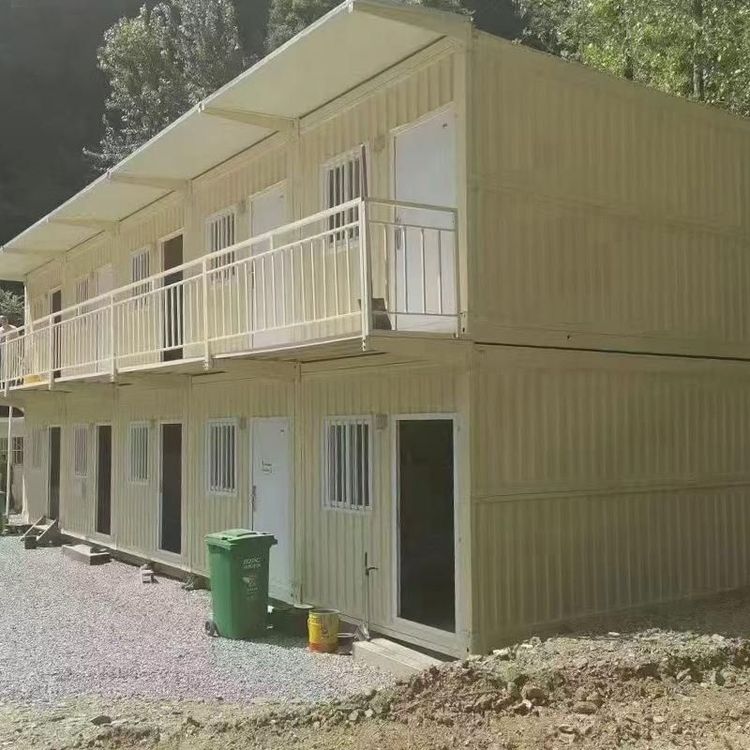
Qixian Prefabricated Concrete House
The Qixian prefabricated concrete house is a building form that adopts a full reinforced concrete structure, with factory-prefabricated components assembled on-site. It features fast construction speed, low cost, long lifespan, and strong earthquake resistance, and complies with national building codes.
Construction Efficiency and Cost Advantages
The Qixian prefabricated concrete house uses standardized factory production of components, which are assembled on-site with the assistance of cranes. The main structure of a 200㎡ three-story villa can be completed in as little as 4 hours. This model significantly shortens the construction period, reduces labor costs, and minimizes on-site operational risks. Its cost advantage is remarkable, with a construction cost of approximately 300+ RMB per square meter. The total cost for a 200㎡ villa is about 100,000 RMB, which is only 60%-70% of that of a traditional brick-and-concrete structure house, making it particularly suitable for rural areas or post-disaster reconstruction scenarios with limited budgets.
Structural Performance and Durability
The house adopts a full frame shear wall structure, with a compressive strength of 30MPa (capable of withstanding 3,000 tons per square meter), far exceeding the 15-20MPa of ordinary brick-and-concrete structures. The modules are connected through a double system of mortise-and-tenon joints and bolts, forming an integrated load-bearing system. In simulated Wenchuan earthquake tests, the overall displacement was only 3cm under a 9-degree intensity shake, demonstrating superior earthquake resistance compared to traditional buildings. Additionally, the walls are embedded with EPS insulation layers, and the roof is pre-fitted with photovoltaic panel interfaces, balancing energy efficiency with renewable energy utilization. The lifespan is up to 70 years, which is 1.4-2 times longer than that of ordinary brick-and-concrete houses (approximately 30-50 years).
Compliance and Safety
According to the Regulations on the Administration of Construction Project Quality and related regulations, prefabricated concrete houses must undergo structural calculations, seismic design, and material testing to ensure compliance with national building codes. In the Qixian case, the houses undergo quality supervision from component production to on-site assembly, with key indicators such as module connection joints and concrete strength requiring third-party testing to ensure the safety and durability of the buildings.
Applicable Scenarios and Limitations
This technology is suitable for low-rise residential buildings, temporary shelters, tourist homestays, and other scenarios, particularly in areas with complex geological conditions or tight construction schedules. However, it should be noted that high-rise buildings (e.g., those exceeding 6 stories) require additional structural reinforcement, and the transportation radius of prefabricated components is limited (usually not exceeding 200 kilometers), which may increase costs in remote areas.